
Hard wood and inedible leaves:
when the going gets tough
Only the hardy survive where water is scarce. And surviving is even harder where too little water can suddenly become too much.
This is what happens in the semi-arid areas of the planet, including most of the Mediterranean coastline. In these environments when the little annual rain falls, it does so intermittently and sometimes so intensely, for just a few days a year, concentrated into one or no more than two seasons. And that just has to do for the rest of the time.
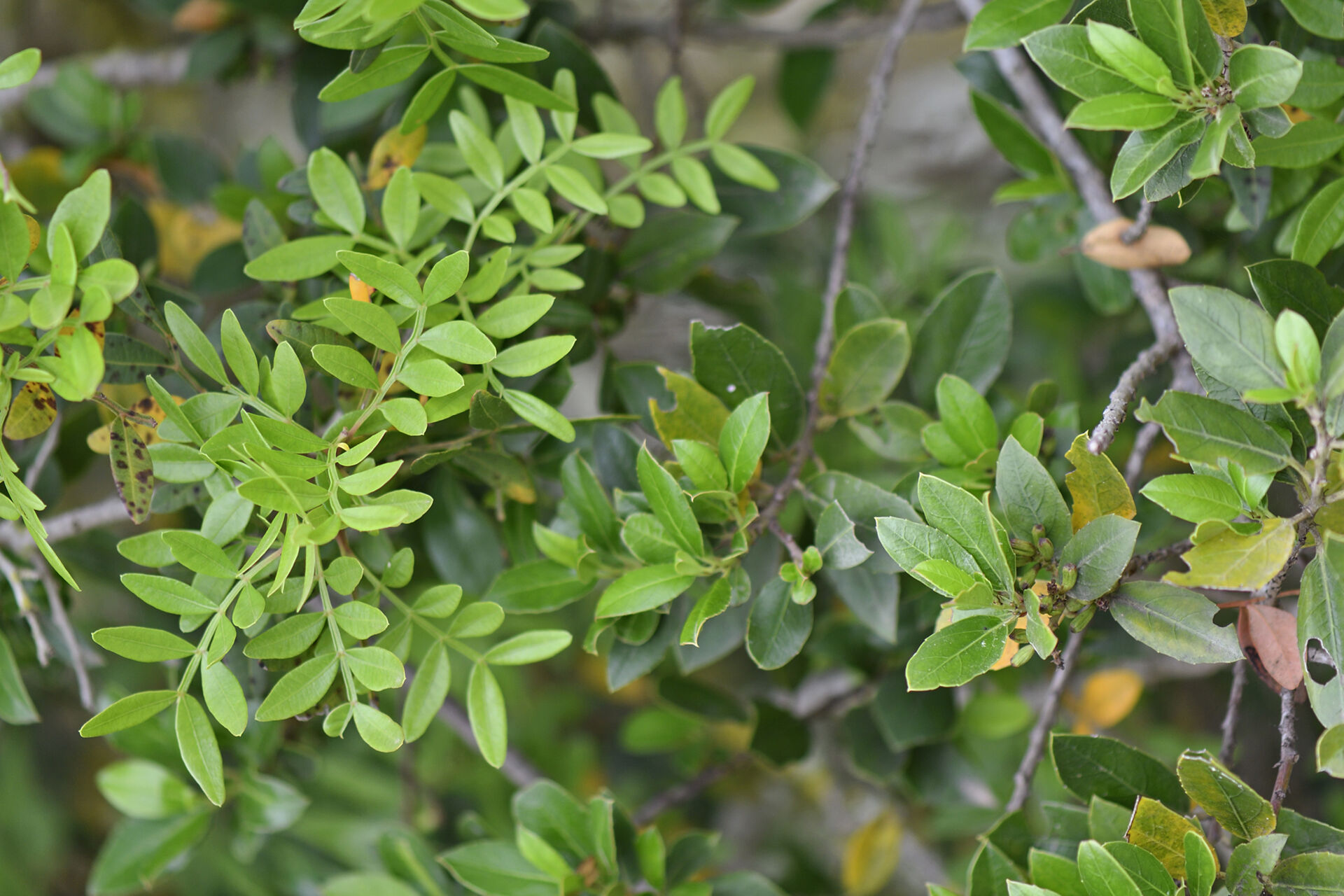
There are two ways of tackling dryness: tolerate it or avoid it. Perennial plants, for example, have developed specific adaptation strategies to survive dry, sunny conditions by storing water. The dual aim is not to waste water and not to have it stolen by other organisms. Between tough wood and inedible leaves, the name of the game is survival in these environments.
Ravine vegetation in Apulia
Francesca Carruggio (Aldo Moro University of Bari) describes the vegetation found in Apulia’s ravines, which host a wealth of biodiversity.
She highlights the main threats to biodiversity and the conservation strategies adopted in recent years, explaining how the Terra delle Gravine Regional Nature Park was set up in 2005 and how targeted in situ conservation programmes are essential in difficult areas like this one, under such intense human pressure.
Surviving by transforming the environment
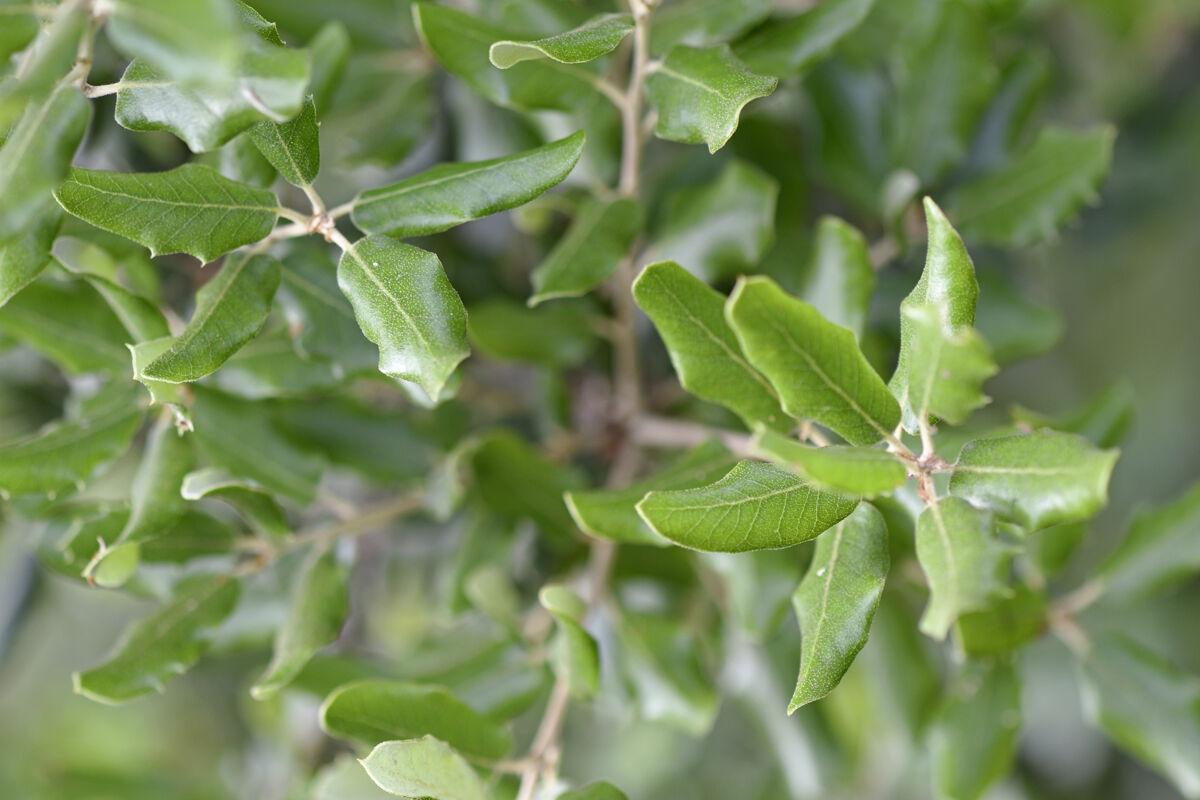
‘Coriaceous’ literally means leathery, but in botany it describes plants’ ability to survive in extreme conditions.
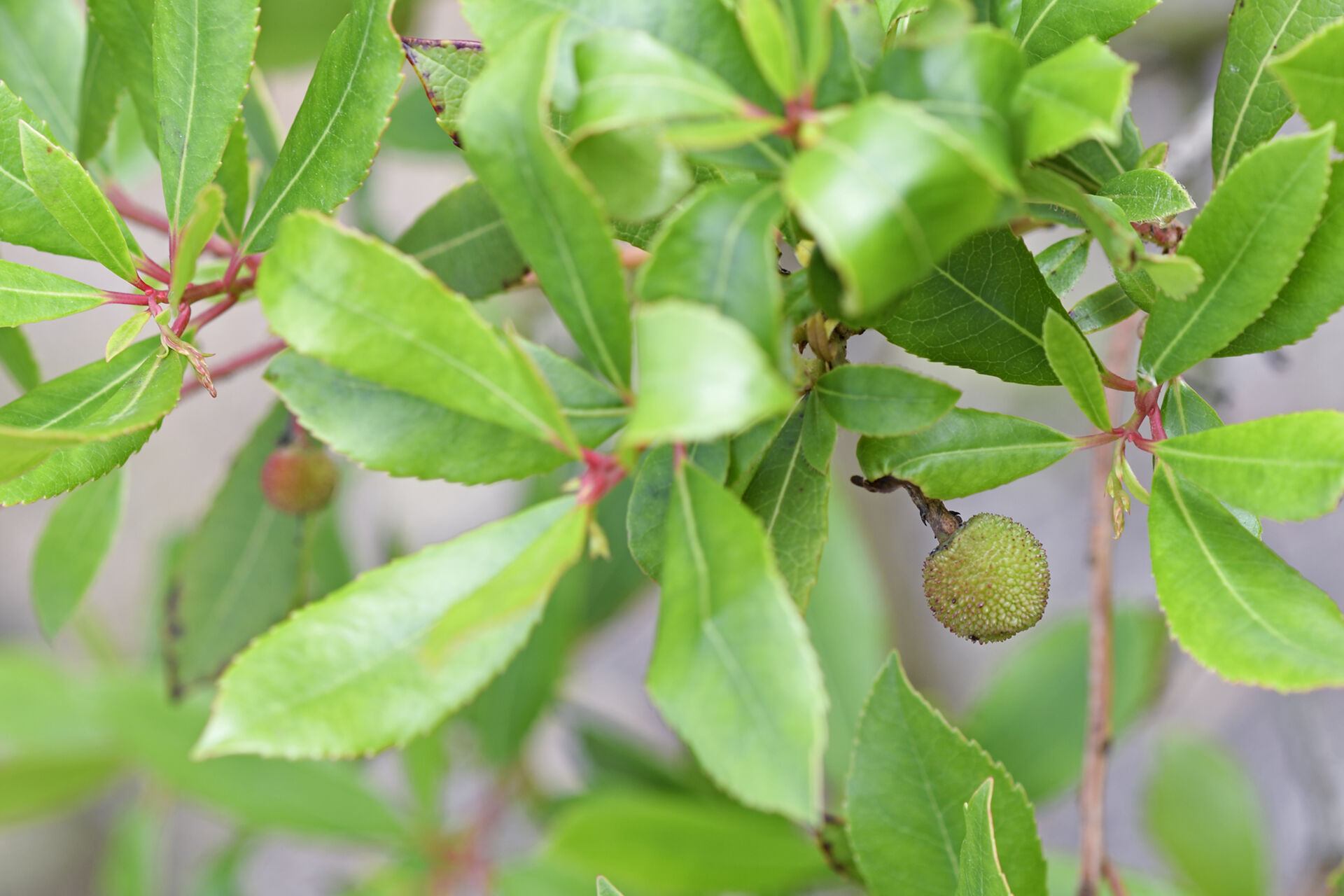
Sclerophylls, for example, are woody plants with coriaceous leaves covered with thick layers of resin or wax, limiting transpiration and making them unappetising. This prevents herbivores from ‘stealing’ the water stored in their leaves.
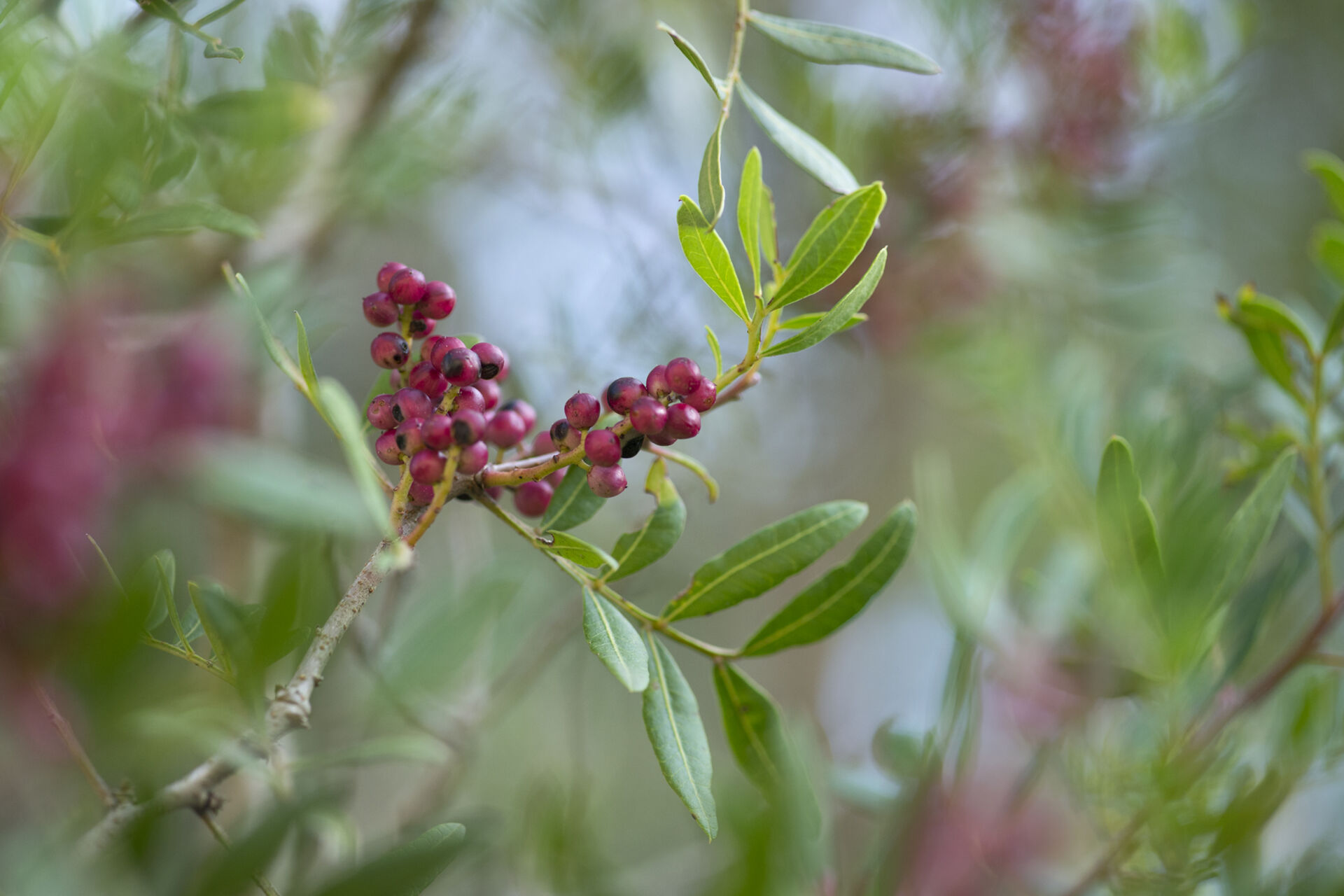
Mastic tree (Pistacia lentiscus)
Giacomo Radi | Rights reservedOne example is the mastic tree (Pistacia lentiscus) commonly found throughout the Mediterranean, mainly in coastal areas, both in the thickest maquis and in clearings. The leathery texture of its leaves makes them very hard to digest.
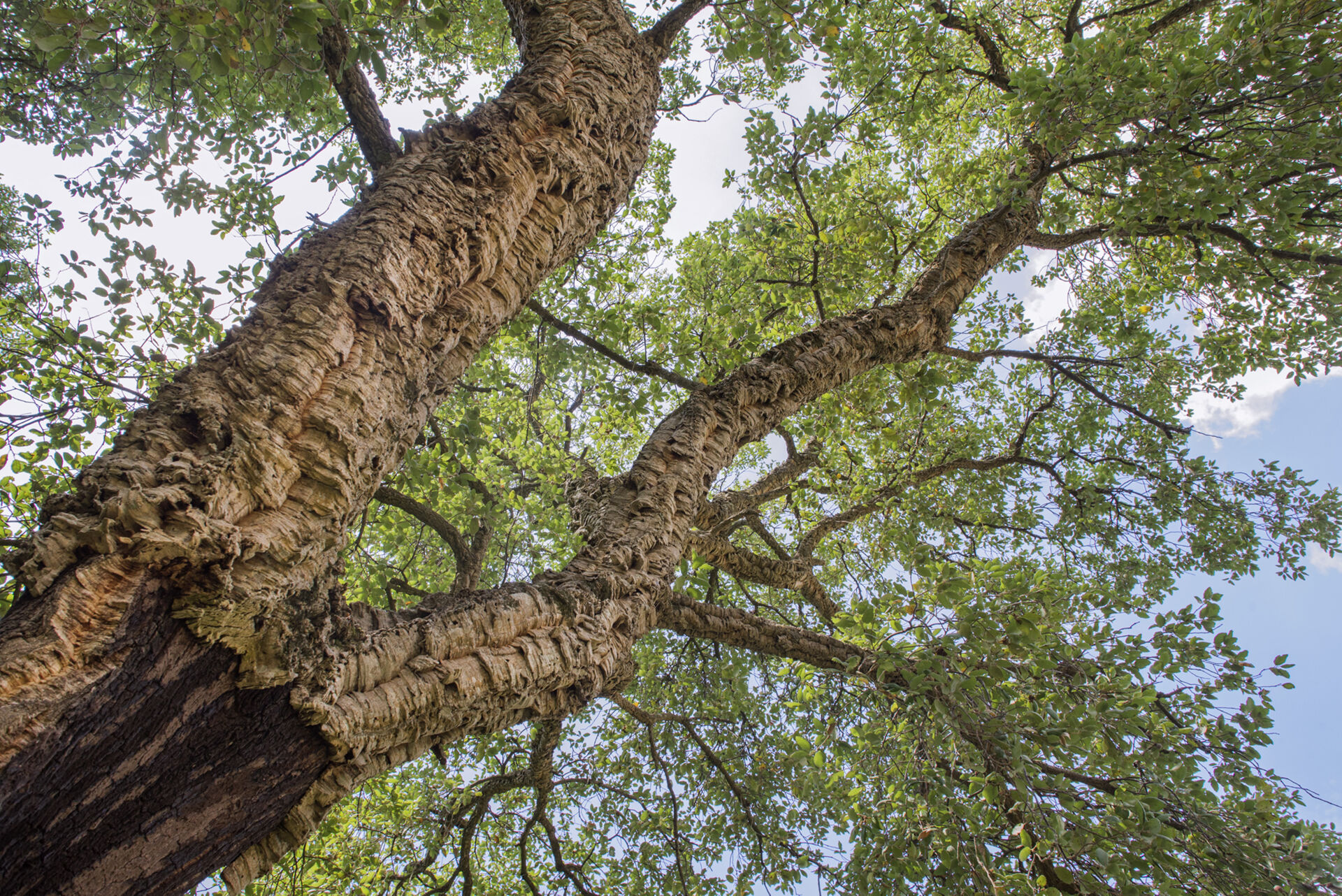
Quercus suber
Giacomo Radi | Rights reservedAn extreme example is the cork oak (Quercus suber). Its defence mechanism is a coating of coriaceous bark, which provides thermal insulation and fire resistance.
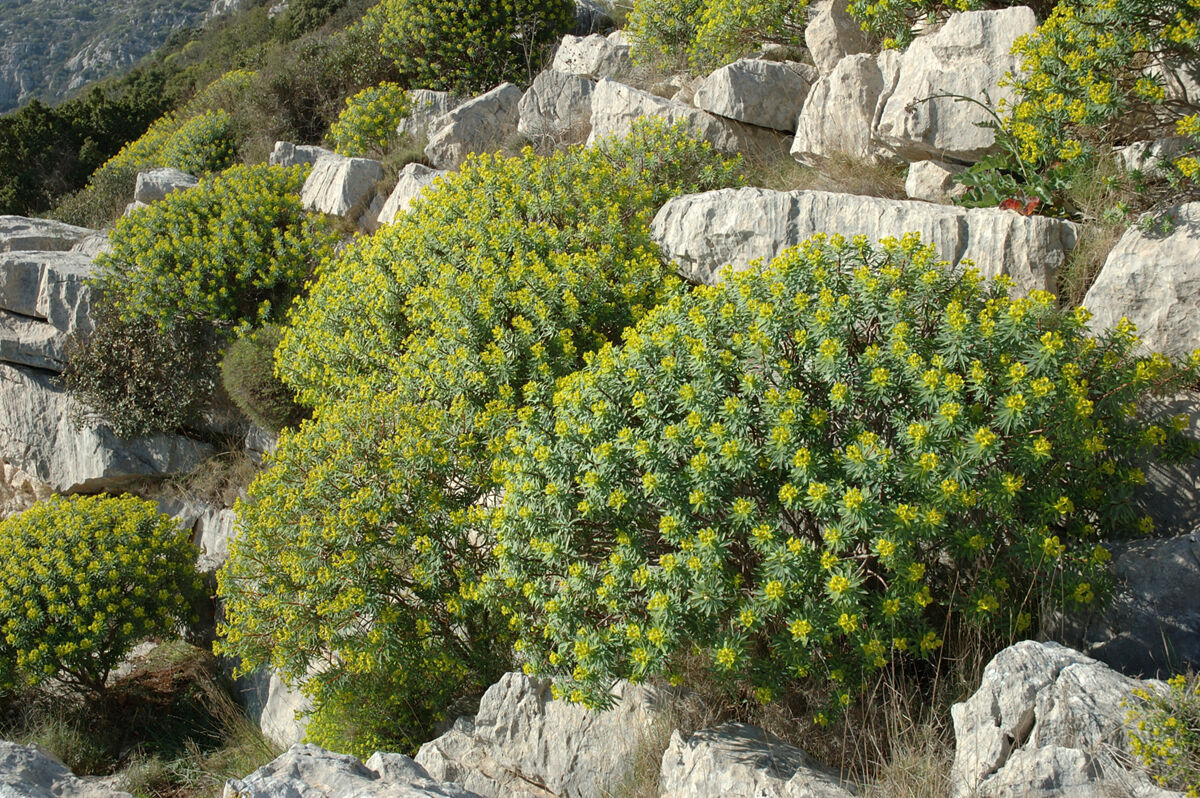
Euphorbia dendroides (without leaves)
Anyone used to the sight of autumn trees and spring flowers in temperate climates will be amazed to see shrubs staying green through winter and losing their leaves in summer.
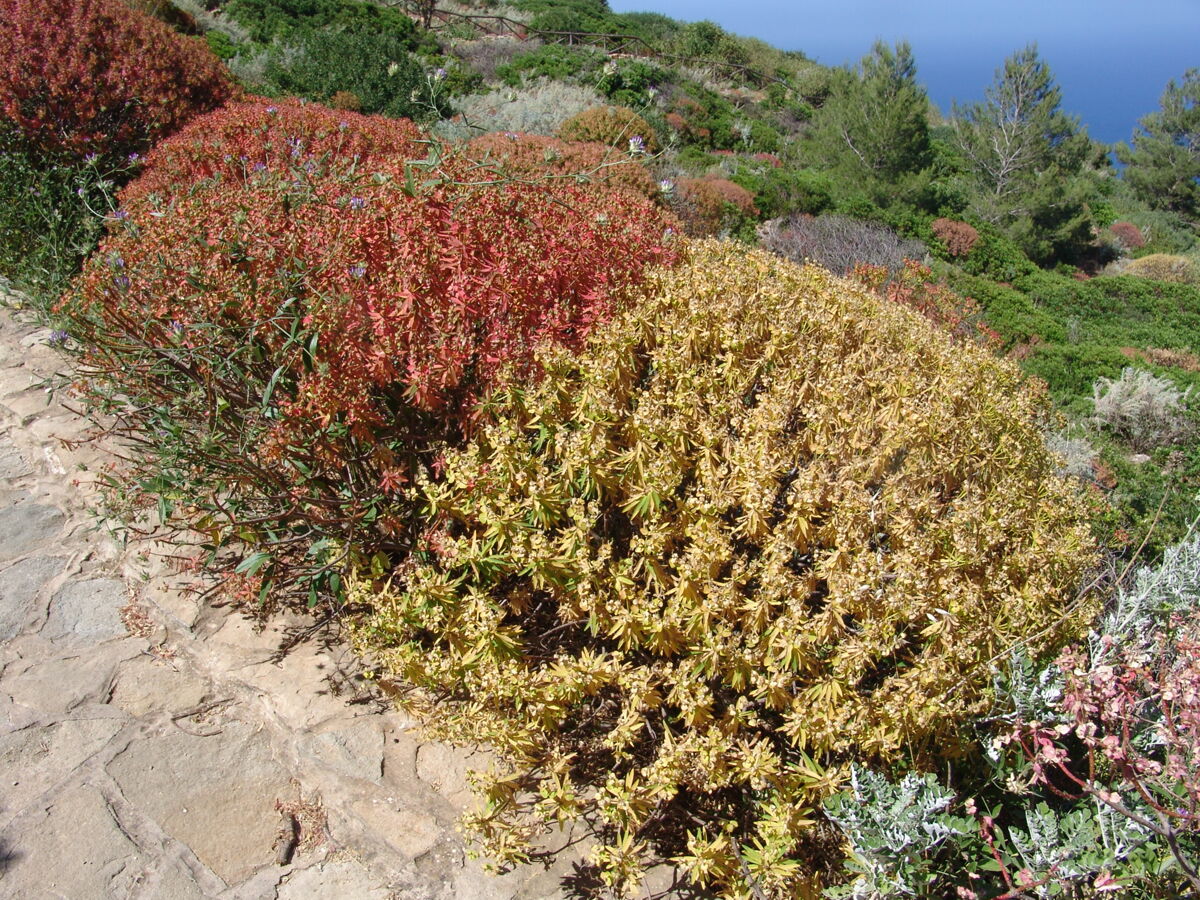
Euphorbia dendroides
These plants, such as the tree spurge (Euphorbia dendroides), stay dormant in summer, since opening the stomata for photosynthesis would evaporate too much water.
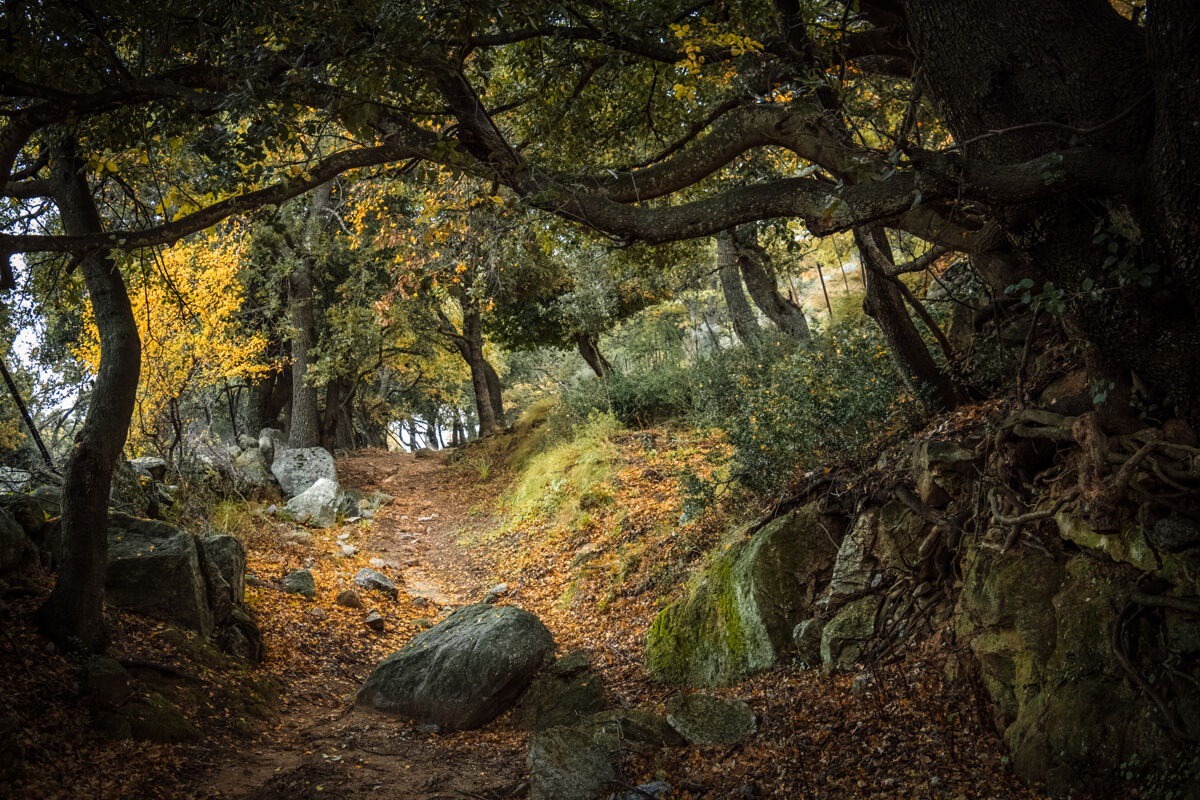
For many species in semi-arid environments, the important thing is to find some shade. The thickets of trees and low shrubs of the maquis protect the ground from the sun’s rays and offer shady, moist and cool shelter for other species too.
Closing the stomata to survive
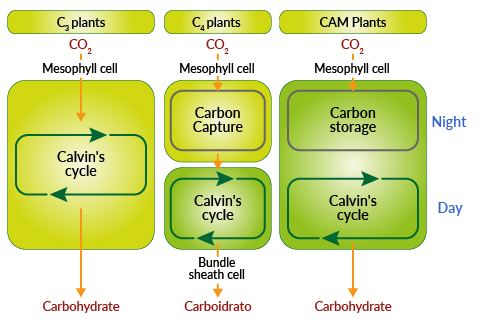
CO2 absorption scheme
Desperate times call for desperate measures. Certain succulents adopt a different approach to photosynthesis. Carbon dioxide (CO2) is absorbed at night instead of during the day and stored as maleic acid, only to be turned back into CO2 and used for photosynthesis during the day. This transformation requires extra energy to be used in the chemical reaction to convert CO2. However, the energy cost is amply repaid since avoiding daytime opening of the stomata allows these plants to reduce water loss effectively.
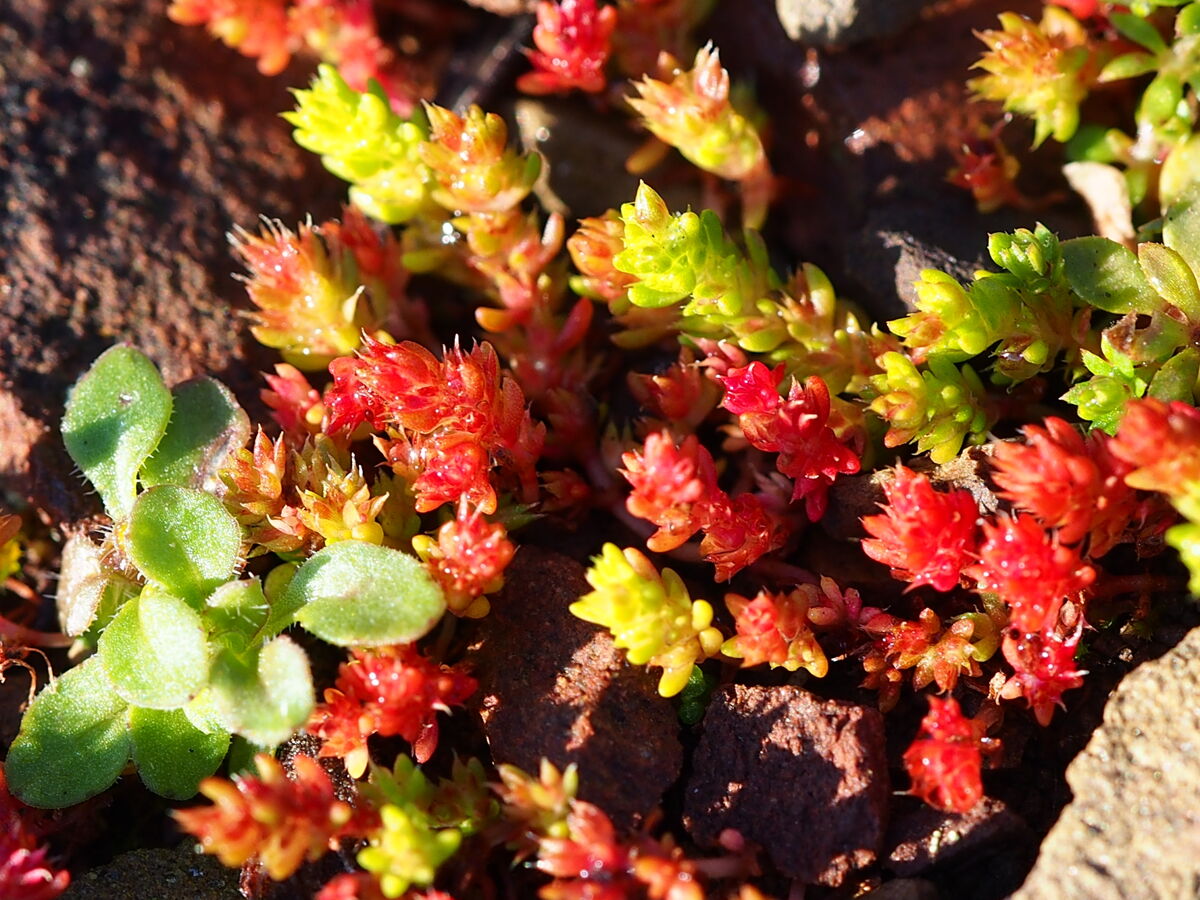
Crassula tillaea.
This photosynthetic mechanism is known as Crassulacean Acid Metabolism or CAM photosynthesis. All the plants in the Crassulaceae family, 170 species of which are found in the Mediterranean basin, use this mechanism, including the common houseleek (Sempervivum tectorum), mossy stonecrop (Crassula tillaea) and starry stonecrop (Phedimus stellatus).
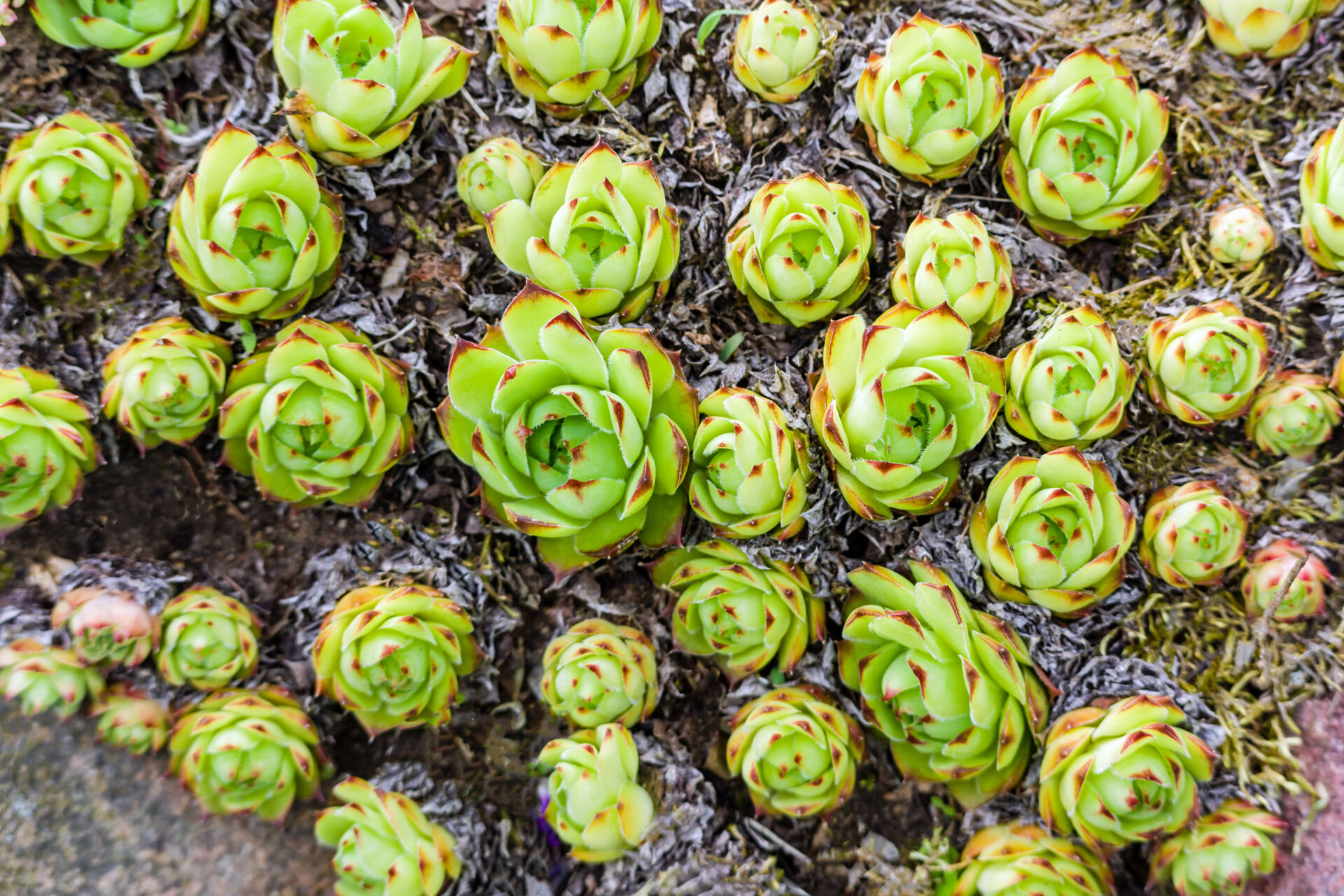
Sempervivum tectorum
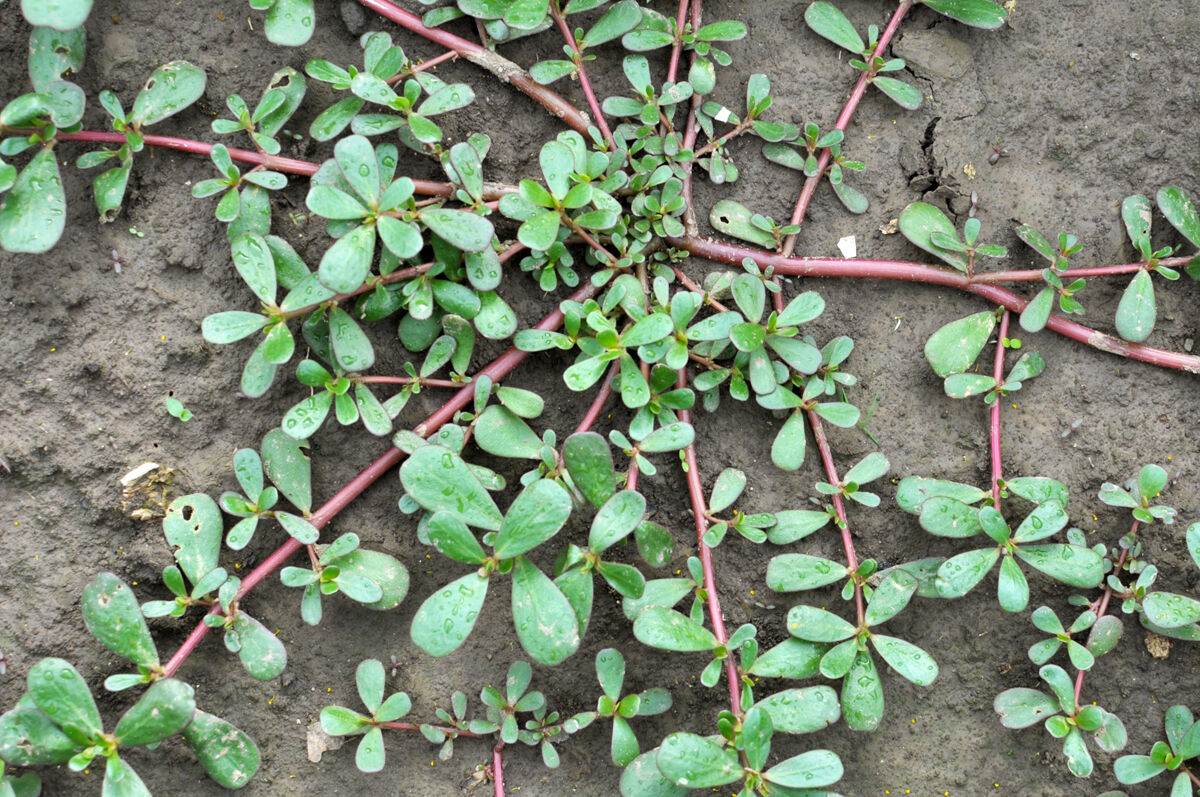
Common purslane (Portulaca oleracea)
Another example is the common purslane (Portulaca oleracea), which is quite widespread in most placesfound in a most countries, which can choose whether to activate CAM photosynthesis.
Using thorns and chemicals to fend off herbivores
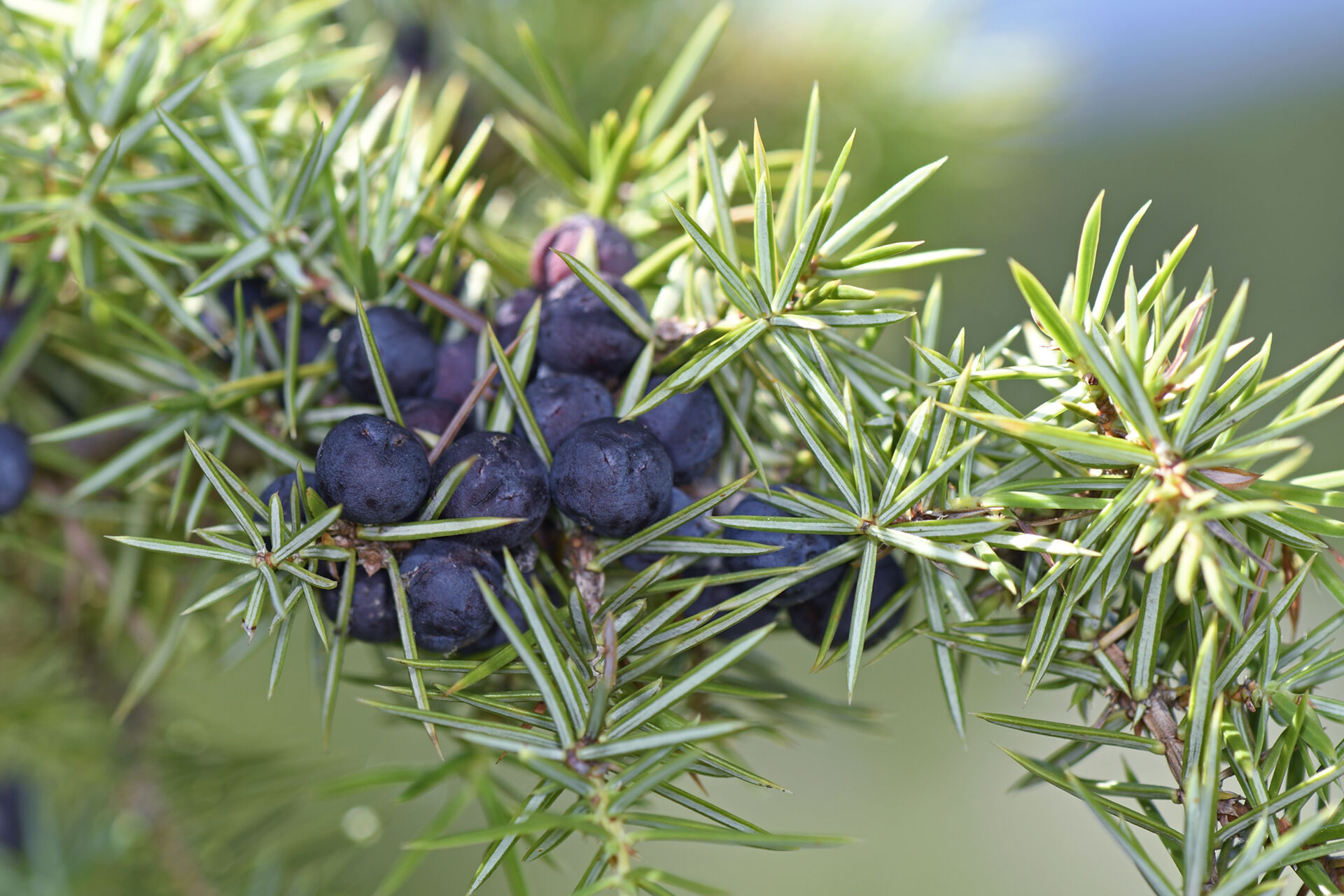
Ginepro
Nicola Destefano | Rights reservedTo protect their water, some species of plant have made themselves unappetising to herbivores, using thorns and unpalatable chemicals to keep grazers away.
These include some spurge species (Euphorbia spp.) that are inedible for most herbivores since their latex is very toxic. These plants do however provide food for the spurge hawk-moth (Hyles euphorbiae) caterpillar, which can digest their foliage due to symbiosis with a special bacterial flora.
Sometimes such defensive toxins are fragrant, which explains the wealth of aromatic plants found in the Mediterranean maquis!
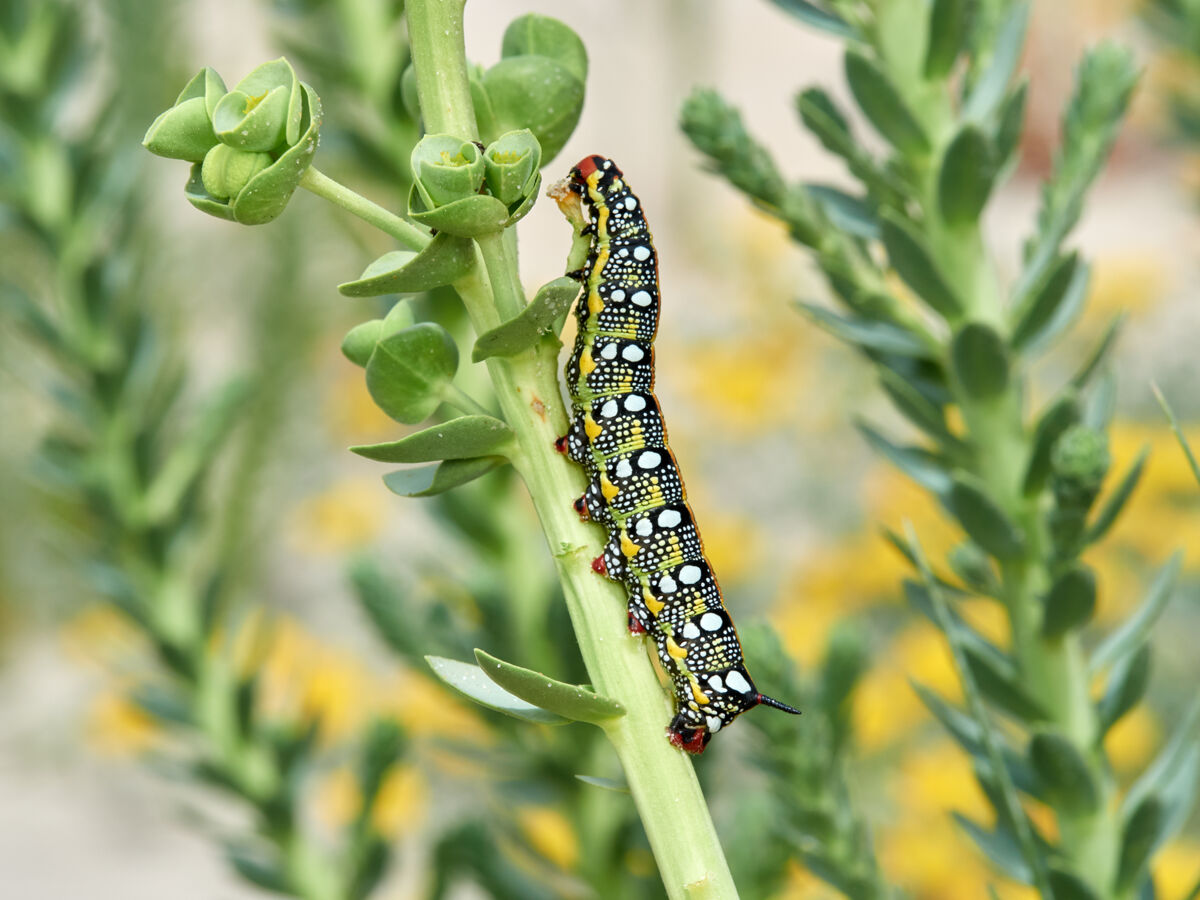
A spurge hawk-moth (Hyles euphorbiae) caterpillar
Thorns are another important defence strategy against herbivores and also protect plants from sunlight and wind.
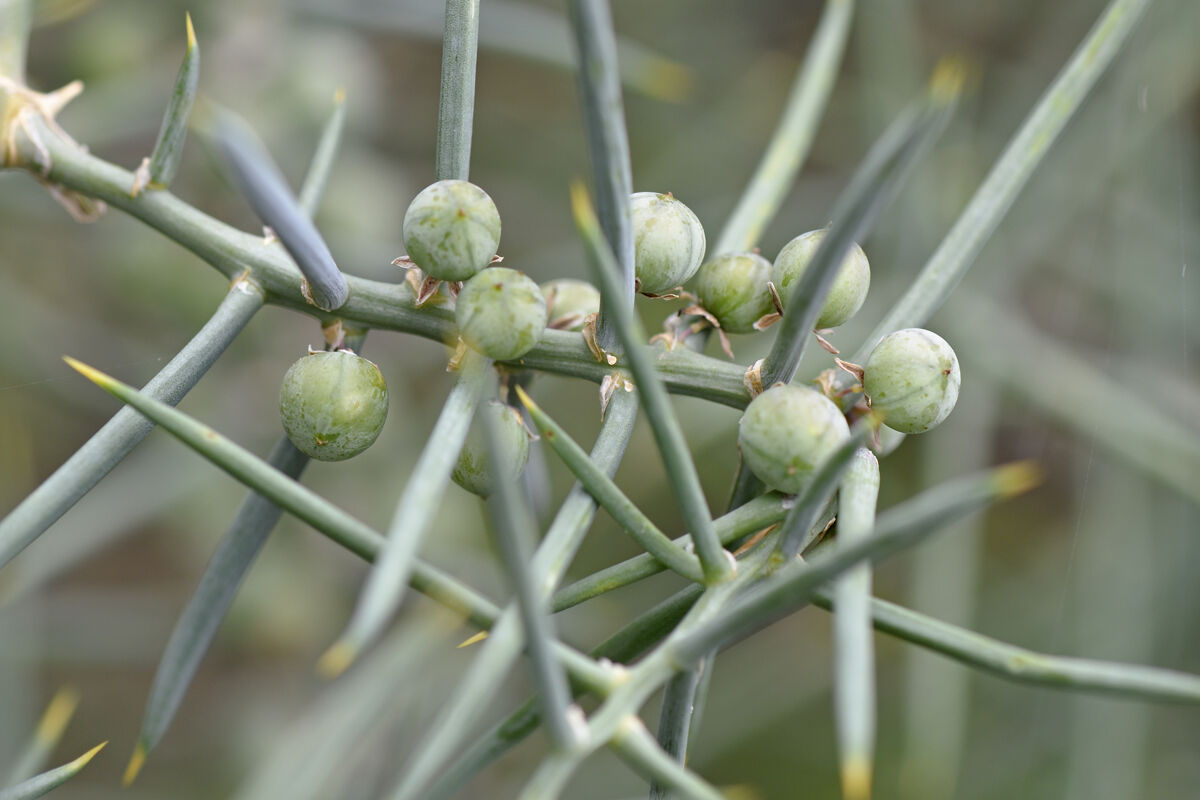
Asparagus horridus
Surviving capturing and storing as much water as possible through the roots
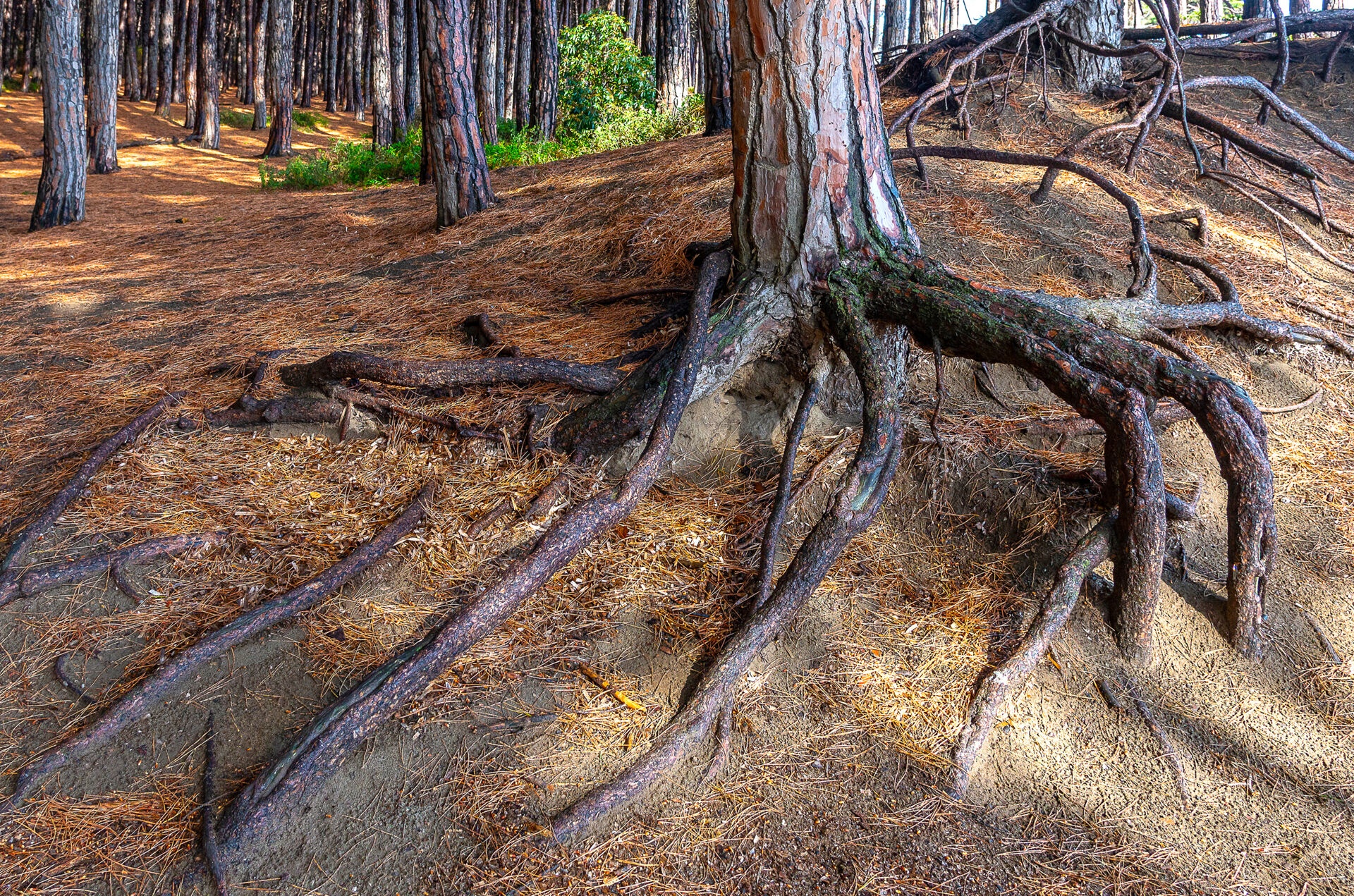
Some plants, especially in more desert areas, manage swift uptake of water during the rare downpours. They do this using a dense surface network of roots that collects most of the water entering the soil.
Other plants search out water deeper in the soil using roots measuring up to one and a half metres in length.
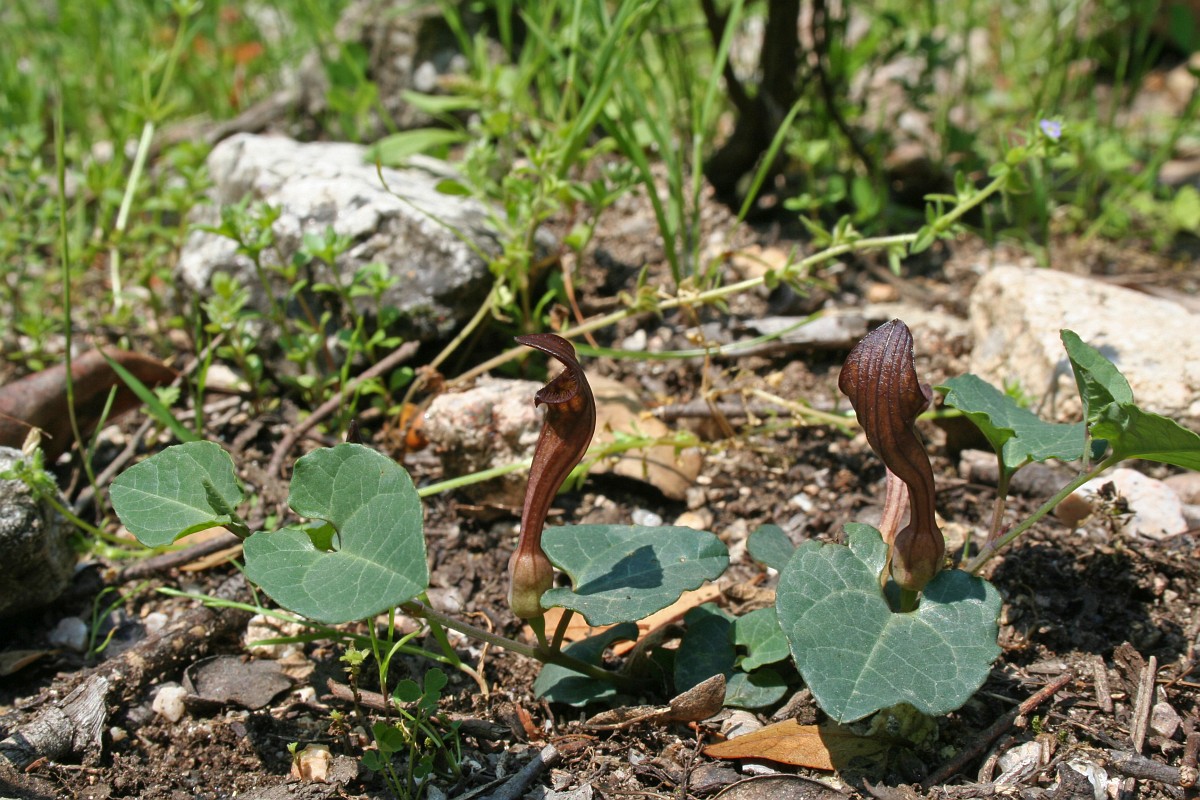
Aristolochia tyrrhena
Jeroen Willemsen | Rights reserved | SaxifragaStill other plants, including those of the birthwort family (Aristolochiaceae), have turned their roots into tubers for water storage. Mediterranean members of the family include Aristolochia tyrrhena and Aristolochia clusii, both considered to be endangered species.
Surviving by varying the germination season
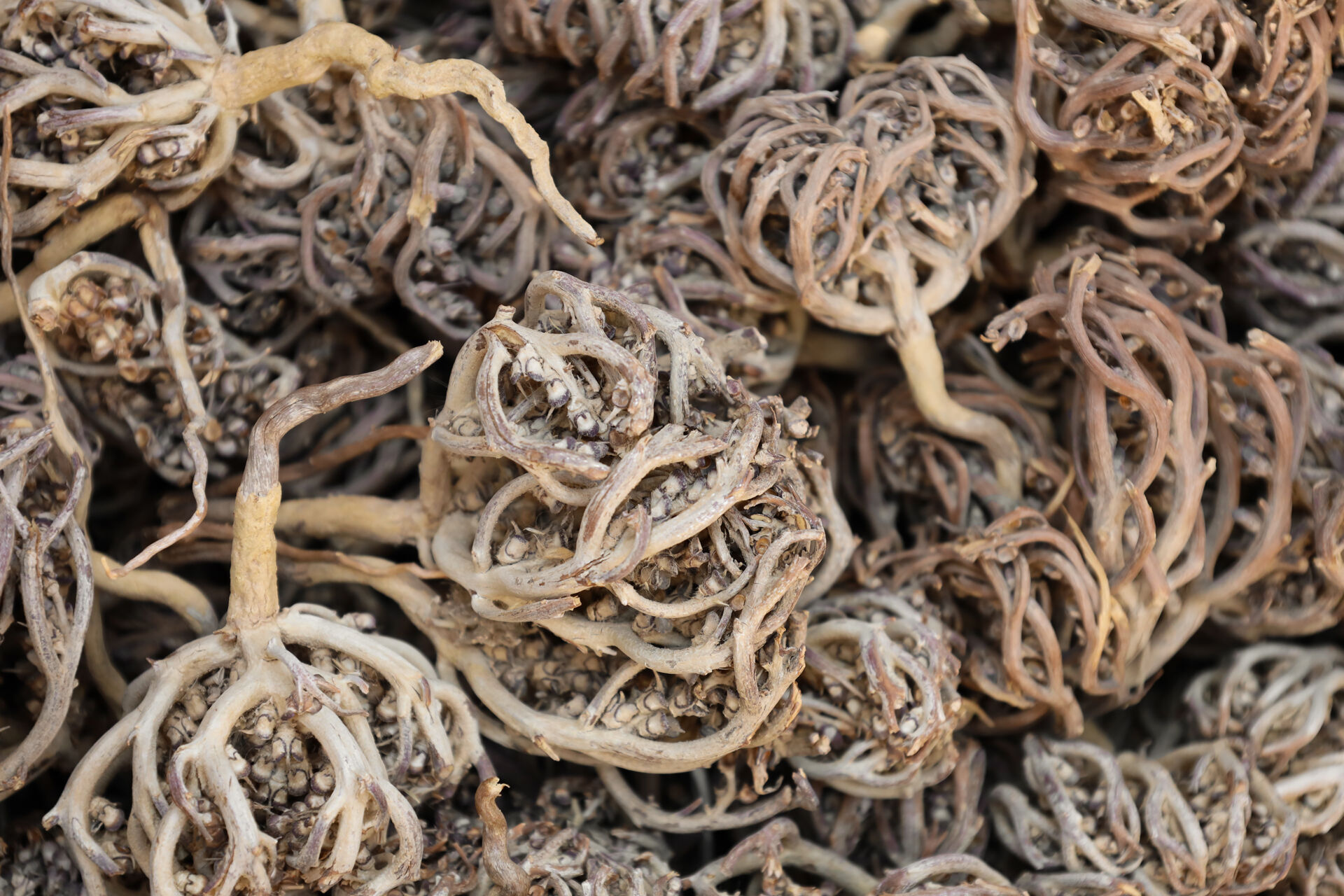
Anastatica hierochuntica, known as the rose of Jericho
Avalepsap | Rights reserved | Adobe StockSome plants in drier areas such as sand dunes produce very hardy seeds that can stay dormant for years.
Other species, including the rose of Jericho (Anastatica hierochuntica), only release their seeds when wet with rainwater.
The seeds take advantage of such favourable conditions to all germinate simultaneously and produce new seeds as long as they have enough water, ensuring the survival of the species.
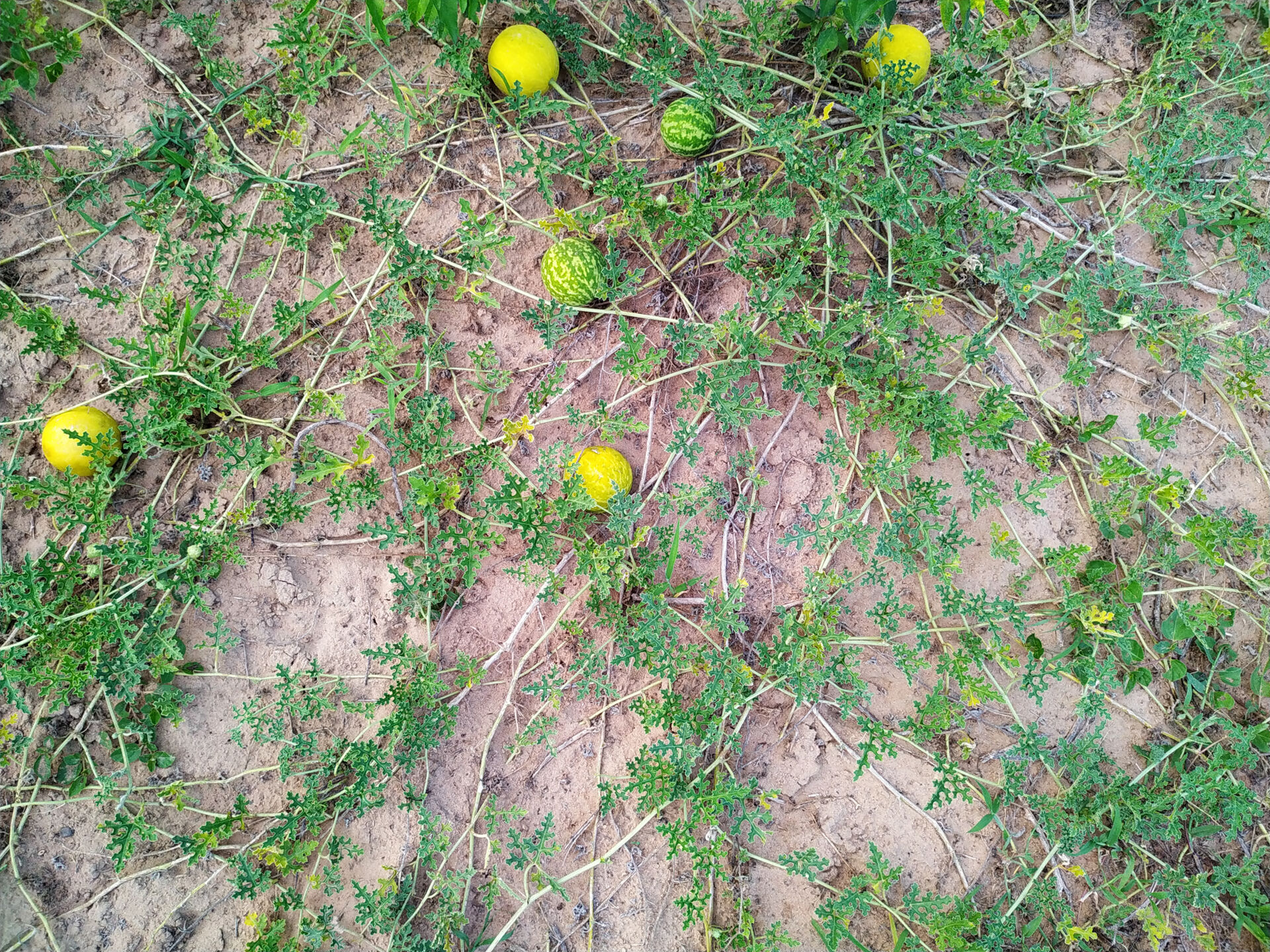
Citrullus colocynthis
DEEP | Rights reserved | Adobe StockThe bitter apple (Citrullus colocynthis) also adopts this strategy. Its coriaceous fruit softens in the rain and release its seeds, ready to germinate and take root.
When in Rome, do as the Romans do
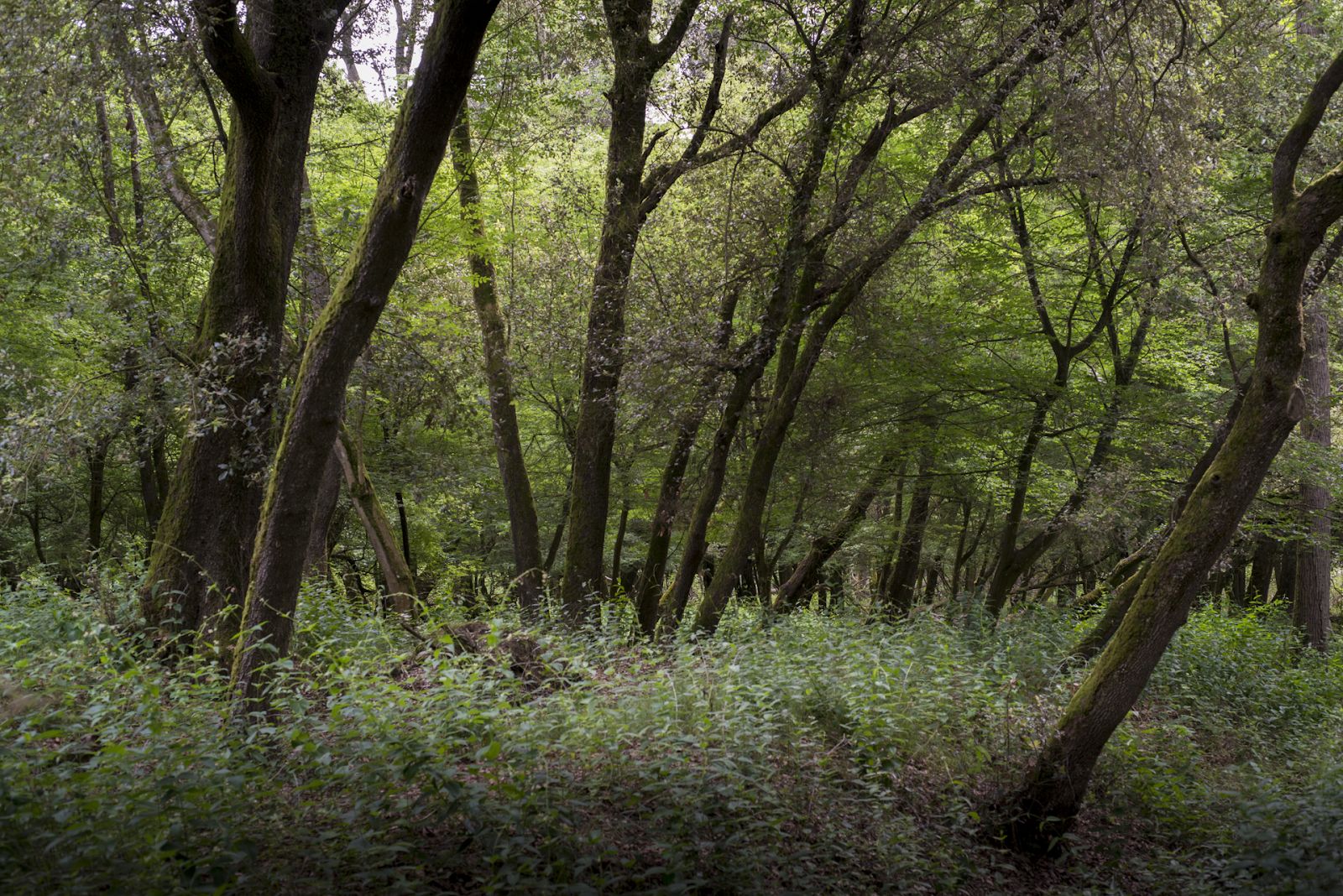
Holm oak thicket in Mesola forest
Silvia Giamberini | Rights reservedPlants growing widely apart, even on different continents, have adapted similarly to the problem of aridity.
In Southwest Australia, for example, banksias grow in woodland as holm oaks do in the Mediterranean, while shrubs including sclerophylls and thorny plants similar to those found in the Mediterranean thrive in more open areas, although they have evolved within completely different families of flora.
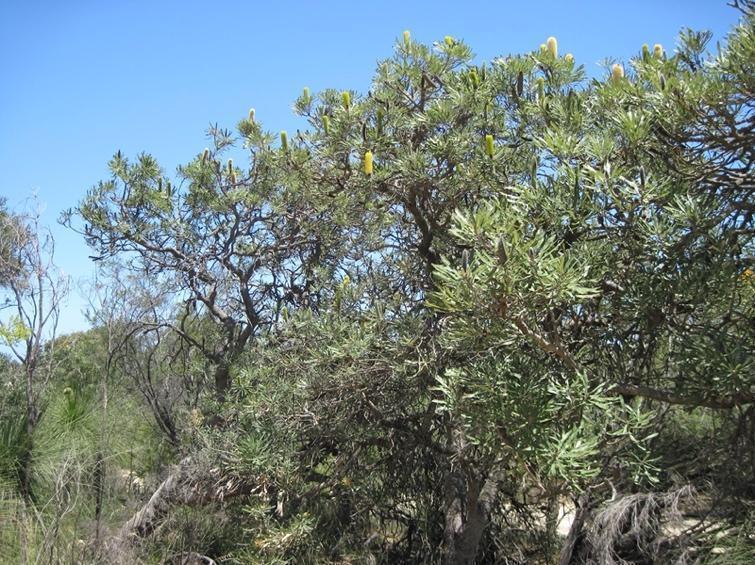
Candlestick banksia (Banksia attenuata) of the Proteaceae family in Western Australia
In the Mediterranean, the ecological function of sclerophylls is fulfilled by woodland rich in evergreen species, such as the European olive (Olea europea var. sylvestris) and the carob (Ceratonia siliqua).
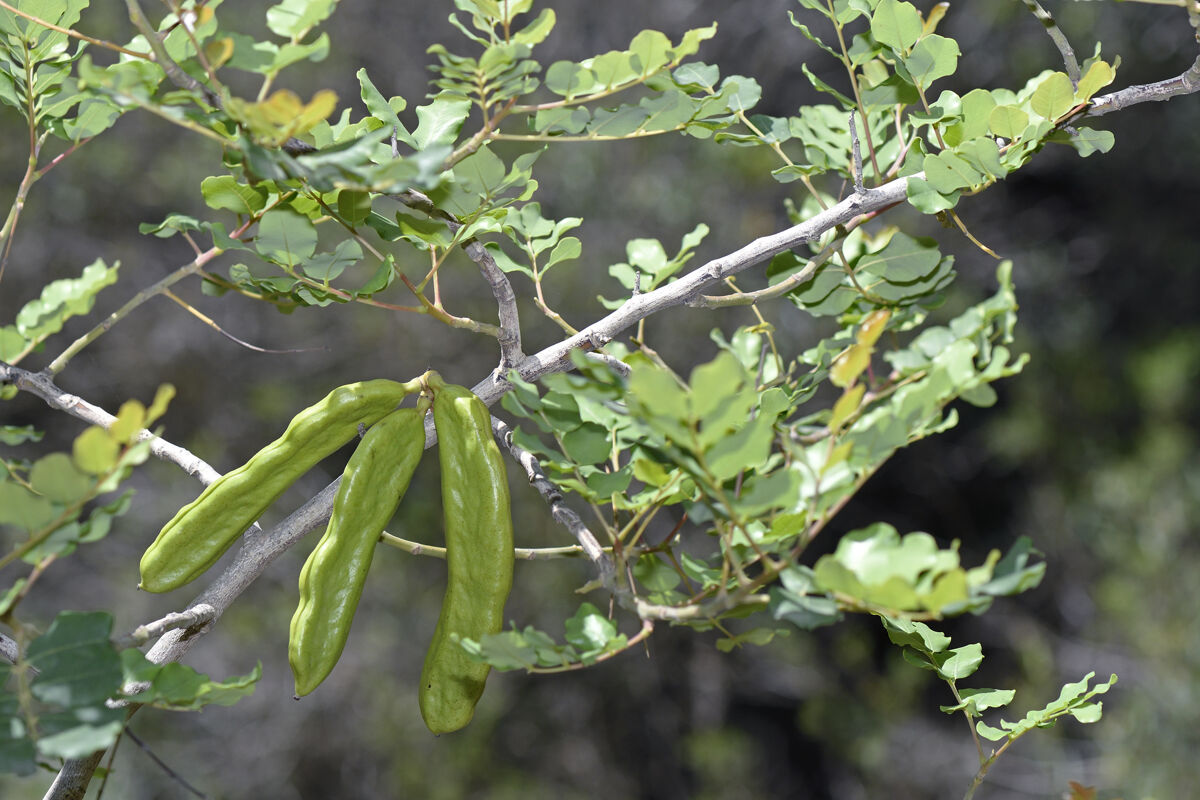
Carrubo (Ceratonia siliqua)
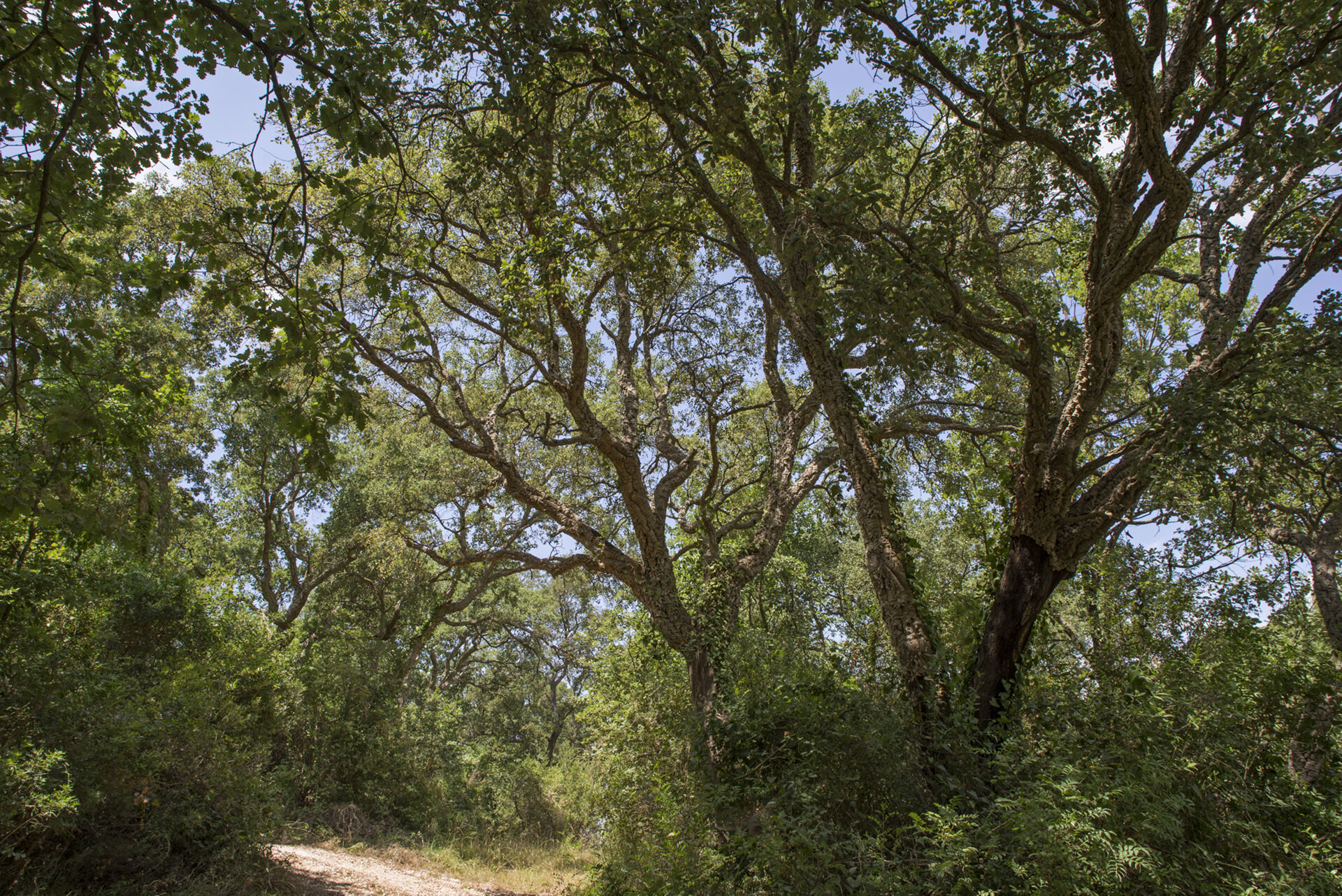
Cork oak (Quercus suber) or holm oak (Quercus ilex), woodland is also very widespread, often rich in other species of semi-deciduous oak (Quercus dalechampii, Q. virgiliana, Q. suber) or other evergreen broadleaved species such as bay trees (Laurus nobilis).
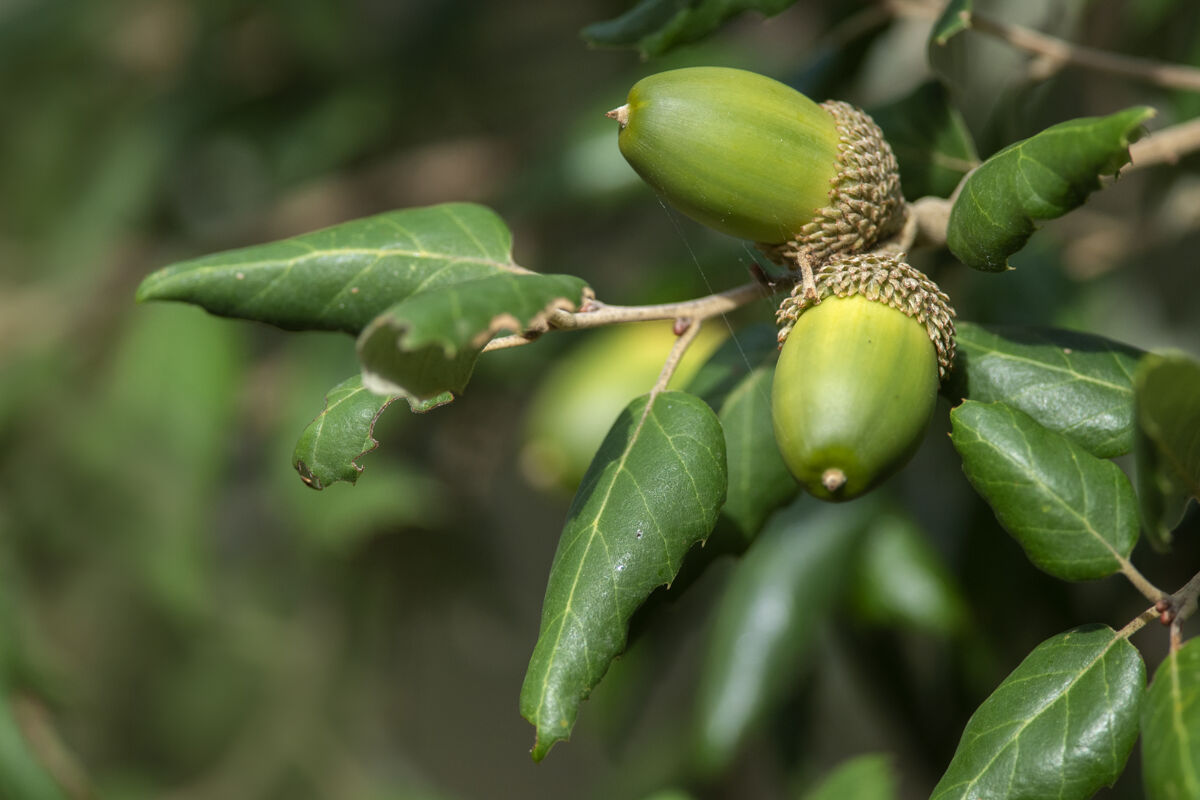
Quercus suber
I’ve never seen you, but we’re alike
It can happen that similar animal and plant species are found separated by seas or even continents. Sometimes they are exemplars of the same species, even though they exist far part.
Similarity between organisms caused by converging evolutionary processes is quite a different matter. Species that are different and distant from one another can evolve similar characteristics in response to a given environmental situation, adopting the same solutions.
The holm oak (Quercus ilex) is one of the most adaptable and hardy Mediterranean trees, constituting the most common type of sclerophyll woodland in Italy.
Its immense lifespan can reach up to 1000 years. Several monumental specimens of the species are to be found in Italy, including the ‘Ilice di Carrinu’ in the municipality of Zafferana on the slopes of Etna.
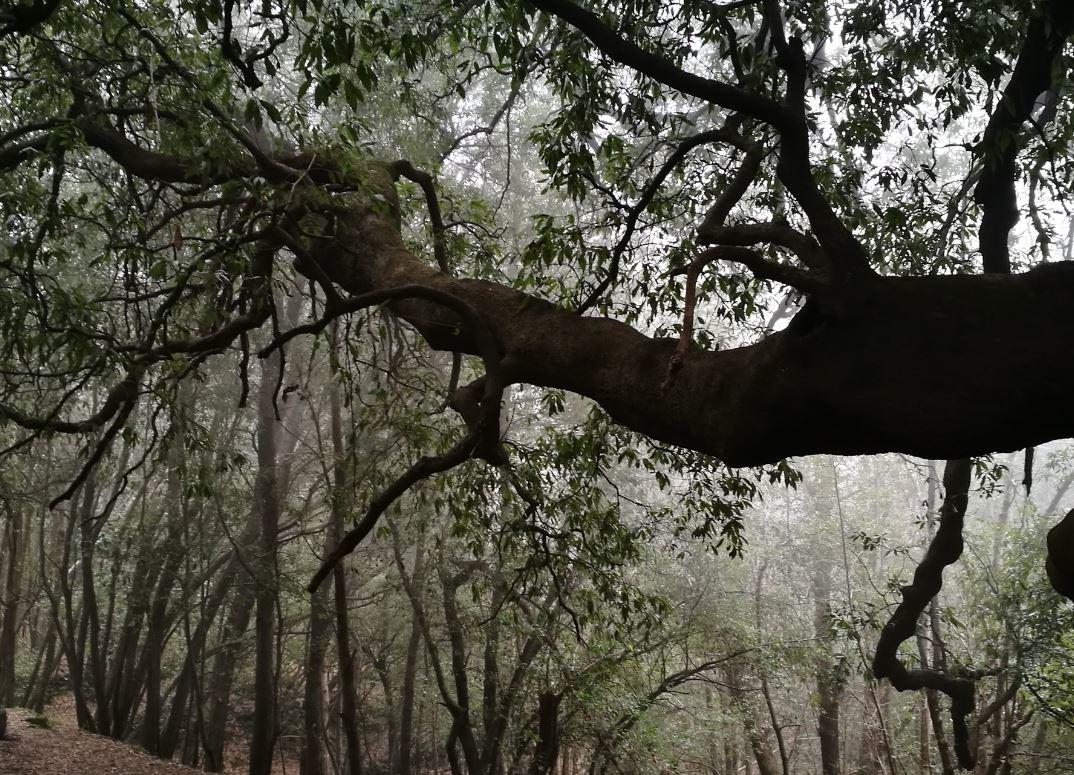
Ilice di Carrinu, Zafferana, Sicily. The tree is at least 800 years
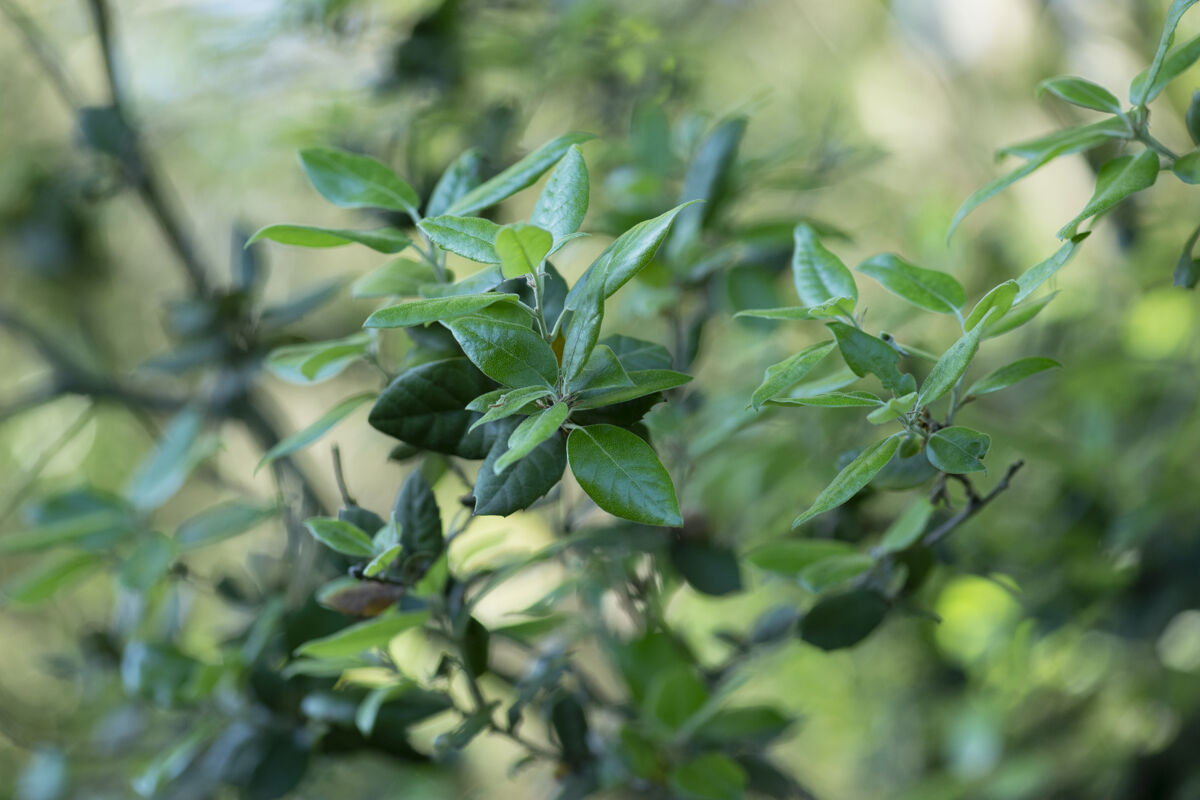
Quercus ilex
The holm oak has coriaceous leaves with an average lifespan of two to three years and produces acorns, a sought-after food source for wildlife.
This tree dominates the most typical and mature Mediterranean plant environments and was considered one of the key tree species of the lucus, the sacred grove of the ancient Romans. The Latin word lucus (lucem, lux, light) indicates a clearing in the woods open to the sun’s rays, and it is no coincidence that the holm oak grows best in direct sunlight.
Holm oak woodland is not found exclusively in the Mediterranean. This plant can adapt to a range of habitats and is found in Italian peninsular coastal environments up to a height of 1000 metres, on inland hills, on the Italian mainland and islands and less frequently in the foothills of the Alps.
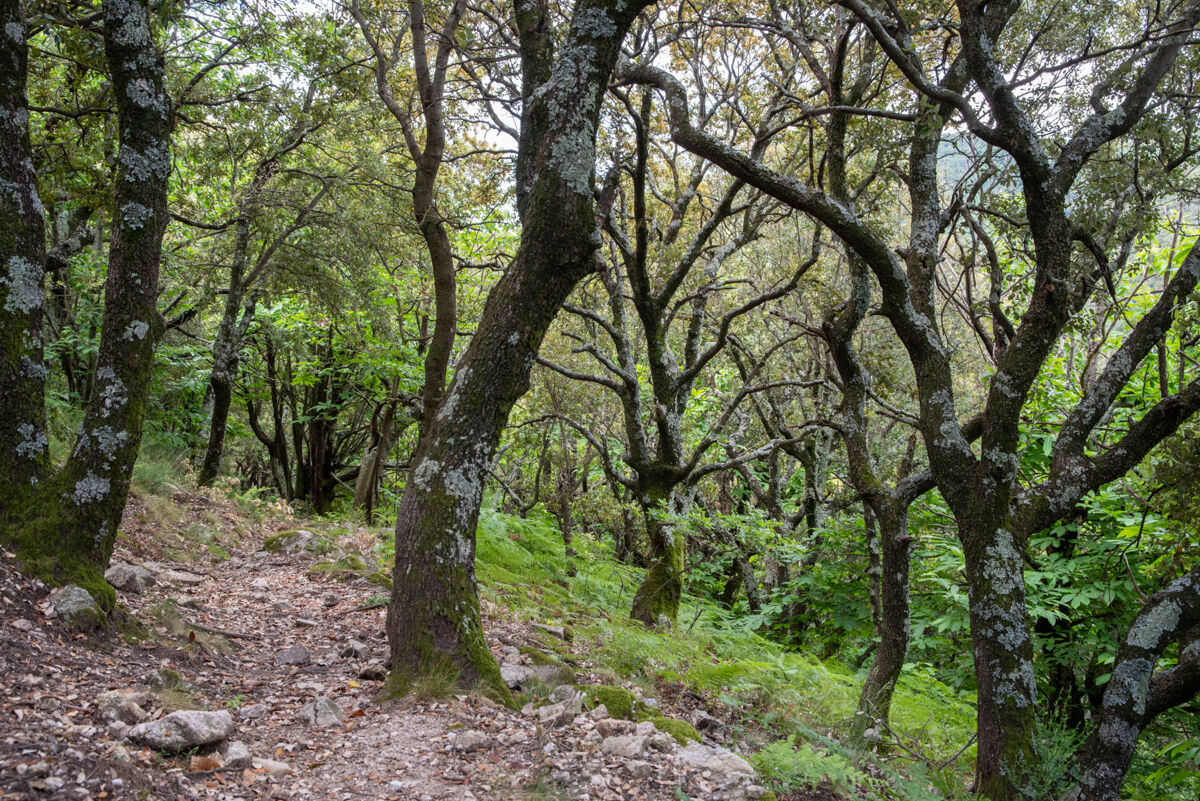
Lecceta
Despite its adaptability, survival is anything but simple for the holm oak. The ancient holm oak woods, so typical of Mediterranean landscapes, were cut down in past centuries for grazing and agriculture, or were overtaken by maquis. Today its presence in coastal areas is scattered, often constituting a relictual population. Many holm oak forests are now protected under the Habitats Directive, careful and sustainable forestry management being an essential means of ensuring the development and protection of such woodland.
The ilex groves, ancient forests of the Mediterranean
Elisa Carrari (University of Florence) explains how holm oak woodlands are forest communities populated by this, the most widespread evergreen oak species, and typical fauna. She stresses that it is important to monitor the effects on this type of vegetation of climate change, which, together with the excessive presence of herbivores, threatens the conservation of such typical Mediterranean woodlands.

