
Flying over the Arctic
The winged inhabitants of one of the most extreme environments on our planet
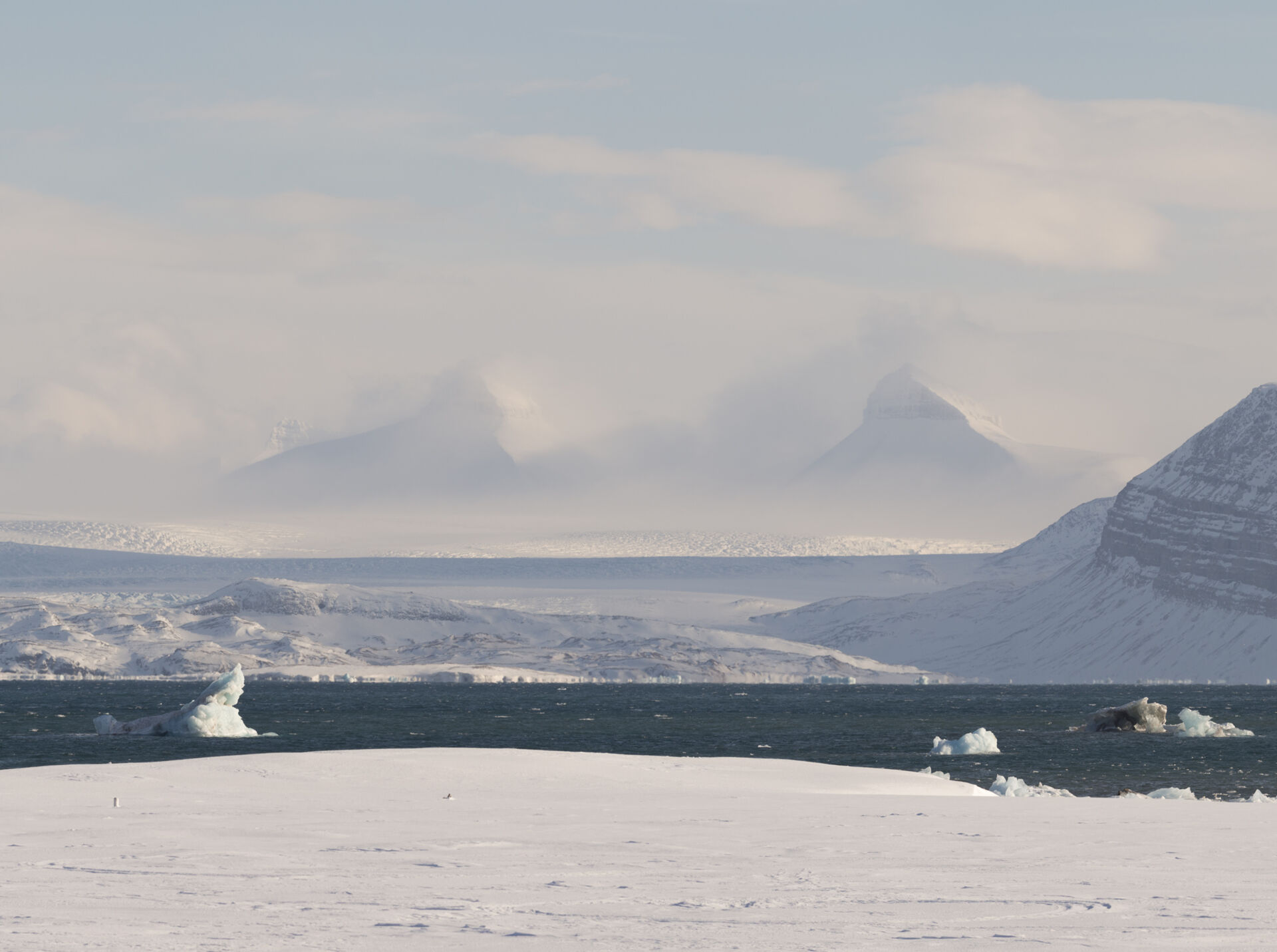
Kongsfjorden, Svalbard (Norway)
Silvia Giamberini | Rights reservedThe Arctic is one of the most fascinating regions on Earth. Everything is extreme here: the air and water temperatures, the wind, the seasons, the cliffs... Given all of this, we might expect to find an almost lifeless environment here, a kind of ‘biological desert’.
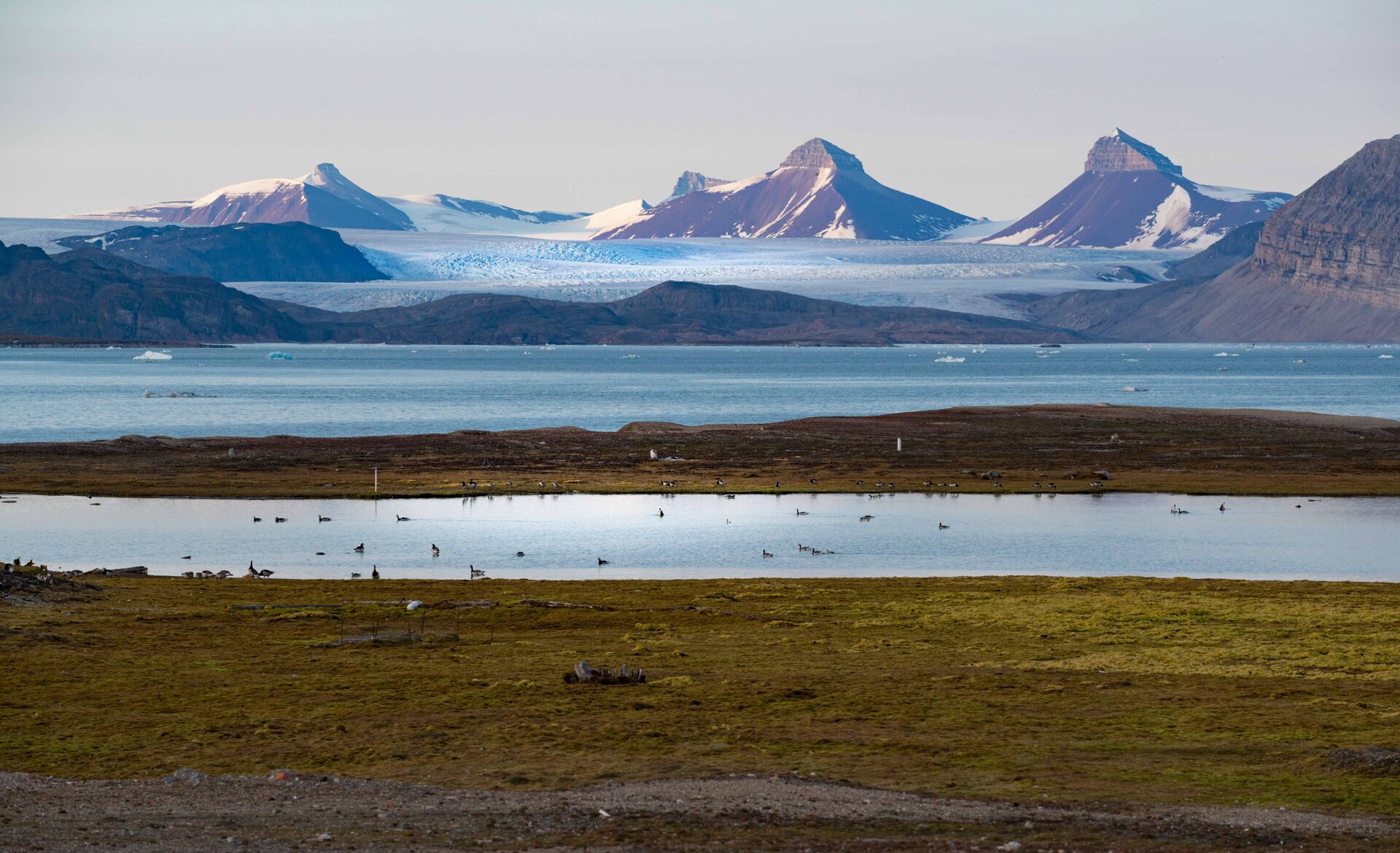
Nothing could be further from the truth. A host of animals live in the Arctic or migrate there to breed: the short but intense summer, with long hours of light and an almost endless supply of water from the melting ice and snow, allows rapid growth of vegetation, with numerous insects developing thanks to the light and the formation of surface marshlands.
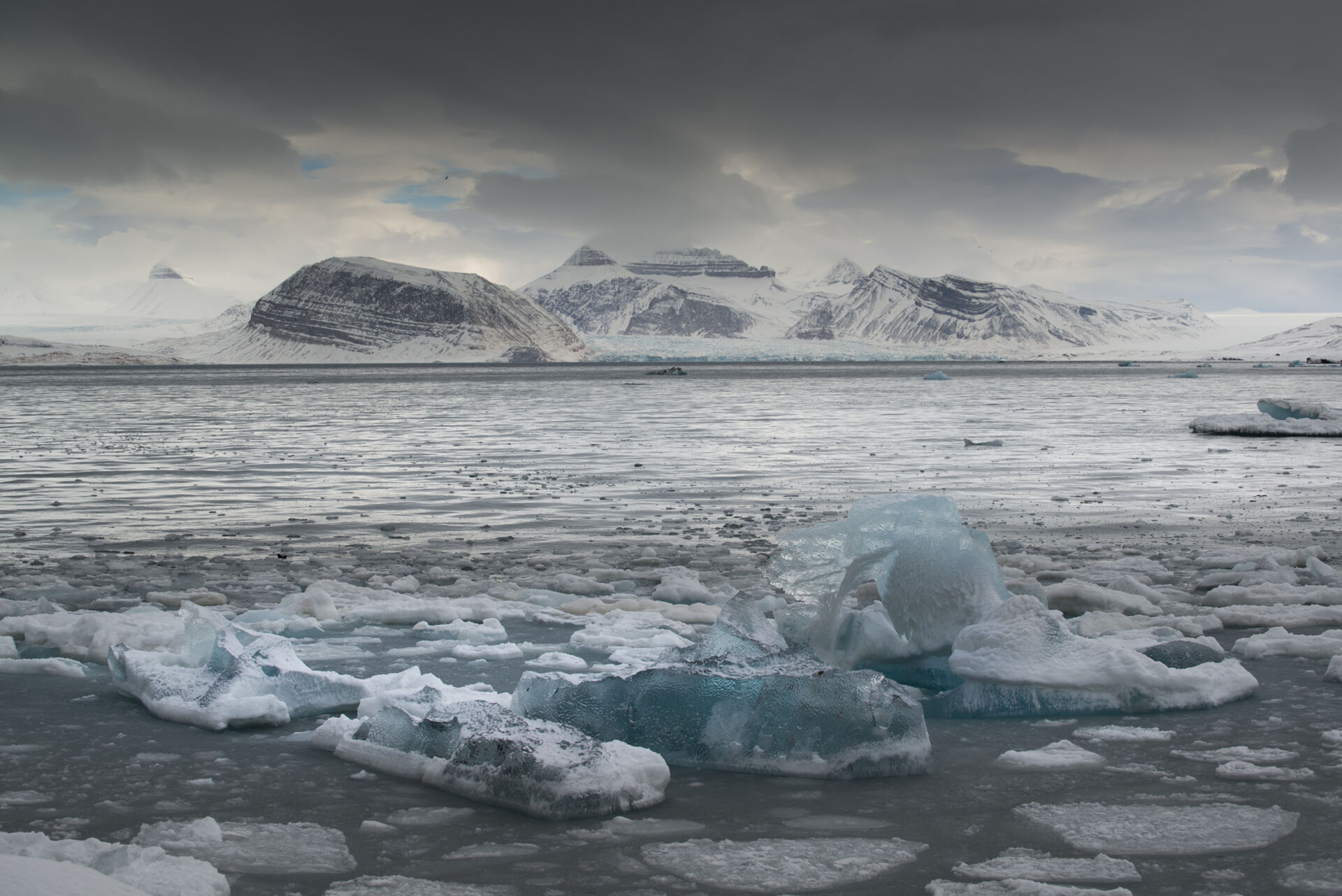
The frigid waters of the polar seas are also considered to be among the most productive in the world. These regions are populated by a great number of animals, especially in the summer, thanks to the presence of these food sources.
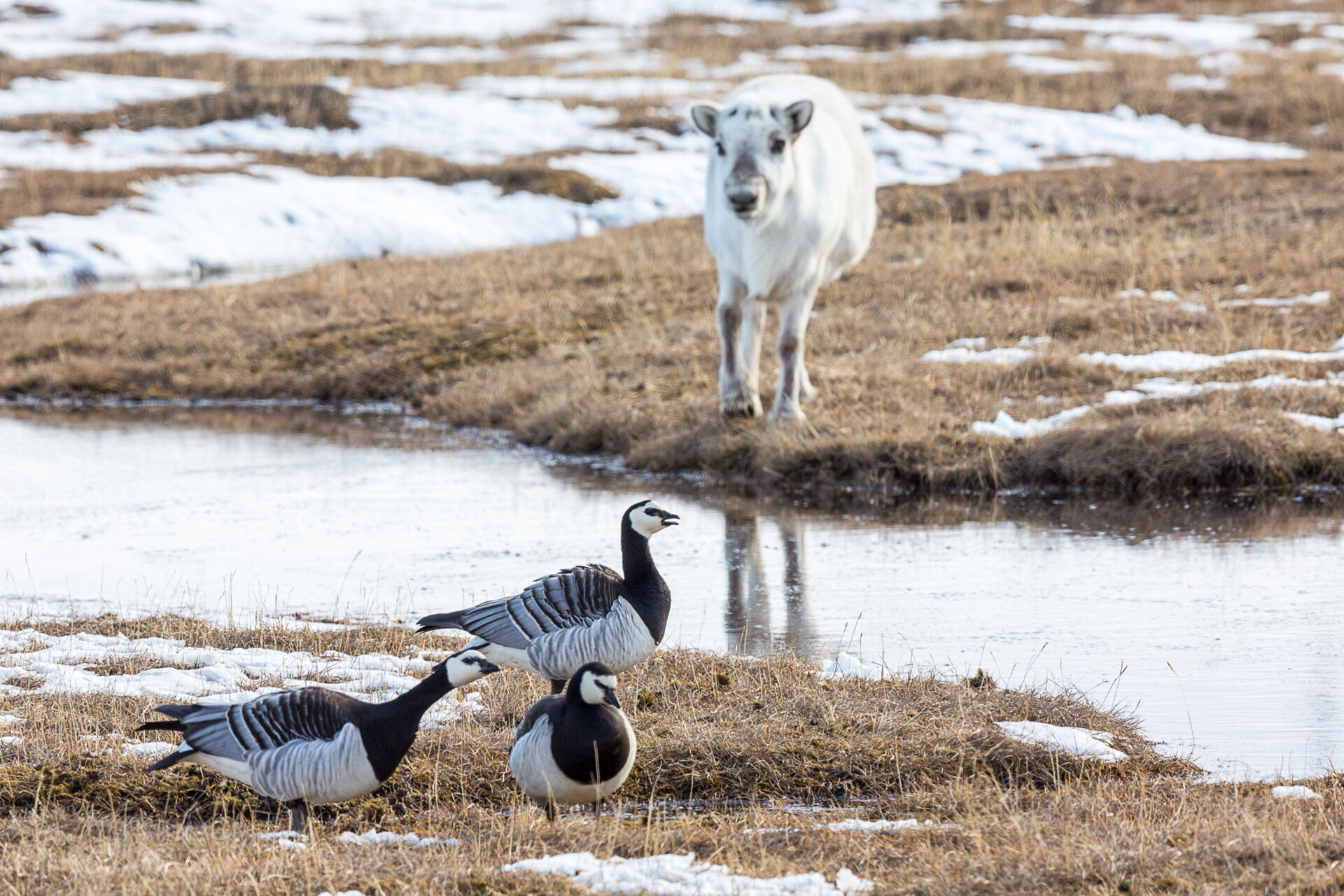
Birds are among the animals best able to take advantage of these surroundings, thanks to their ability to travel to wherever conditions are best-suited to their needs.
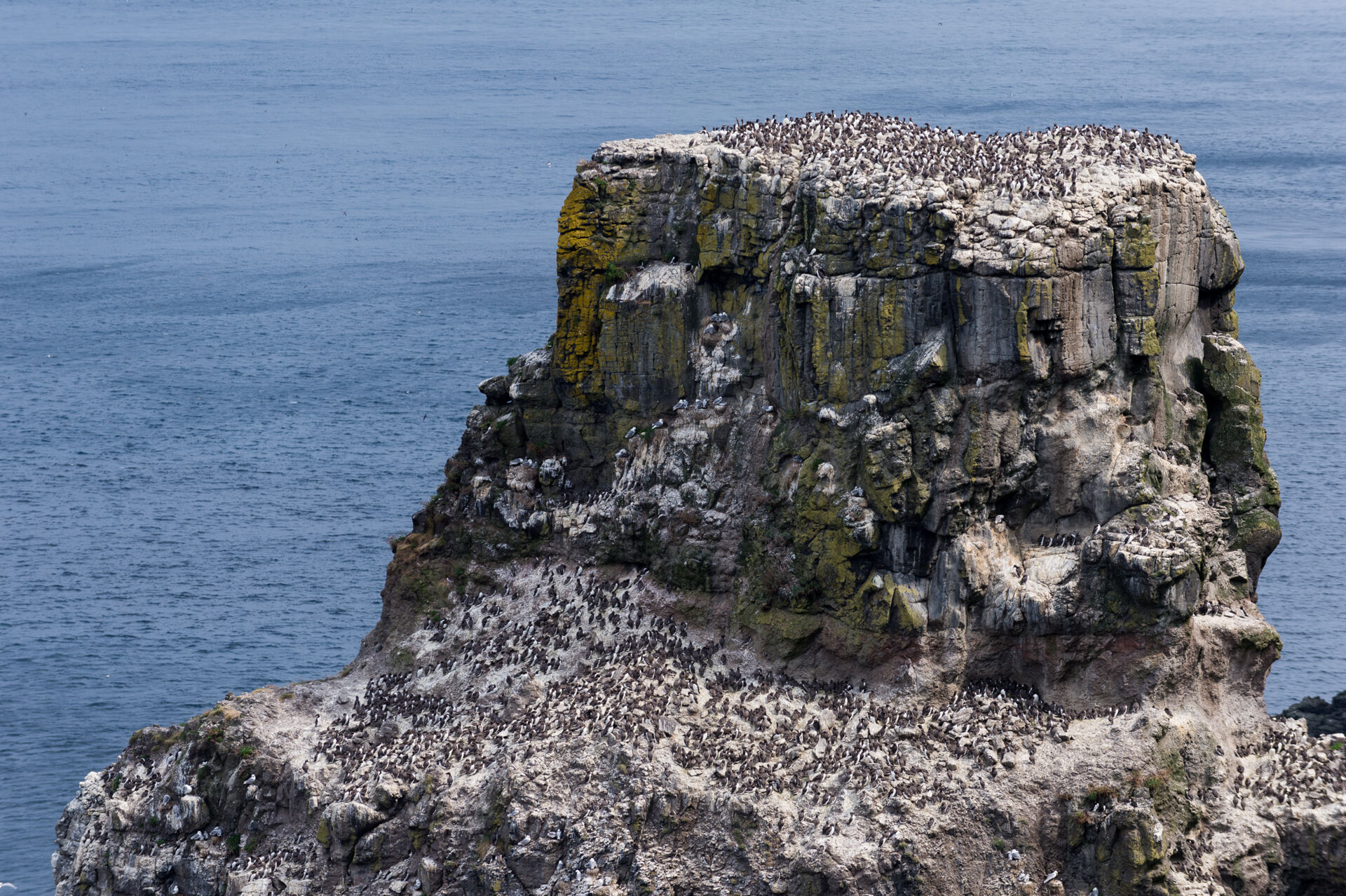
Colony of birds, Arctic
Andrea De Zan | Rights reservedThe Arctic is inhabited by literally hundreds of millions of birds, most of which only stay there for the summer.
At least 1,536 breeding colonies have been recorded on the Svalbard archipelago alone, belonging to 18 seabird species. Each colony is made up of hundreds of birds, with an estimated total of 2.8-3.1 million pairs, not counting chicks and non-breeding adults.
And we are counting just the seabirds!
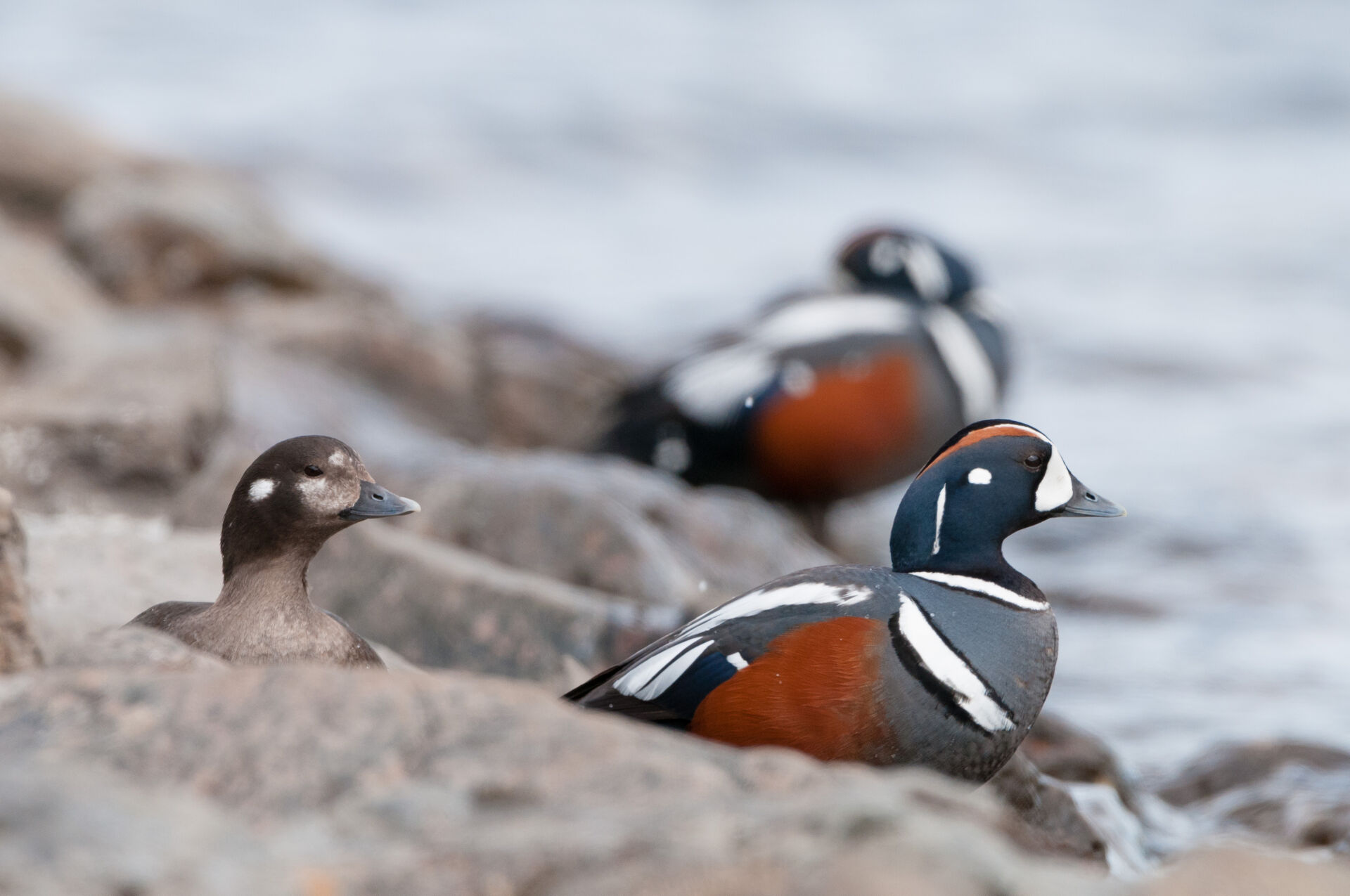
Harlequin duck
Andrea De Zan | Rights reservedHowever, seabirds are not the only regular visitors to Svalbard during the lively summer season. Various migratory species travel to the archipelago to nest in the tundra. These include a range of waterfowl, especially members of the Anatidae family, such as geese, as well as waders, which also frequent the inland wetlands.
Land birds are less common, the most notable Svalbard rock ptarmigan (Lagopus muta hyperborea) and the snow bunting (Plectrophenax nivalis). The first is the only land bird to live on Svalbard all year round, while the second is the only passerine found there.
Travelling for survival: migration
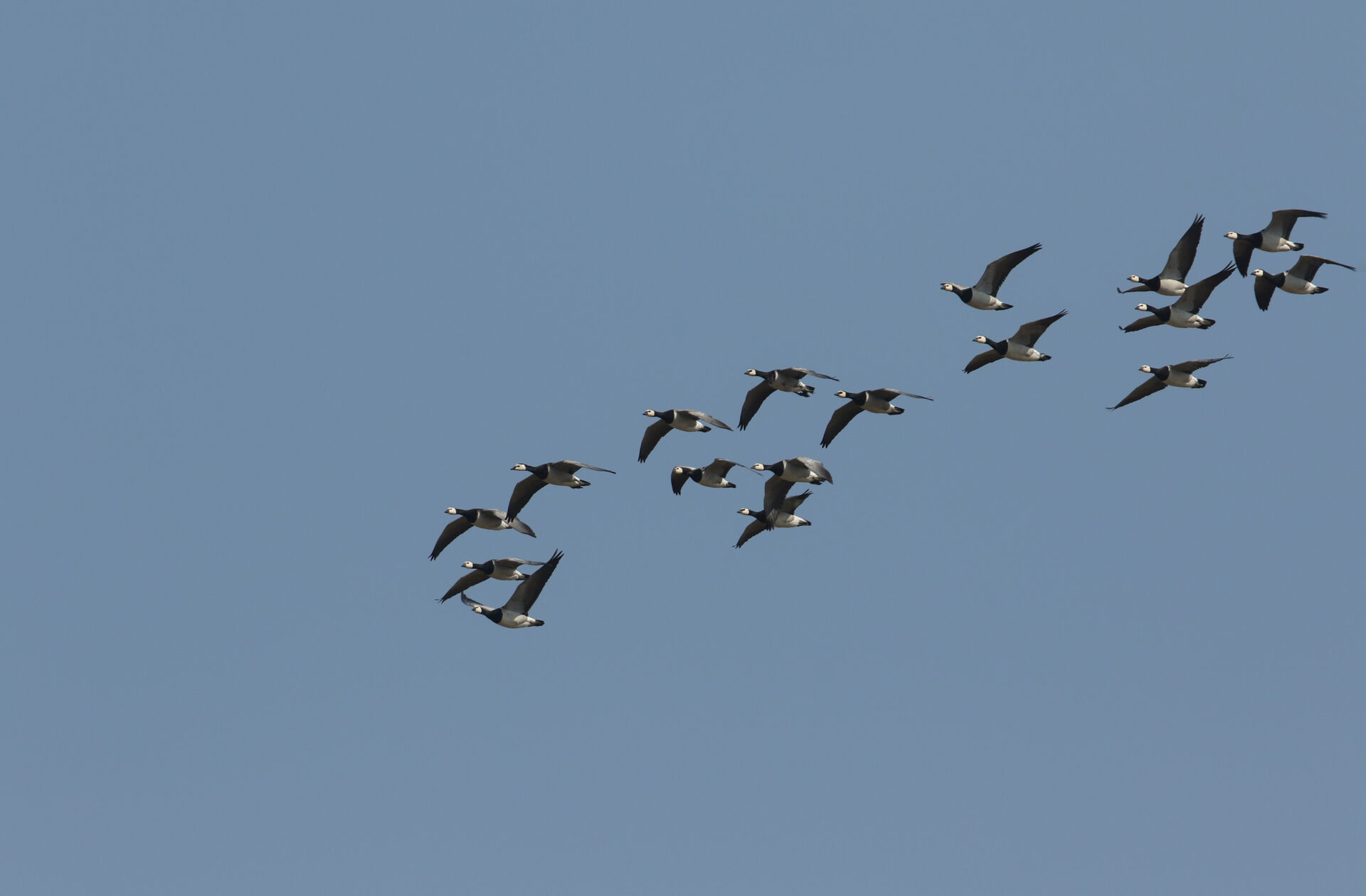
Barnacle geese in migration
sandrastandbridge | Rights reserved | POND5Winters are harsh on Svalbard, with temperatures falling to as low as -20 °C, with very limited food sources. Summer, on the other hand, however brief, is a peak time in terms of the quantity and quality of resources.
How to take advantage of summer abundance while avoiding the harsh Arctic winter? By the miracle of migration!
In the northern hemisphere, migratory birds travel hundreds or even thousands of kilometres.
They fly mainly south to north in summer, in search of the best environmental conditions and habitats for breeding and raising their young.
They then move north to south to overwinter in a more favourable climate, offering better availability of food sources.
Record-breaking migrants
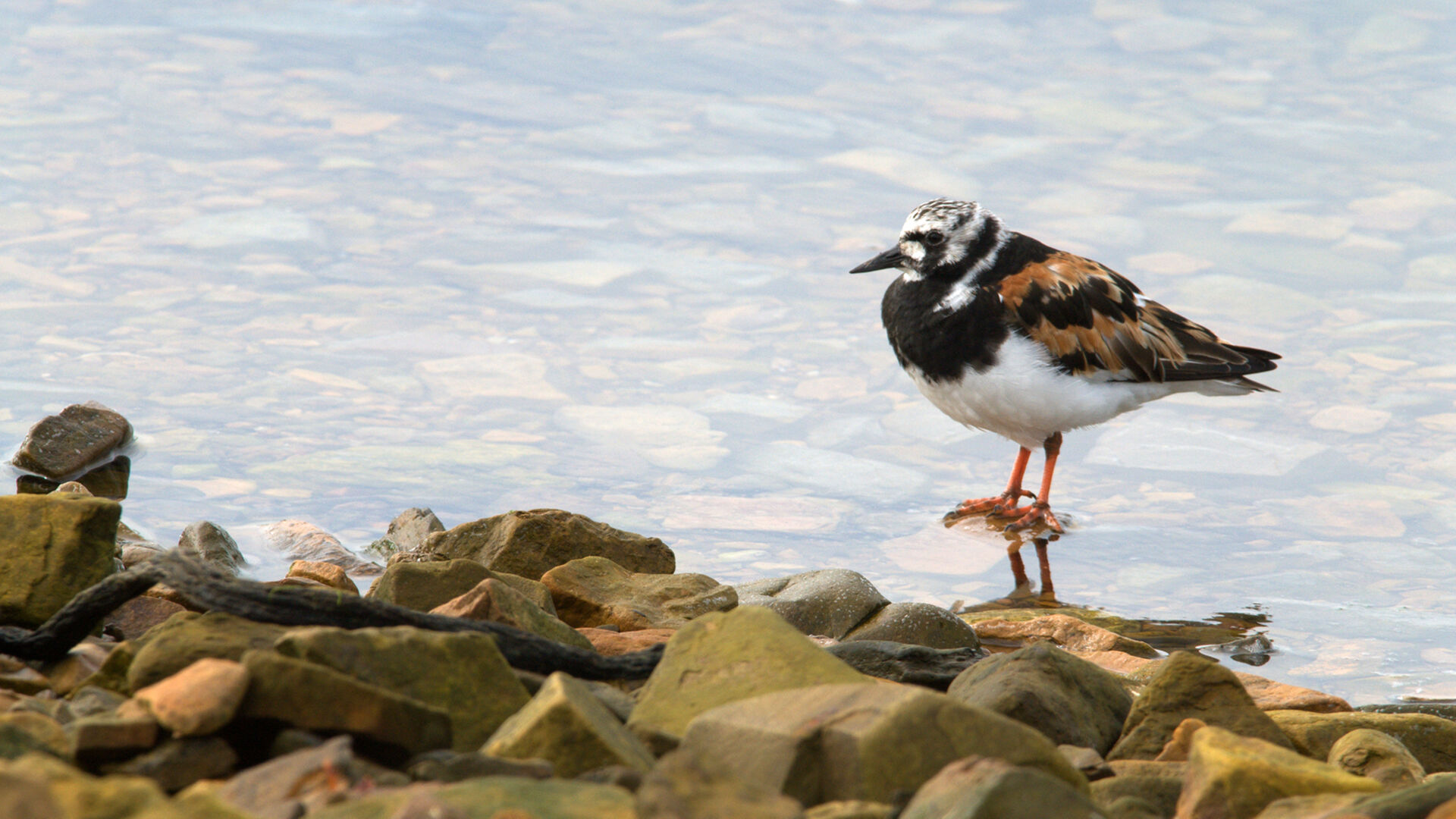
Ruddy turnstone
Andrea De Zan | Rights reservedNot much larger than a robin, the ruddy turnstone (Arenaria interpres) undertakes long migrations.
After overwintering on the coast of West Africa, it flies to nesting grounds in Europe’s northernmost latitudes, from Iceland to Norway, and right up to Svalbard.
To cover this long migration route, the ruddy turnstone can adapt to very different climate conditions, from harsh Arctic temperatures, even in the summer, to the warm tropics.
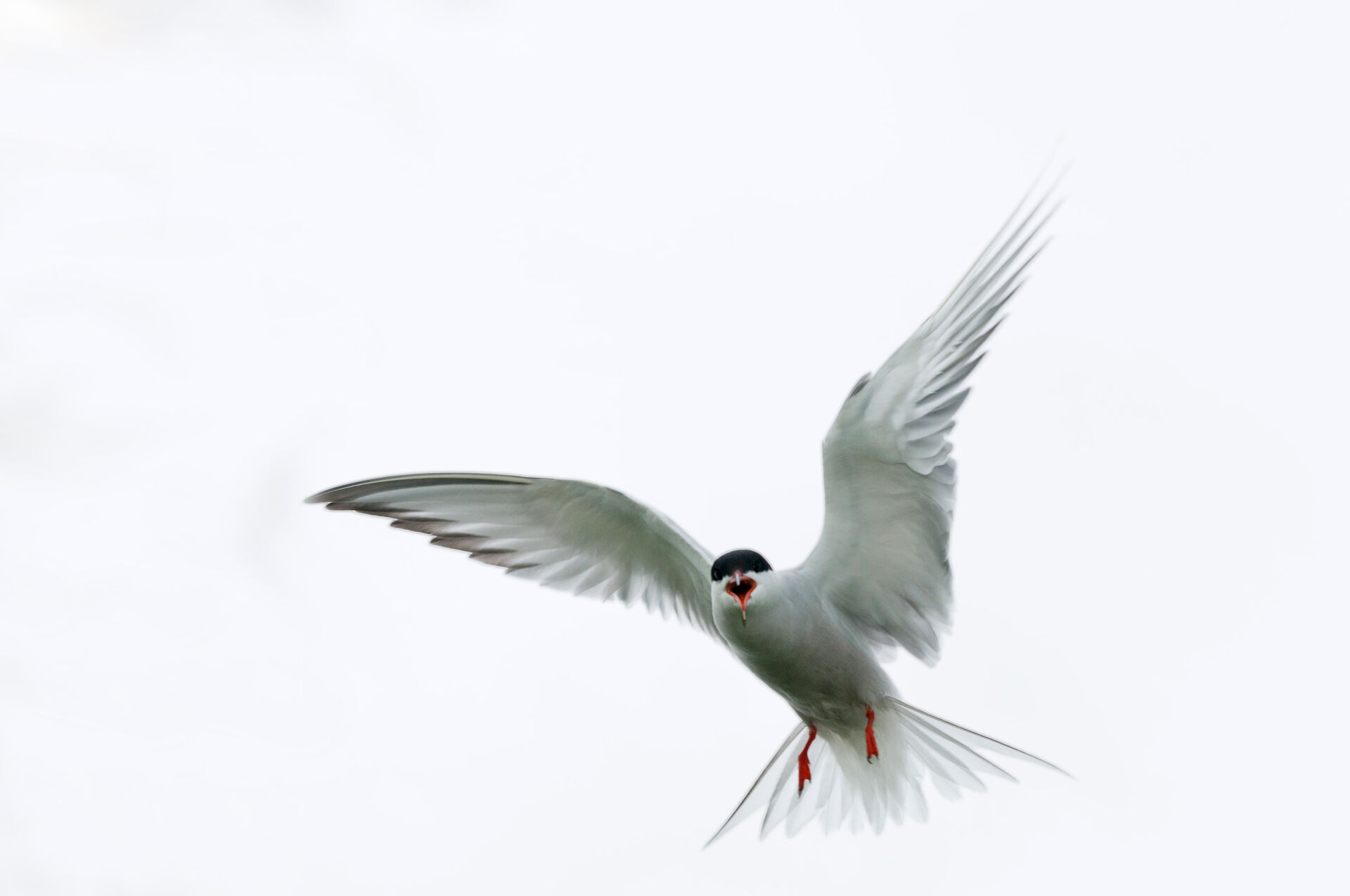
Arctic tern
Andrea De Zan | Rights reservedBut the strangest story of all is that of the arctic tern (Sterna paradisaea), which holds the world record for the longest migratory journey.
These birds travel up to 70,000 km every year, overwintering along the Antarctic coasts and then travelling to reach their breeding areas inside the Arctic Circle.
Arctic terns migrating from the Svalbard archipelago follow two different long migratory routes down the west coast of Africa or the east coast of South America, travelling through all of the world’s climate zones on the way.
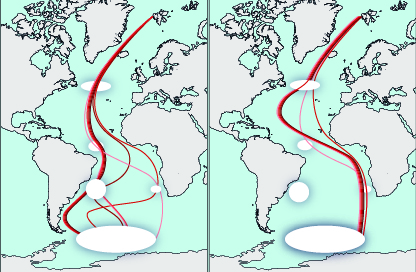
Migratory routes of terns, traced using geolocator data. Left: route from Arctic to Antarctic coasts. Right: return route to the Arctic with stopover sites in white.
Making the most of environmental conditions is all-important for completing the longest migration in the bird world, above all when the shortest route is not the best. Arctic terns adjust and lengthen their routes, often in a curving movement, to make the most of tailwinds. This behaviour allows the birds to cover extremely long distances remarkably quickly.
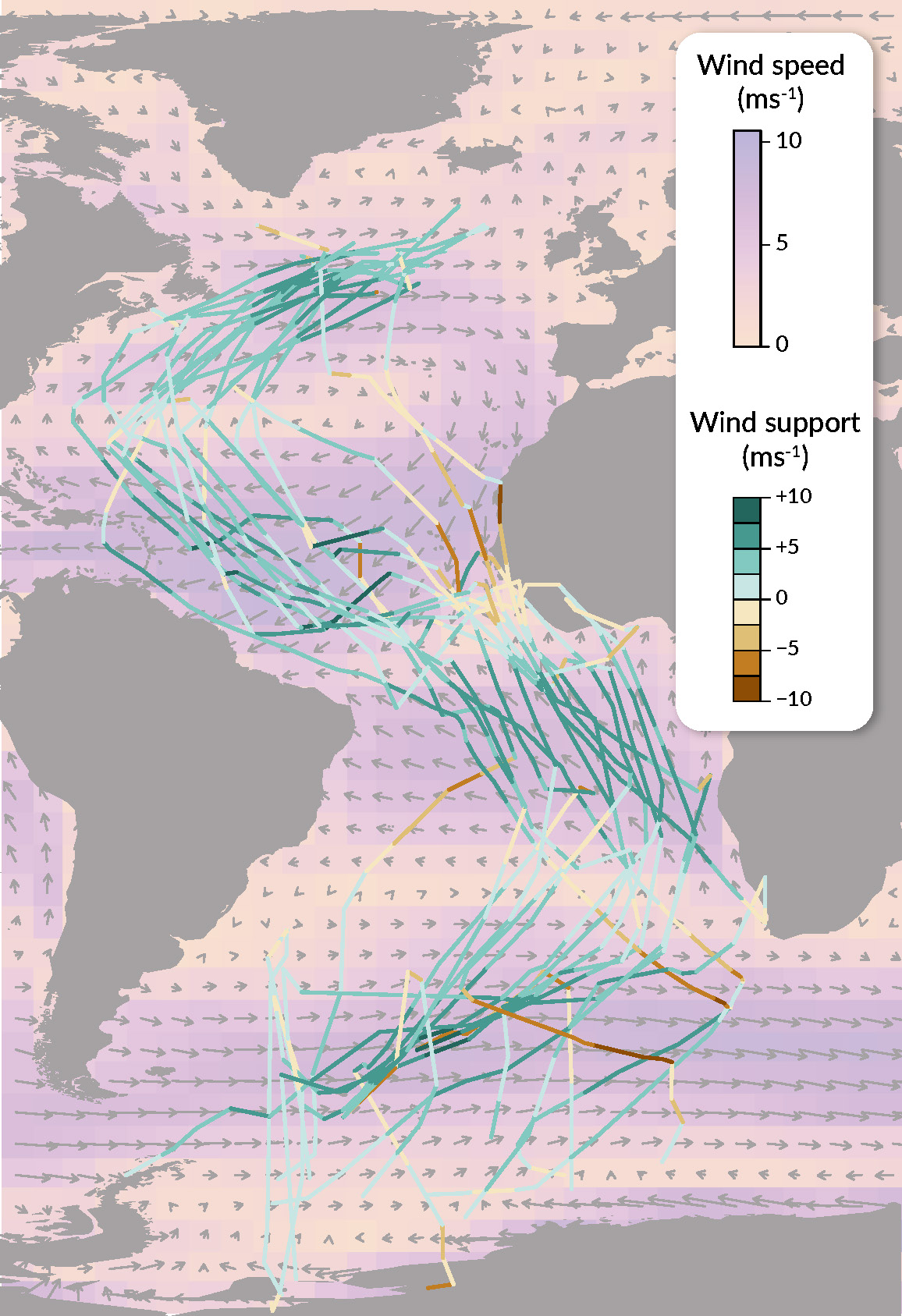
The map shows the migratory route of the Arctic Tern along the Atlantic in relation to two measured variables which are the wind speed and the wind support. The route perfectly follows the areas with the highest wind speed and thus obtaining the greatest support.
Some studies have shown that the spring migratory route towards the breeding sites is very different from the autumn journeys to the birds’ overwintering grounds. The travelling speeds also differ greatly, spring journeys being much faster than autumn ones.

Arctic tern hunting
Arctic terns also show off their magnificent flying abilities when they hunt, moving gracefully just over the water, very skilfully snapping up the smaller fish closer to the surface. The Artic stern is a carnivore, feeding on small fish and crustaceans, but also on insects that it catches in flight, in the manner of swallows.
Migration of the arctic tern
The spectacular journey of the Arctic tern, making the longest migration of the animal in the world, from the Arctic to the Antarctic Circle. A return trip along an indirect route over a distance that would stretch twice around the world!
Non-migratory birds
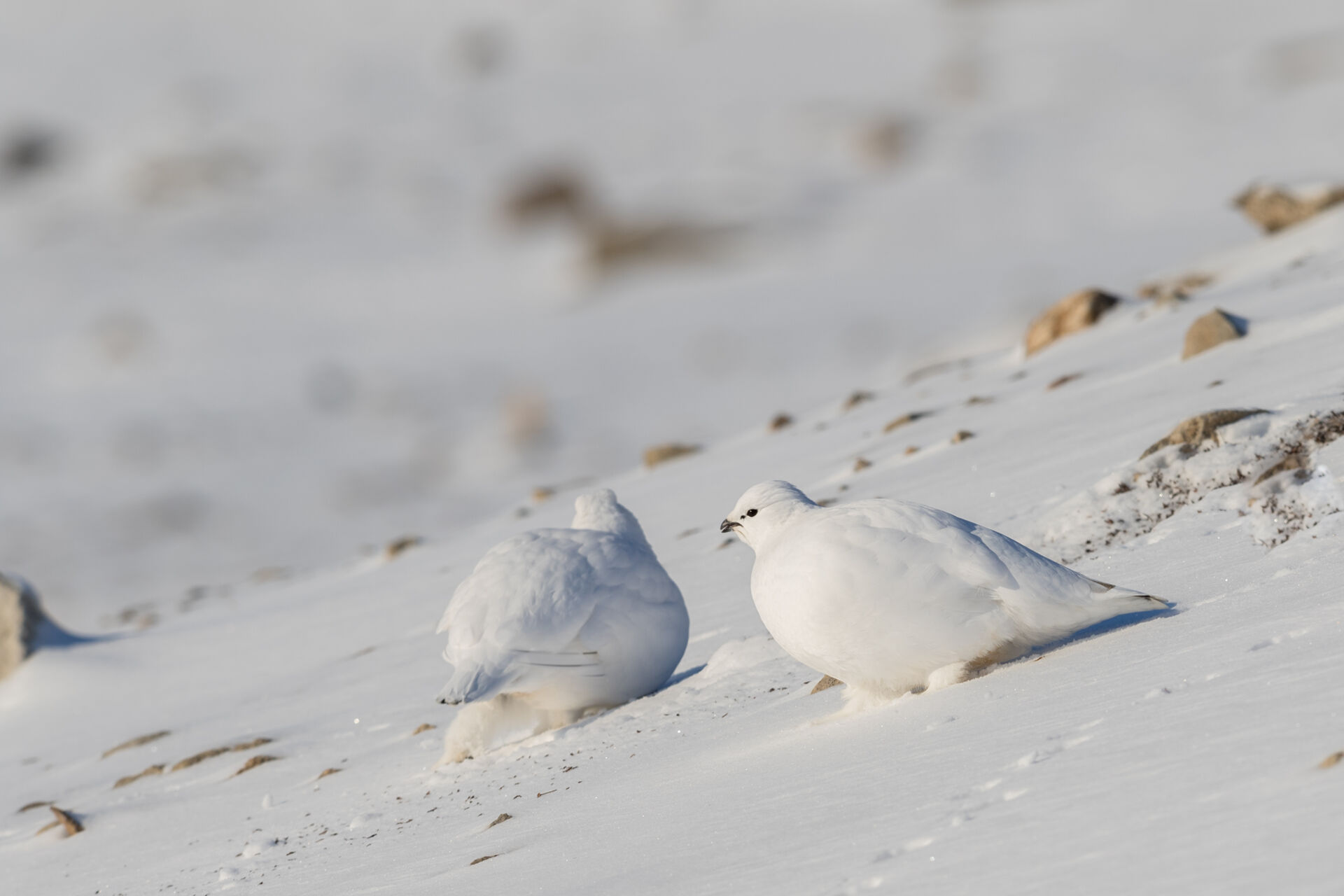
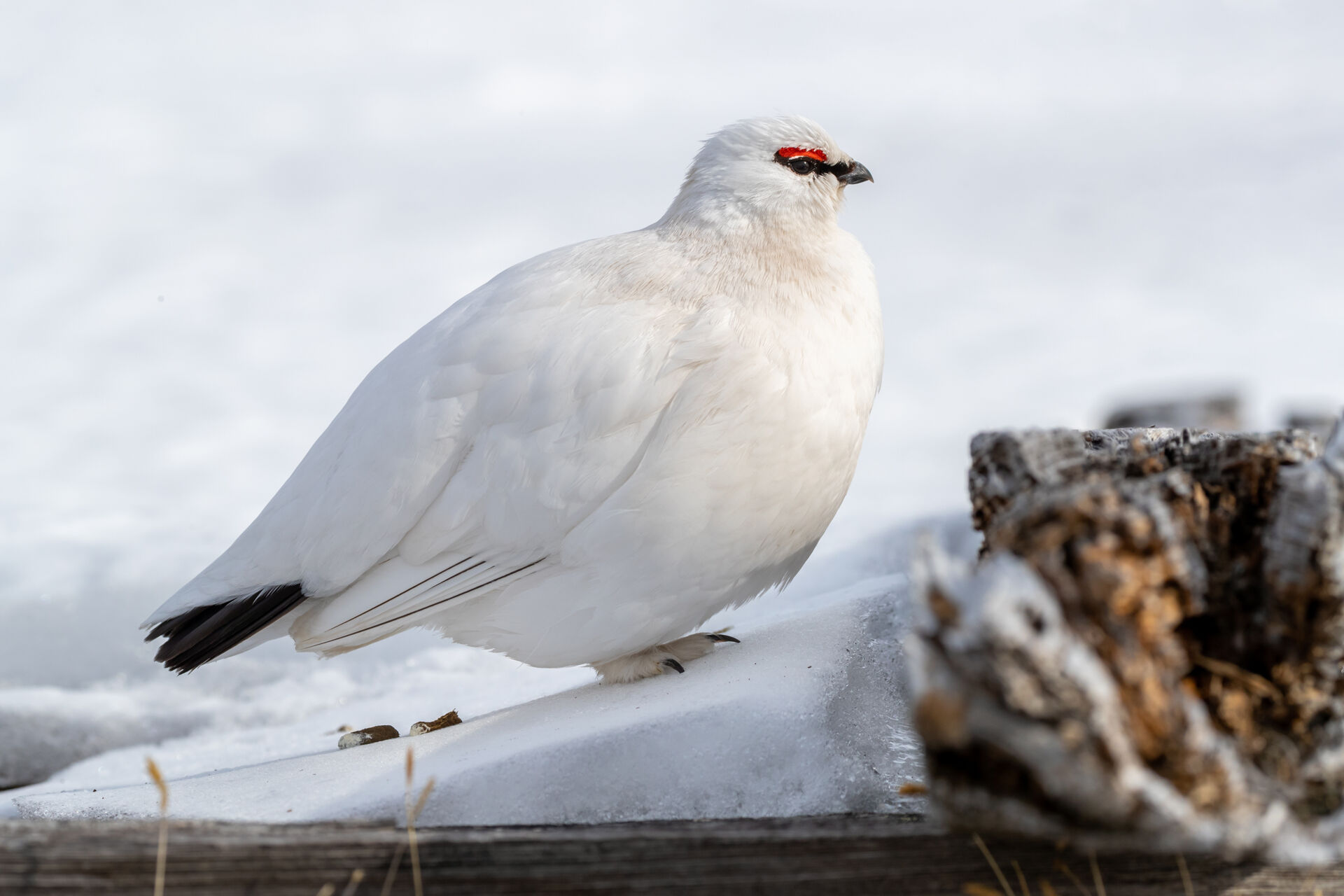
Winter plumage of Svalbard rock ptarmigan
lillitve | Rights reserved | POND5The Svalbard rock ptarmigan (Lagopus muta hyperborea) is one of the several subspecies of rock ptarmigan (Lagopus muta) and is the only land bird that lives on the Svalbard Archipelago all year round.
The plumage of this likeable bird changes with the seasons, allowing it to blend in perfectly with its surroundings. Its winter plumage is completely white, except for the feathers on the tip of the tail of the male.
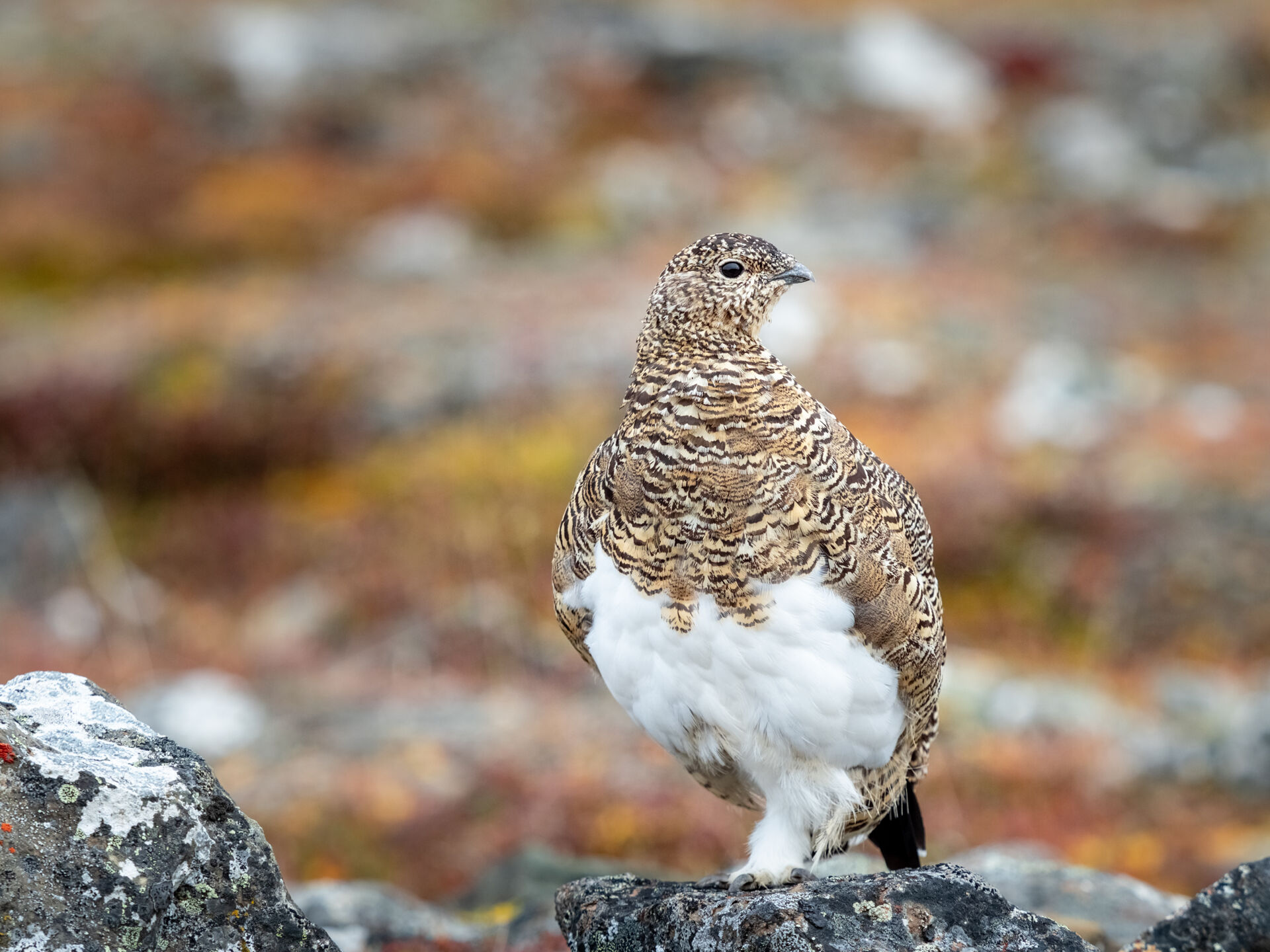
Summer plumage of Svalbard rock ptarmigan
toranote | Rights reserved | Adobe StockIn spring and summer, in the absence of snow and ice, its plumage turns brown.
The plumage on the ptarmigan’s legs thickens notably during the winter season, giving them the appearance of snowshoes that help to prevent the bird from sinking into the snow.
Rock ptarmigan
Rixie | Rights reserved | Adobe StockAnother of the bird’s adaptations is its ability to accumulate large amounts of fat during the winter season.
Recent studies show that despite the fact that rock ptarmigans are up to 47% heavier in winter, the extra weight does not affect the amount of energy they use to move: one theory attributes this fact to their waddling way of walking.
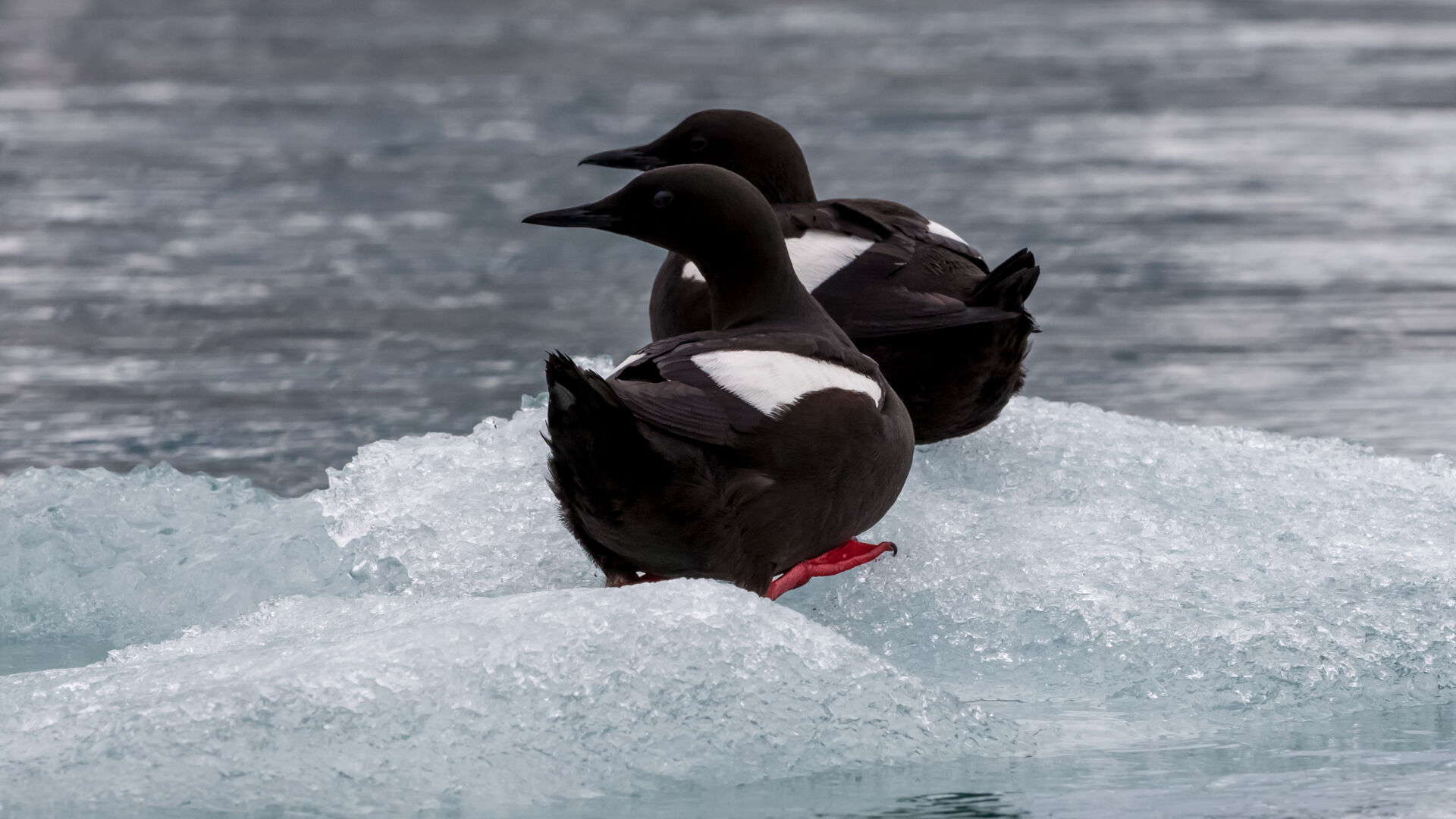
Black guillemots with breeding plumage.
Andreas Weith | CC BY-NC-SA 4.0 | Wikimedia CommonsThe black guillemot (Cepphus grylle) is a magnificent seabird of the Arctic and sub-Arctic regions bordering the Atlantic Ocean. Its elegant breeding plumage is totally black, apart from a large and distinctive white patch on the wings, contrasting strikingly with its bright red legs.
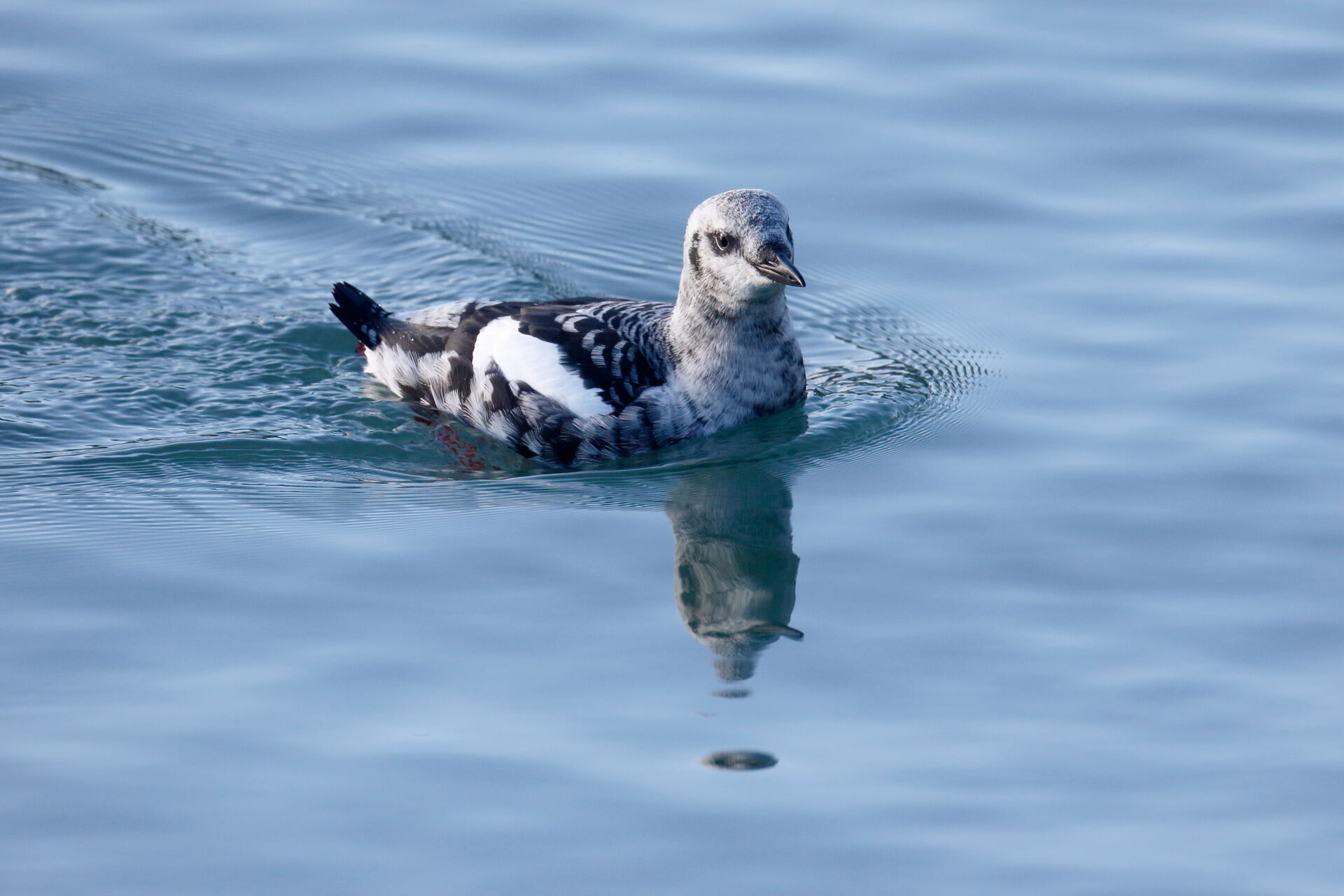
Guillemot with winter plumage
Erni | Rights reserved | Adobe StockThe bird’s winter plumage has a ‘salt and pepper’ appearance, although still retaining the distinctive white patch on the upper side of the wings.
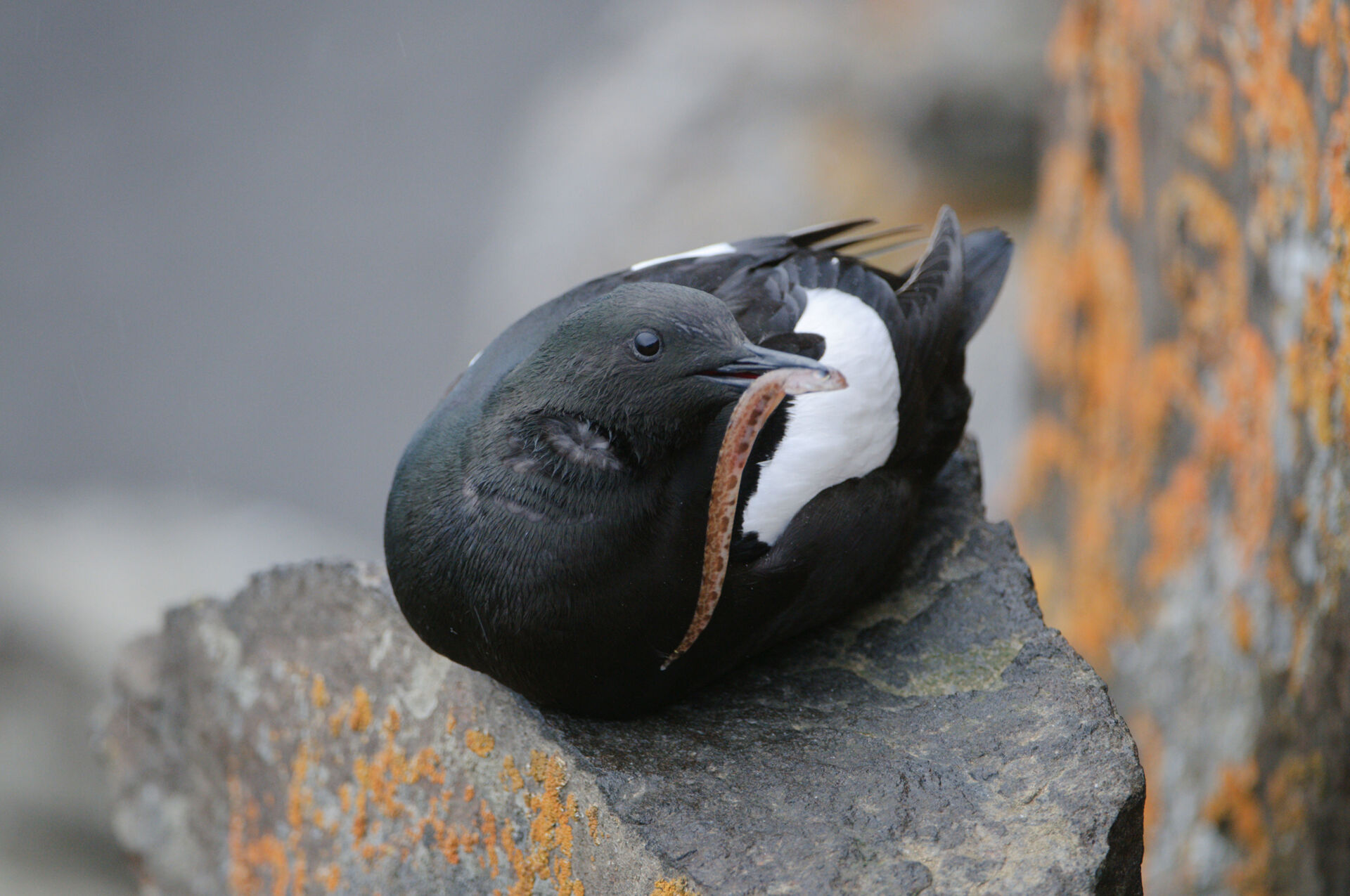
Guillemot with prey in its beak on a cliff in Diabasodden, Svalbard
Roger Eritja | Rights reserved | Alamy Stock PhotoGuillemots are strong swimmers and can dive to considerable depths (up to 50 metres), where they capture fish and crustaceans. Smaller prey are swallowed underwater while larger prey are taken back to land.
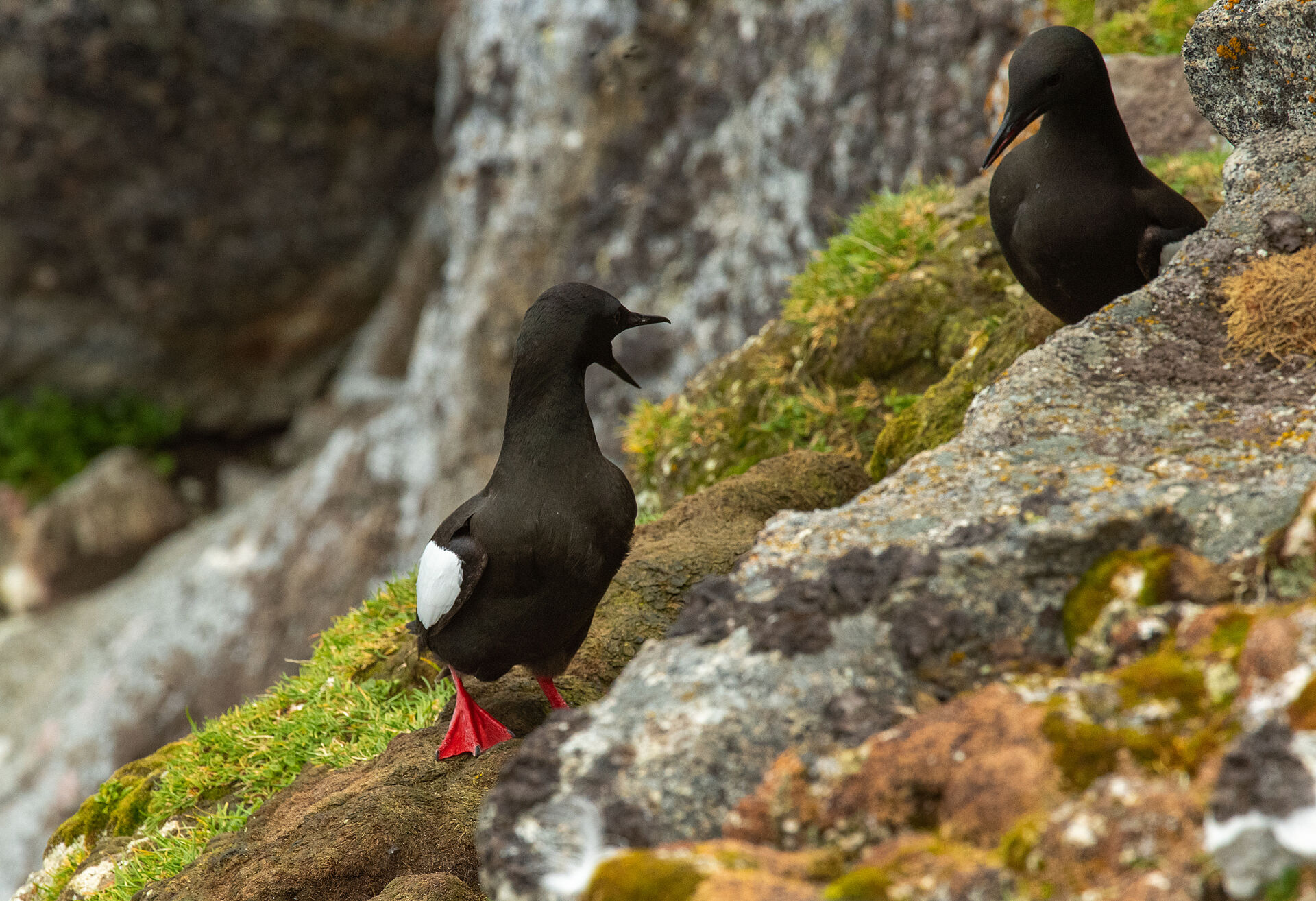
There are over 20,000 nesting pairs on Svalbard, most of which overwinter in the cold waters around the archipelago, staying close to the coast.
Black guillemots nest in small, diffuse colonies in crevices on the sheer rock faces of cliffs. As is true of many Arctic species, their young must be quick to grow; chicks learn to fly in a little over a month to gain independence.
Breeding in the Arctic: nesting
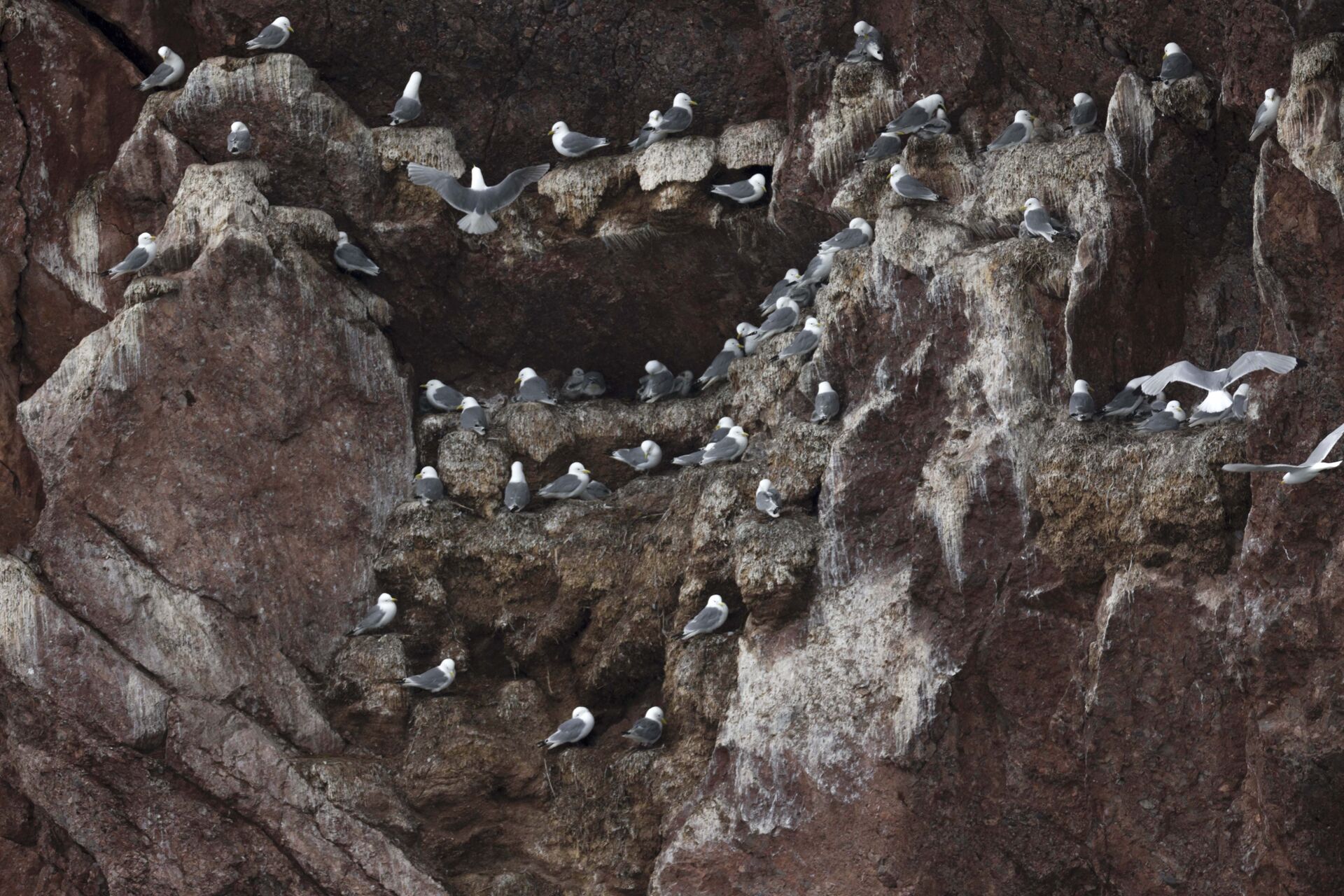
Not many species nest on Svalbard, but their numbers can be impressive, especially where seabirds and geese are concerned.
Nests are built in a number of environments, for example on steep scree slopes and sheer cliffs, inaccessible enough to offer the birds protection from predatory foxes. However, nests are also found on the bare rock, in the region’s low and sparse vegetation, or on sandy beaches.
Some Svalbard species nest alone while others do so in colonies. Such colonies can be large and numerous or small with few birds, or made up of a variety of species. They offer several advantages, when it comes to guarding the nest.
The presence of a group is an essential factor for identifying predators, allowing parents to count on their ‘neighbours’ to help them escape. Species that nest alone, on the other hand, must rely on their aggressivity and on the camouflage of the nest, the eggs or their young, that makes them blend in with their surroundings.
Life as a pair
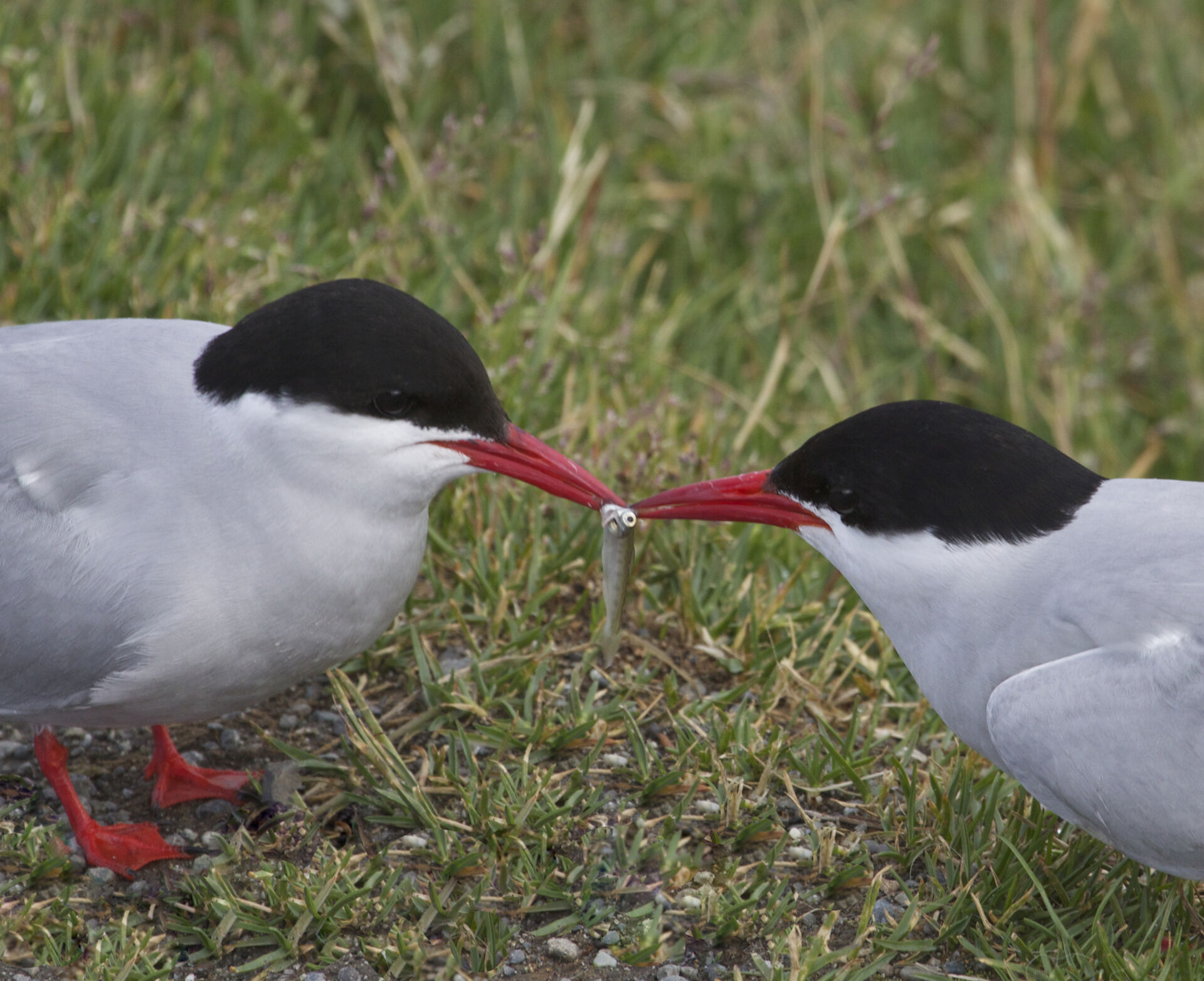
Mating pairs of Arctic terns establish their relationship by exchanging a small fish
Gregory "Slobirdr" Smith | CC BY-SA 3.0 | Wikimedia CommonsMany of the species nesting on the Svalbard archipelago are monogamous, in other words they mate as stable and lasting pairs, in some cases for a single summer, and in others for their whole lifespans, meeting up again each season.
Monogamous pairs share all responsibilities: guarding the nest, incubation and feeding of nestlings.
Monogamy in an environment that is harsh but rich in resources has a range of benefits, allowing the relevant species to make the most of what is on offer, thus ensuring a high level of reproductive success.
Cliff nesting: barnacle goslings
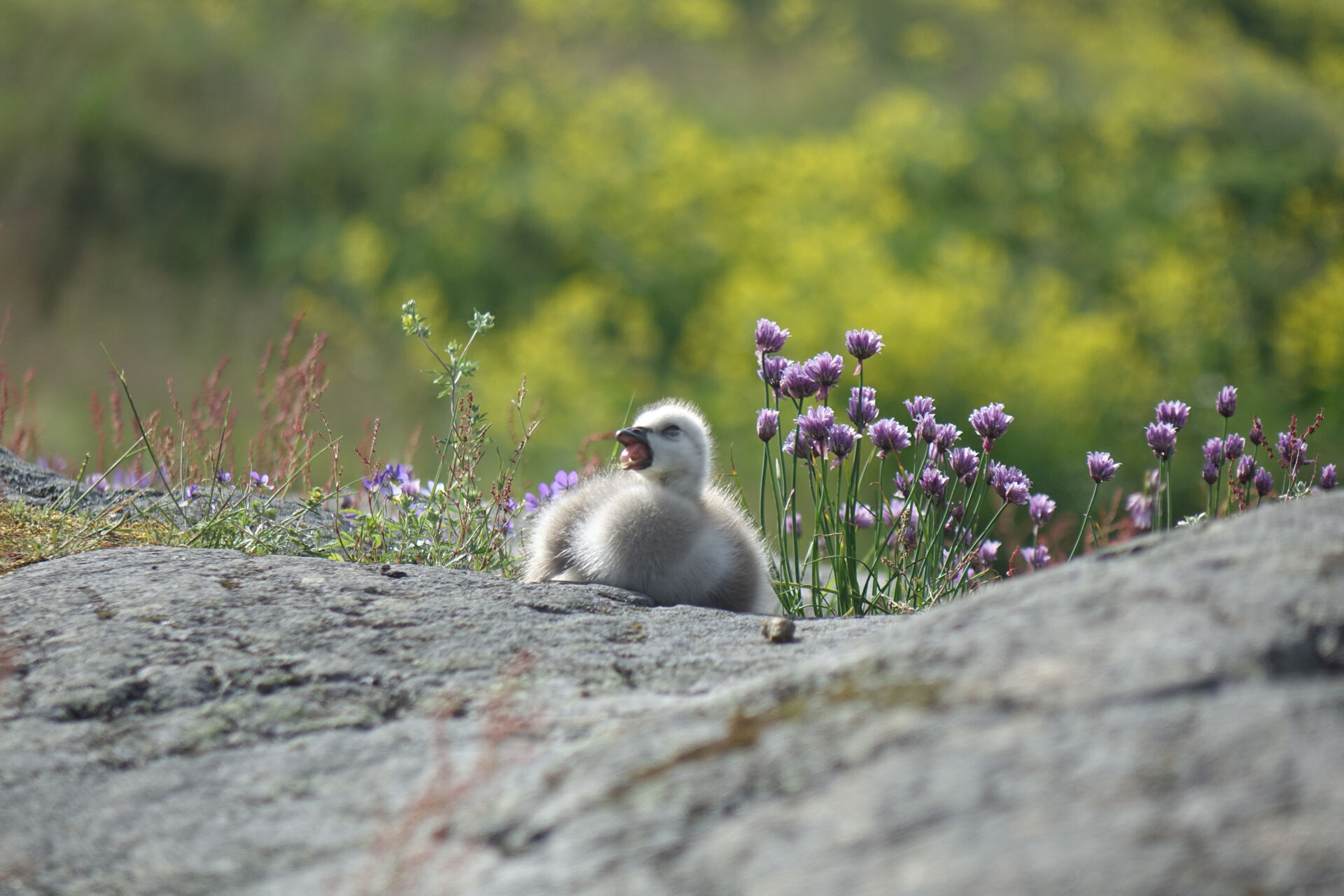
Barnacle gosling in nest (Branta leucopsis)
Nikolay | Rights reserved | Adobe StockBarnacle geese build their nests high up on the sheer cliff faces. The nests are thus out of reach of predators, but the grasslands where the birds go to forage are a distance away and only reachable by flying down from the steep rock walls. The geese do not return to the nest with food. Goslings must therefore learn to launch themselves from the nest very soon after hatching to follow their parents to the feeding areas.
This means they have to plummet from a considerable height before they have even learned to fly. However, thanks to their lightness and perfect weight distribution, they manage amazingly to reduce their speed as they drop, allowing them to land successfully at the foot of the cliff.
Atlantic puffin nesting
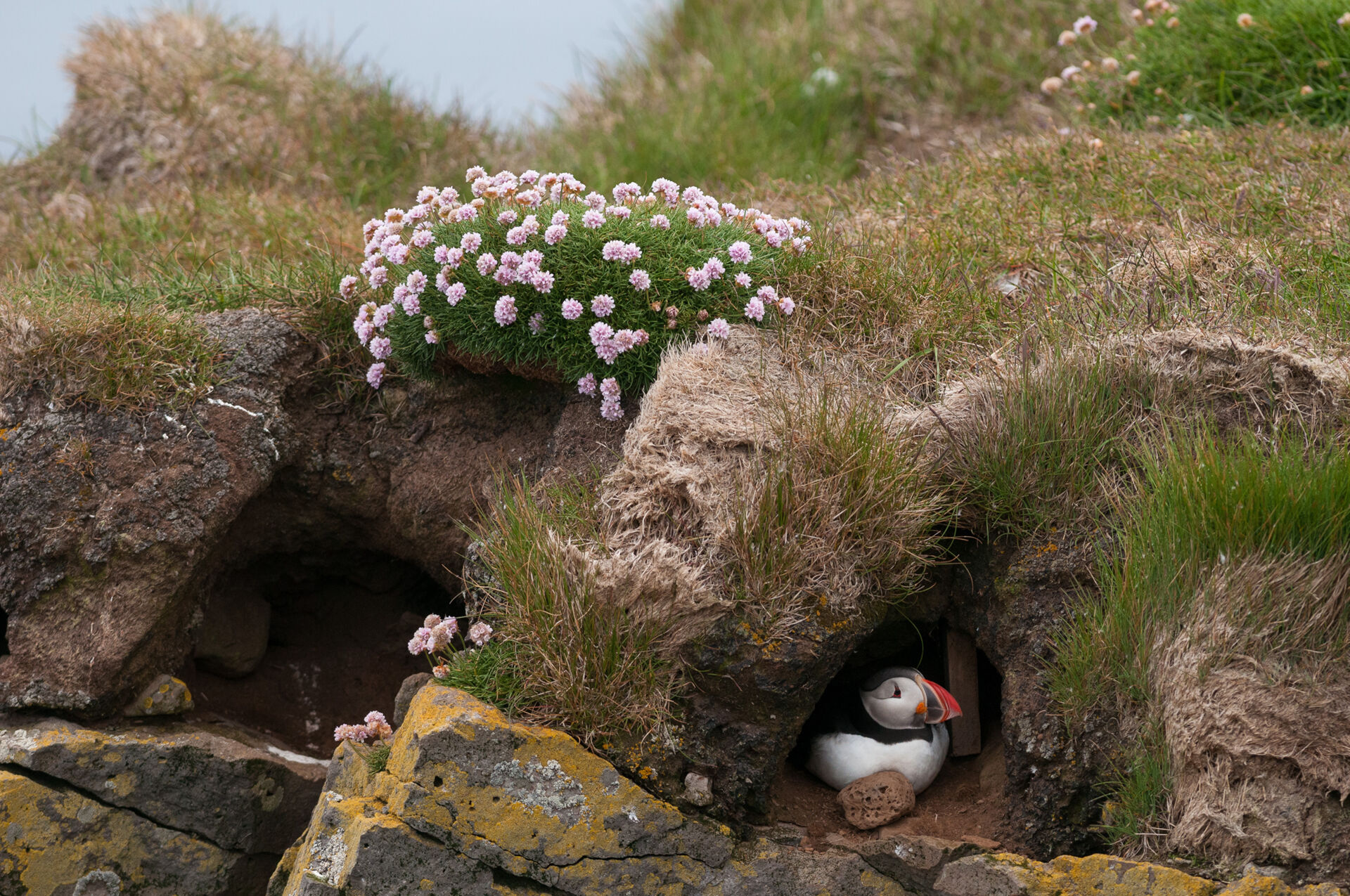
The Atlantic puffin (Fratercula arctica) is a typical Arctic seabird that usually nests in underground burrows that are anything from 70 cm to over a metre deep. The birds use old rabbit burrows or can dig their own with their claws, although not on Svalbard.
When they arrive at the archipelago, at the start of May or a little later, the soil is still frozen and too hard to allow tunnelling.
Nesting puffins have therefore adapted to build their nests inside hollows and crevices in the rocks, forming large colonies on the cliffs that are safe from mammalian predators, foxes in particular.
Snow bunting nesting
Researchers climb up to a snow bunting nest on a rocky cliff to ring the inept chicks
The snow bunting (Plectrophenax nivalis) is the only passerine nesting on the Svalbard Islands, as a rule in areas and expanses of rock close to seabird colonies.
Given the scarcity of suitable nesting sites, they commonly also use the eaves of buildings and artificial birdboxes. The females build the nests: in natural surroundings openings in the rocks or the more hidden crevices, invisible from the exterior, are selected for the purpose.
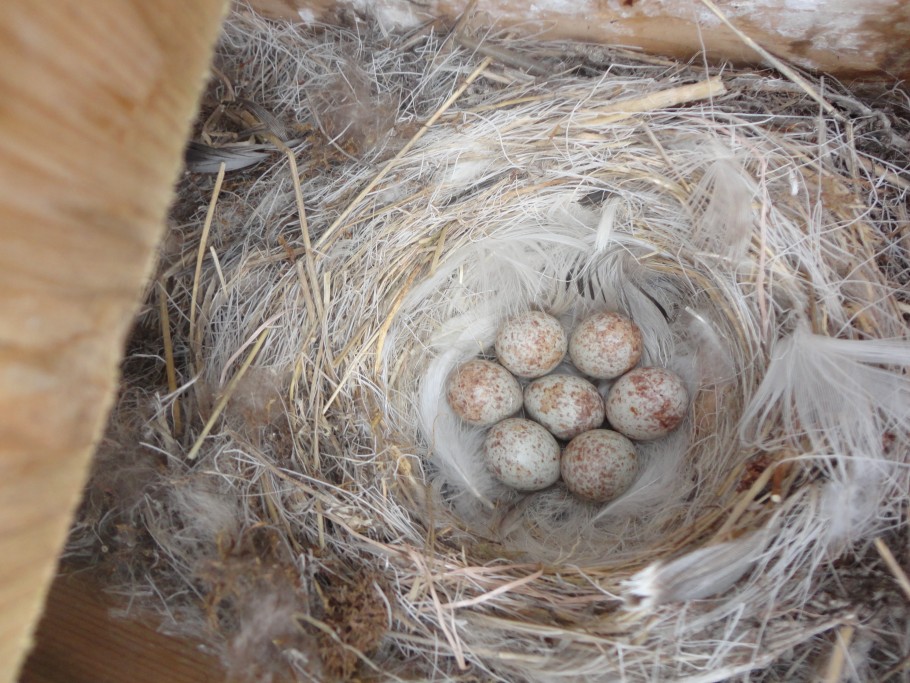
Snow bunting nest inside artificial nestbox
The rocks provide relative safety from predators for nesting purposes, but they are also cold. The females therefore collect moss, grass, hair and feathers to create a thick layer of insulation around the eggs. However, females also need to incubate their eggs constantly, with the males bringing them food every 15 minutes throughout this period.
Nesting sites are scarce on Svalbard, however, and so male snow buntings arrive early to occupy the best sites when the ground is still snow-covered.
Purple sandpiper nesting
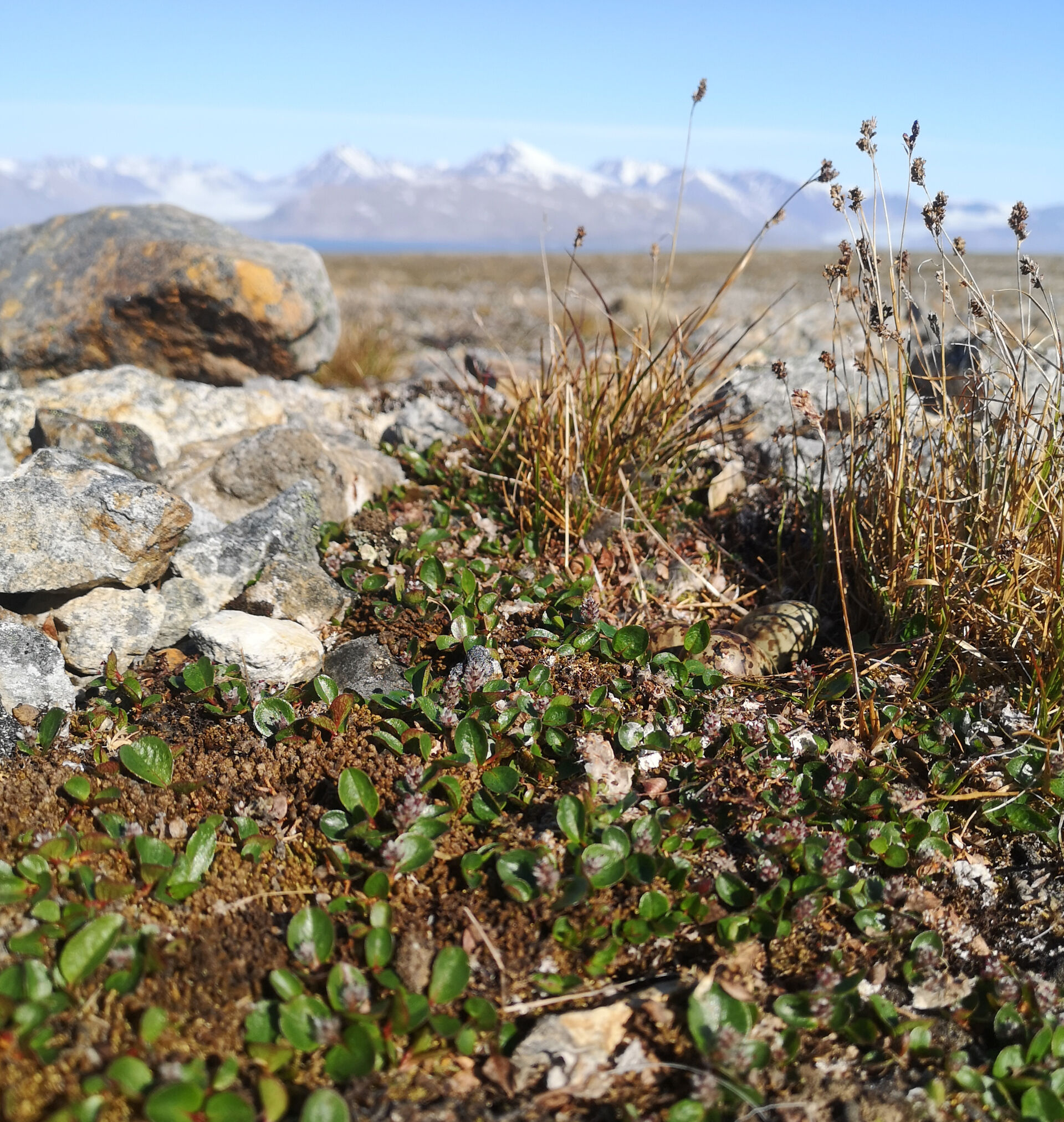
Purple sandpiper nest with eggs in Svalbard tundra
Silvia Giamberini | Rights reservedThe purple sandpiper (Calidris maritima) nests in lone pairs in areas of dry tundra. It is the most abundant shorebird on Svalbard: some studies estimate numbers at over one pair per square kilometre during the breeding season!
The nest is built on a mat of dry moss and lichens to form a cup-shape, finely lined with willow leaves and more lichens. The laid eggs are so similar in colour to the materials used to build the nest that they blend in with them perfectly.
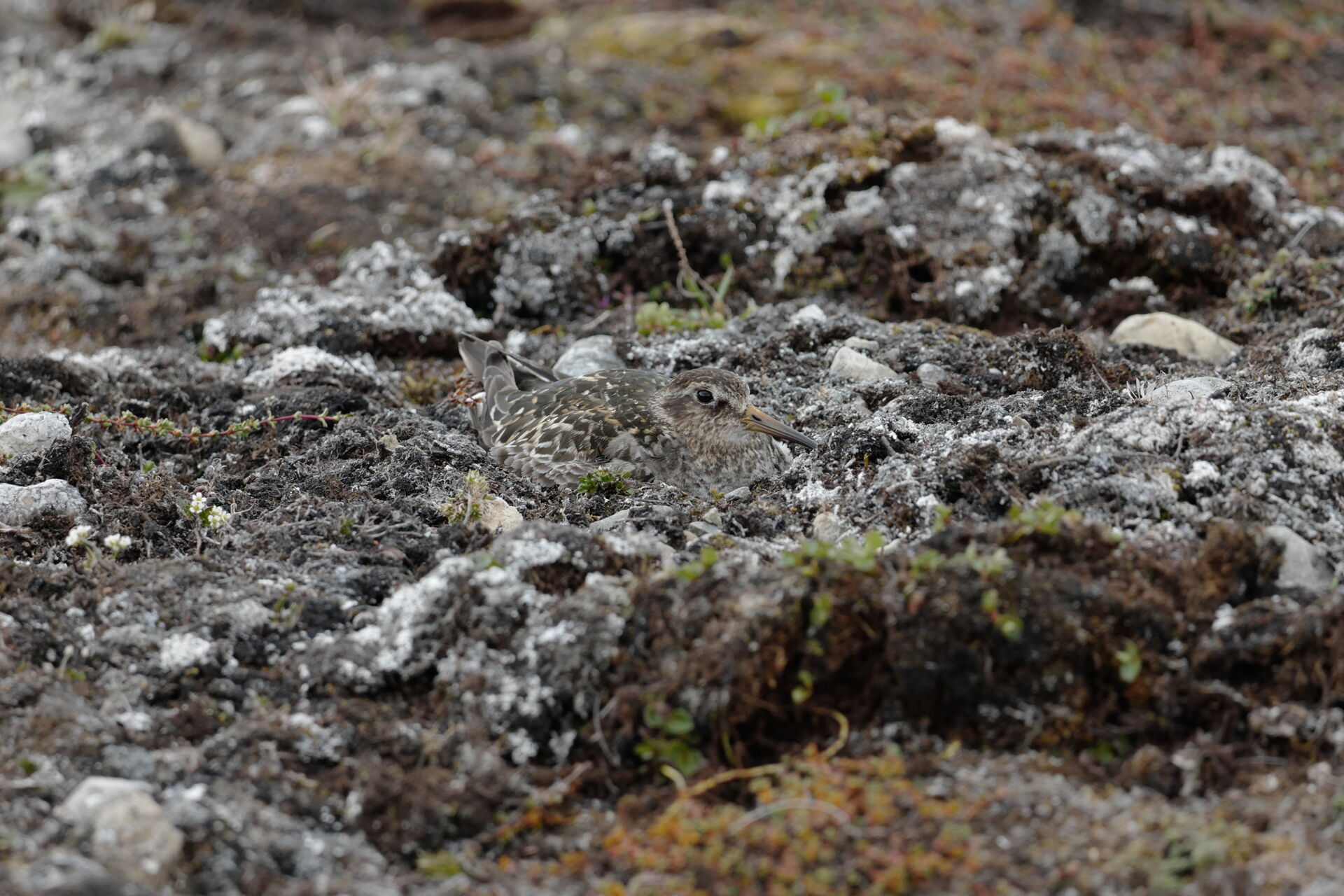
Incubating purple sandpiper blending in perfectly with its surroundings
Silvia Giamberini | Rights reservedAdult purple sandpipers also rely during incubation on the wonderful camouflage of their plumage, which makes them all but invisible to the average onlooker. If predators or human beings get too near the nest, the incubating parent will feign injury to distract the intruders away from its eggs. The chicks are nidifugous, in other words capable of leaving the nest shortly after hatching, and are also well camouflaged by their plumage.
The flow of nutrients
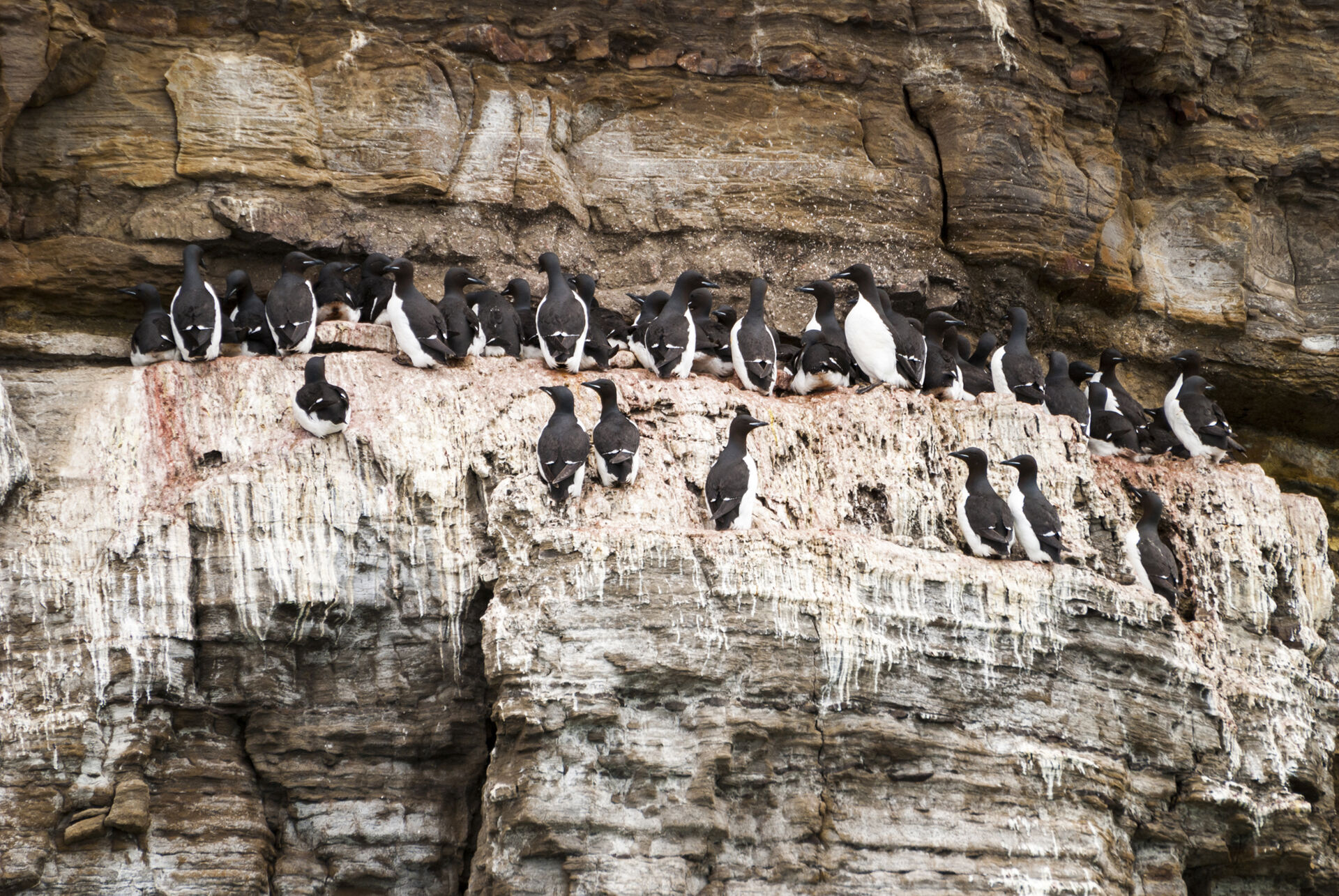
Guillemots nesting in colony. The white streaks on the rock are their guano
Ana Flašker | Rights reserved | POND5On Svalbard, life on sea and land is closely linked and seabirds play a central role in this interconnection. Seabirds play an especially important part in the nutrients cycle, setting up veritable nutrient hotspots in the areas surrounding their colonies.
The many birds feeding in the sea’s various pelagic zones release considerable amounts of guano around their breeding sites on dry land.
This guano acts as a powerful fertiliser in terrestrial and coastal ecosystems.
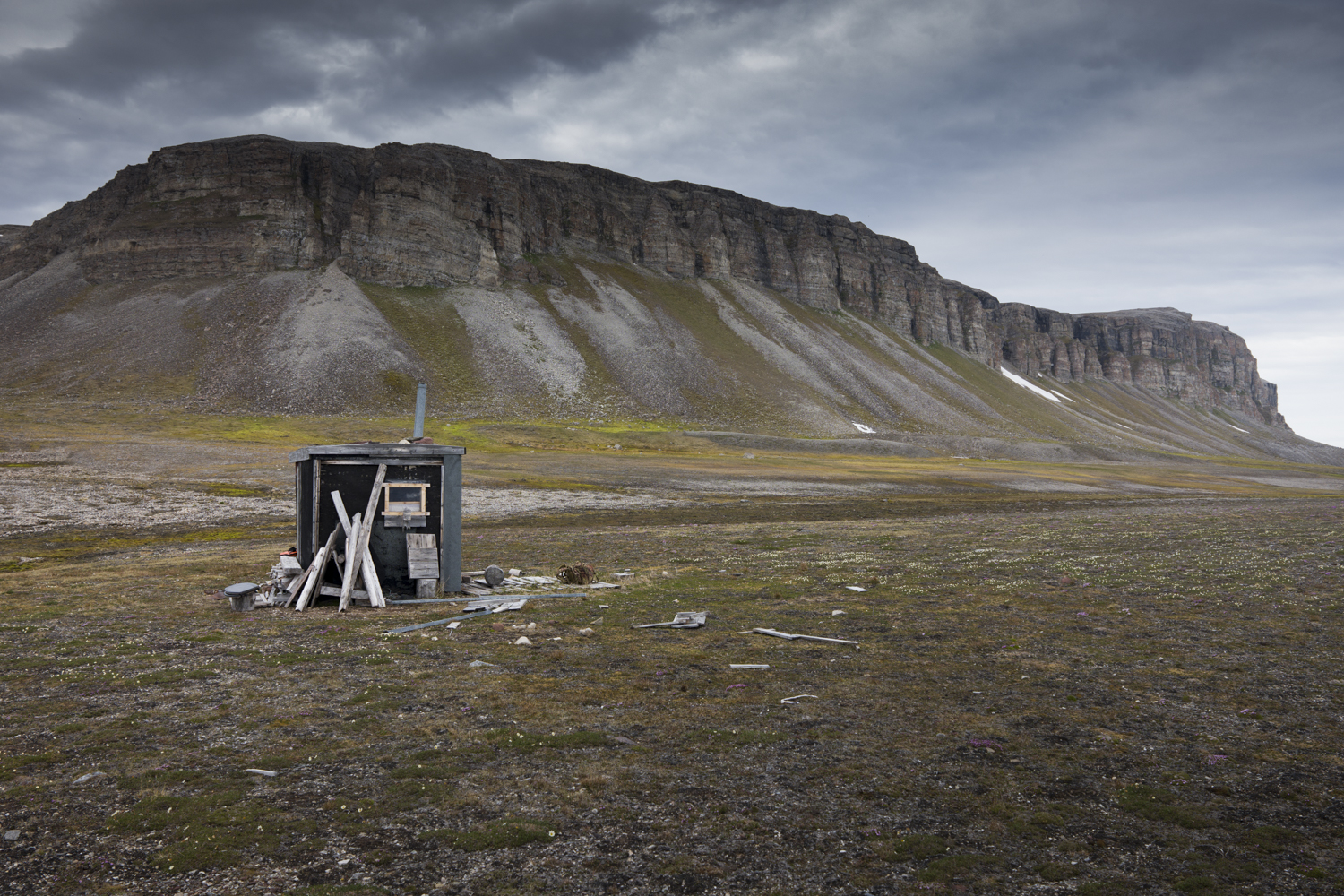
The tundra at the foot of the Stuphallet cliff (Svalbard) is fertilised by bird guano and inhabited by puffins and fulmars
Silvia Giamberini | Rights reservedThese nutrients enhance primary productivity and their effect on terrestrial ecosystems is easy to see: the areas at the foot of the colonies are green and lush, especially when compared to the barren and sparse landscape further away. A range of herbivores – including reindeers, geese and snow partridges – are commonly found in these nutrition hotspots, taking advantage of their abundant primary productivity.
This input of nutrients has effects that can be seen both on land ecosystems and the nearby coastal ecosystem. This is because nutrient-rich runoff from the coastal colonies easily reaches the sea to increase marine primary productivity along the local shoreline too.
The black-legged kittiwake
Maarten Loonen guides us on a visit to a cliff where the three-toed gull nests in the Ossian Sars Nature Reserve. We can follow him to look out over the edge and see the birds... but watch your step!
This is a 360° video, so we can decide what direction to look in by simply dragging the mouse.
The loud call of these gulls has given them their English name: ‘kittiwakes’.
Struggling to survive: the polar bear
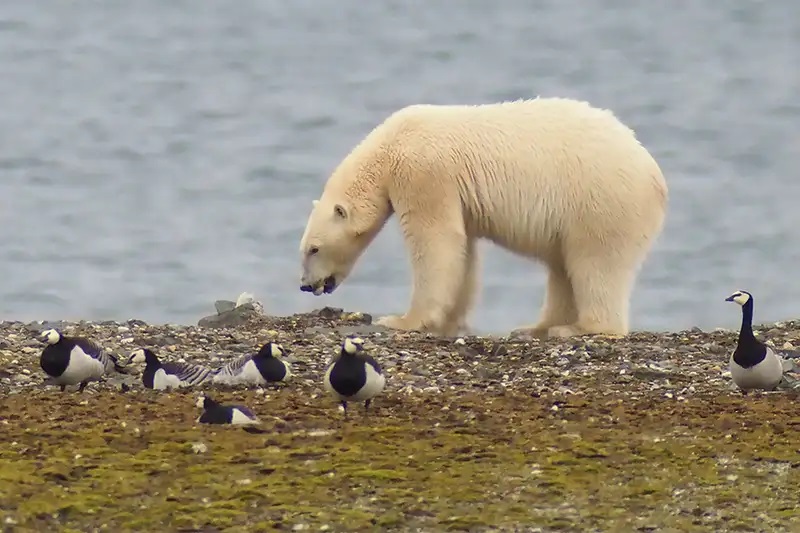
Polar bear raid on a barnacle goose colony
Jouke Prop | Rights reservedThe polar bear is without doubt the monarch of the Arctic. Under normal circumstances, these large predators rely on ice floes to hunt seals, their most common prey. However, recent studies unfortunately show that the powerful impact of climate change on the presence of sea ice is altering their feeding patterns.
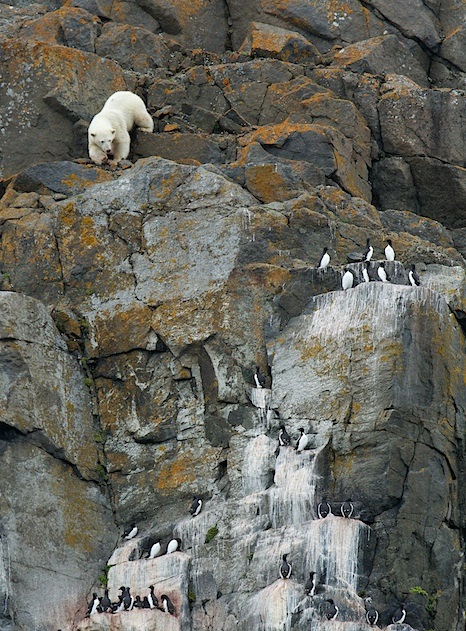
For example, in recent decades the bears have been increasingly present at the breeding sites of various bird species, in particular barnacle geese. Here they can plunder a colony for highly nutritious eggs, thus severely impacting its ability to reproduce, since a single bear can eat over a thousand eggs on one such raid.
Struggling to survive: the Arctic fox
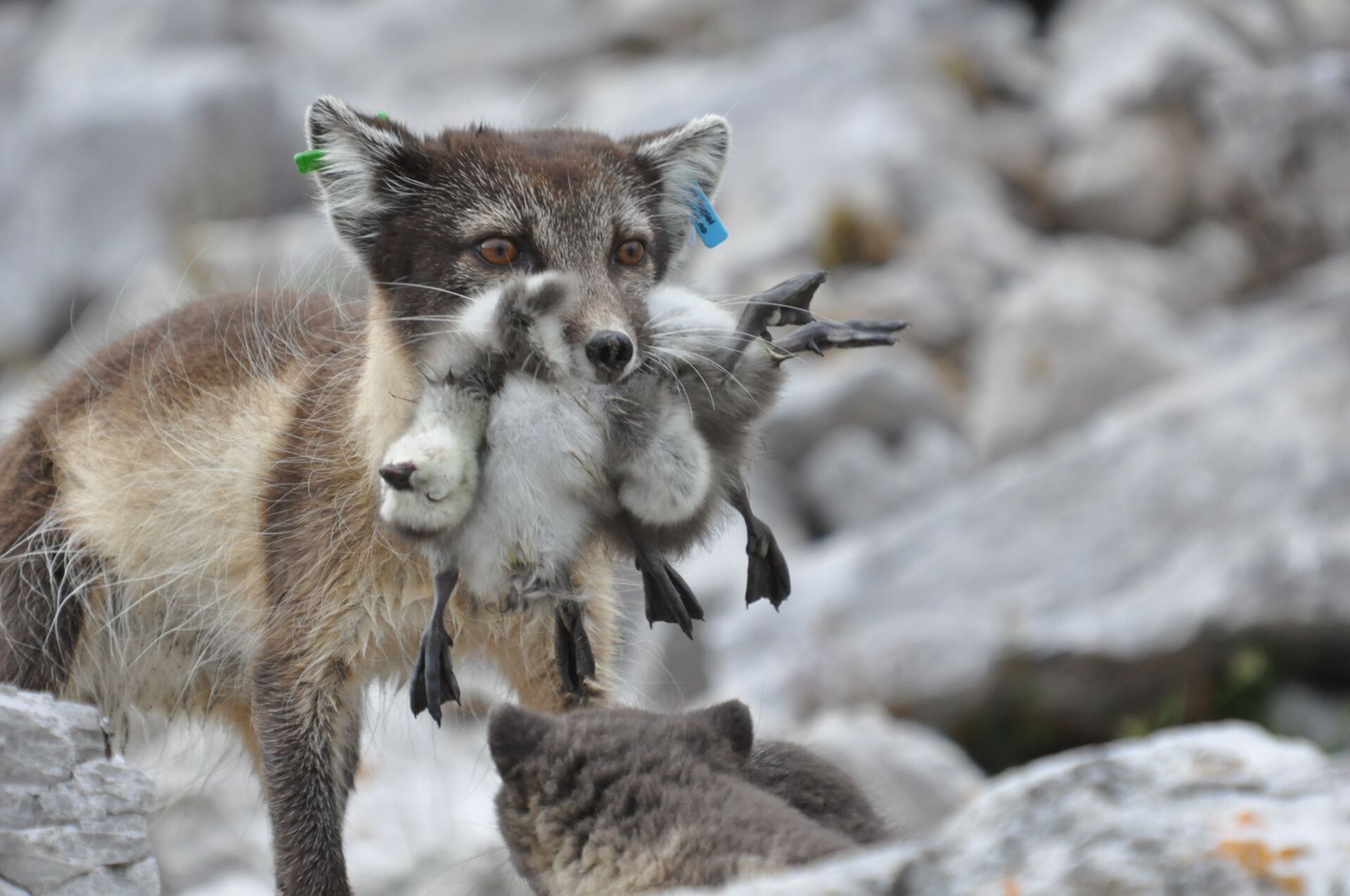
Arctic fox preying on barnacle goslings
Finn Sletten | Rights reservedOn Svalbard, the Arctic fox ranks as a super-predator with necrophagous habits and no natural enemies or competitors. During the summer, Arctic foxes often frequent the cliffs that serve as bird nesting sites, where they find abundant food sources such as eggs and the chicks of various seabirds, including geese.
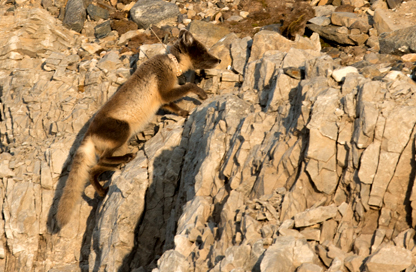
Arctic fox, Ny-Ålesund (Svalbard)
In particular, they are known to wait along the shore at the foot of cliffs for barnacle goslings to drop from their nests. They will then snap up as many chicks as possible to build up reserves for times of scarcity.
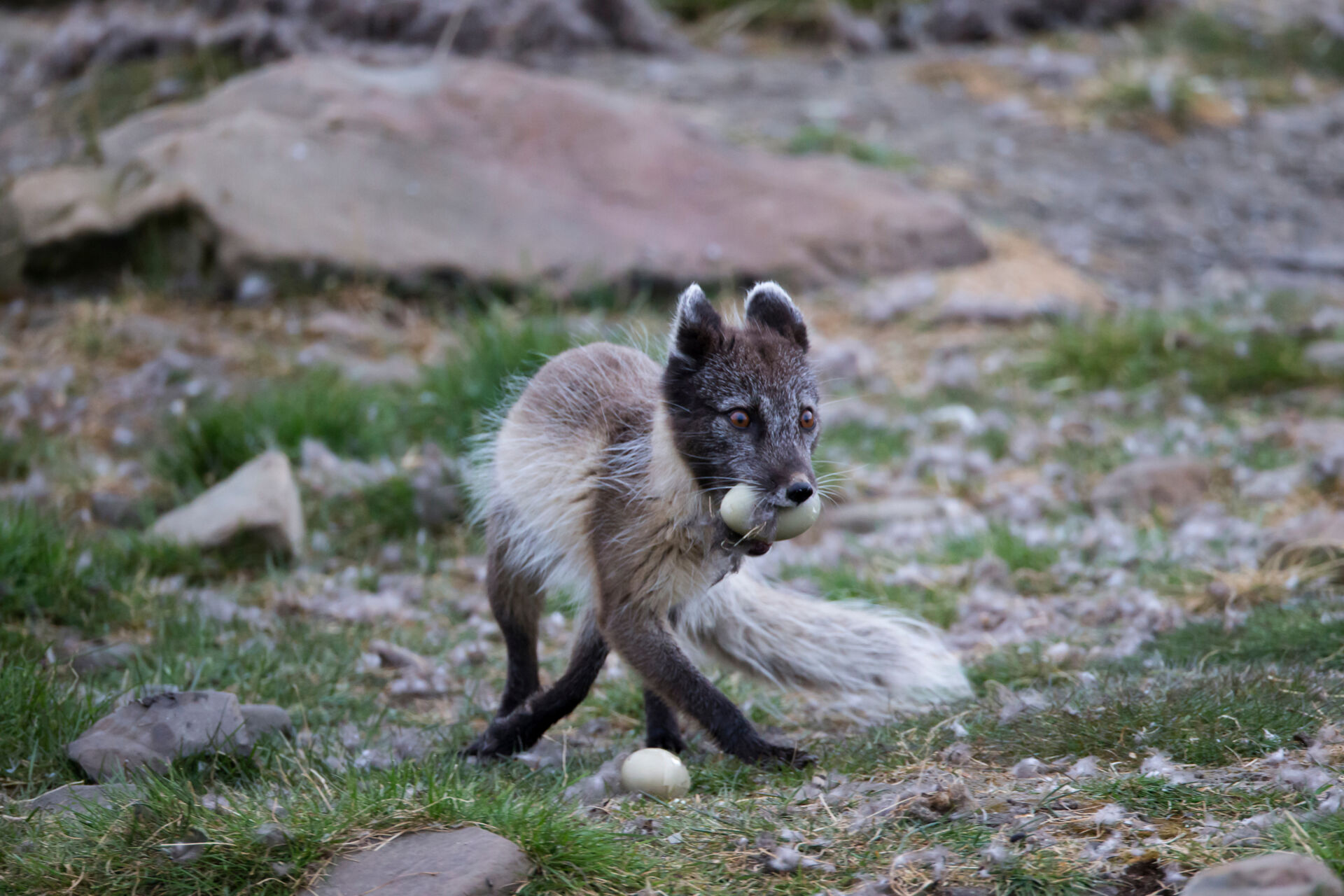
Arctic fox with an eider egg
Ellen Goff, Danita Delimont | Rights reserved | Adobe StockAlthough during the winter Arctic foxes survive mainly on reindeer carcasses and rock ptarmigan, in summer they collect eggs and capture chicks in considerable numbers to bury them in the permafrost, thus preserving them for recovery during winter.
Struggling to survive: the great skua
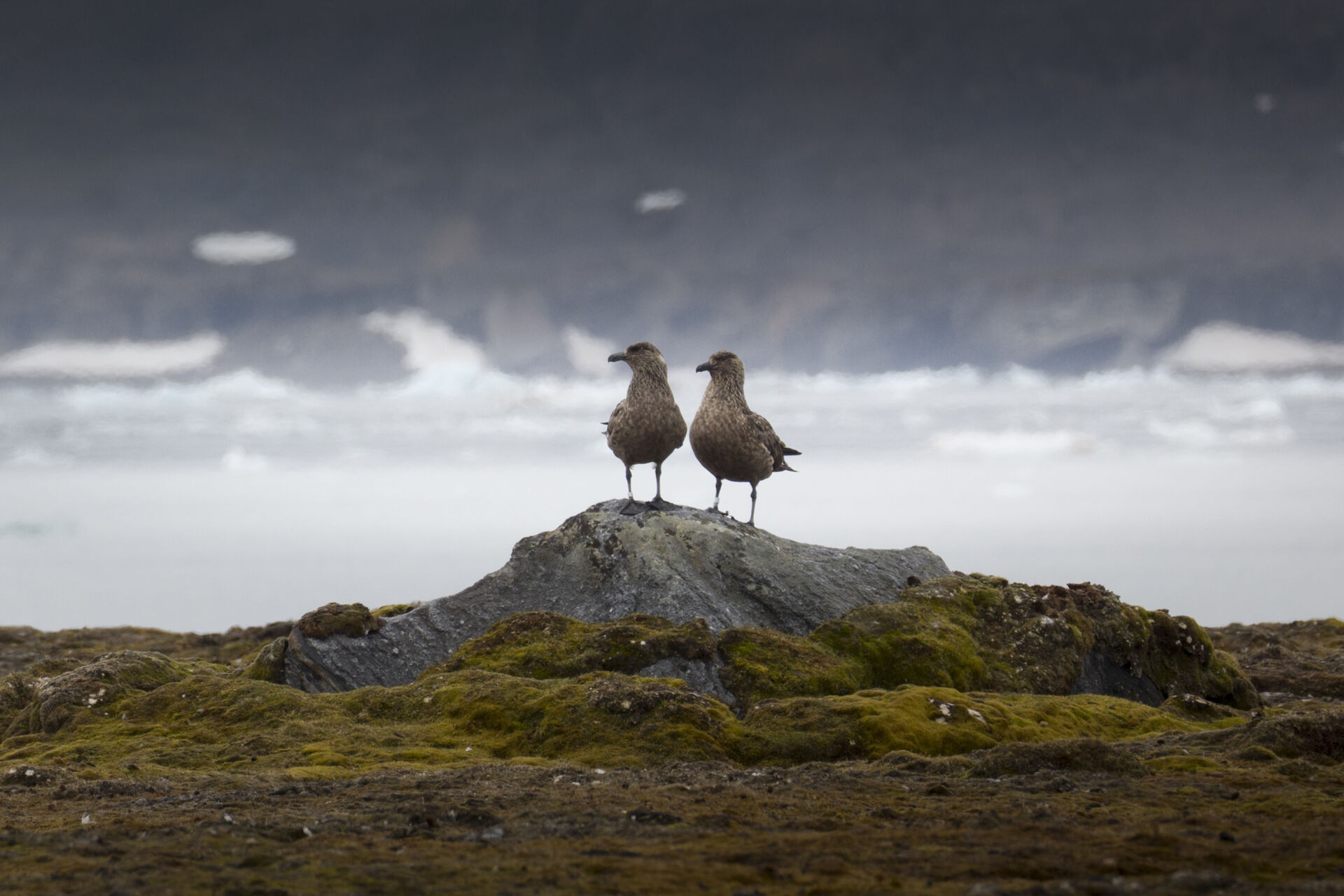
Individual great skuas adopt very different foraging strategies. They feed on fish but are also skilled kleptoparasites, relieving other birds of their prey by bossily overpowering them in mid-flight.
In the breeding season they will also prey on other birds, including large species such as the European herring gull.
Obviously, this strategy extends not only to adults but also to eggs and chicks, which are removed from their nests after the adults have been driven off by violent assaults.
On Svalbard, great skuas are true super-predators, the adult birds fearing no threat whatsoever.
Struggling to survive: the glaucous gull
Glaucous gull preying on a thick-billed murre chick
Andrles | Rights reserved | Adobe StockGlaucous gulls are the largest members of the gull family found on Svalbard. They are omnivores that prey on fish, molluscs, crustaceans, but also on other seabirds and their eggs and chicks. They can easily capture guillemots in flight, as well as their chicks taking to the air for the first time.
Glaucous gulls nest around cliffs close to seabird colonies, becoming skilful predators and carrying out veritable raids for eggs, chicks and adults. They have also been observed following foxes or even humans as they approach the colonies, in the hope that these intruders will frightened other birds off and leave their nests unguarded.
A journey for life: the incredible migration of Arctic birds
Gaia Bazzi (Italian Centre for Ornithological Studies - CISO) explains how the short Arctic summer offers a wide range of food resources but that with the onset of the cold season, these resources soon run out or become inaccessible, forcing many birds to move if they want to survive.
The evolutionary history, size, shape and the ecological characteristics of a species determine whether it will have to undertake long migrations or stay where it is. By way of example, she takes the Arctic tern, which completes an extraordinary migration, while the rock ptarmigan – much heavier and with short, rounded wings – is not suited for long-range flight and has had to adapt to the long Arctic night.
Arctic birds, she explains, are vulnerable to a number of threats, including human depletion of fish stocks, pollution and climate change.
Lastly, she tells us that conservation policies have been enacted across Europe in recent decades, which must be maintained and enforced in the coming years to halt biodiversity loss in the Arctic.
Climate changes and their consequences
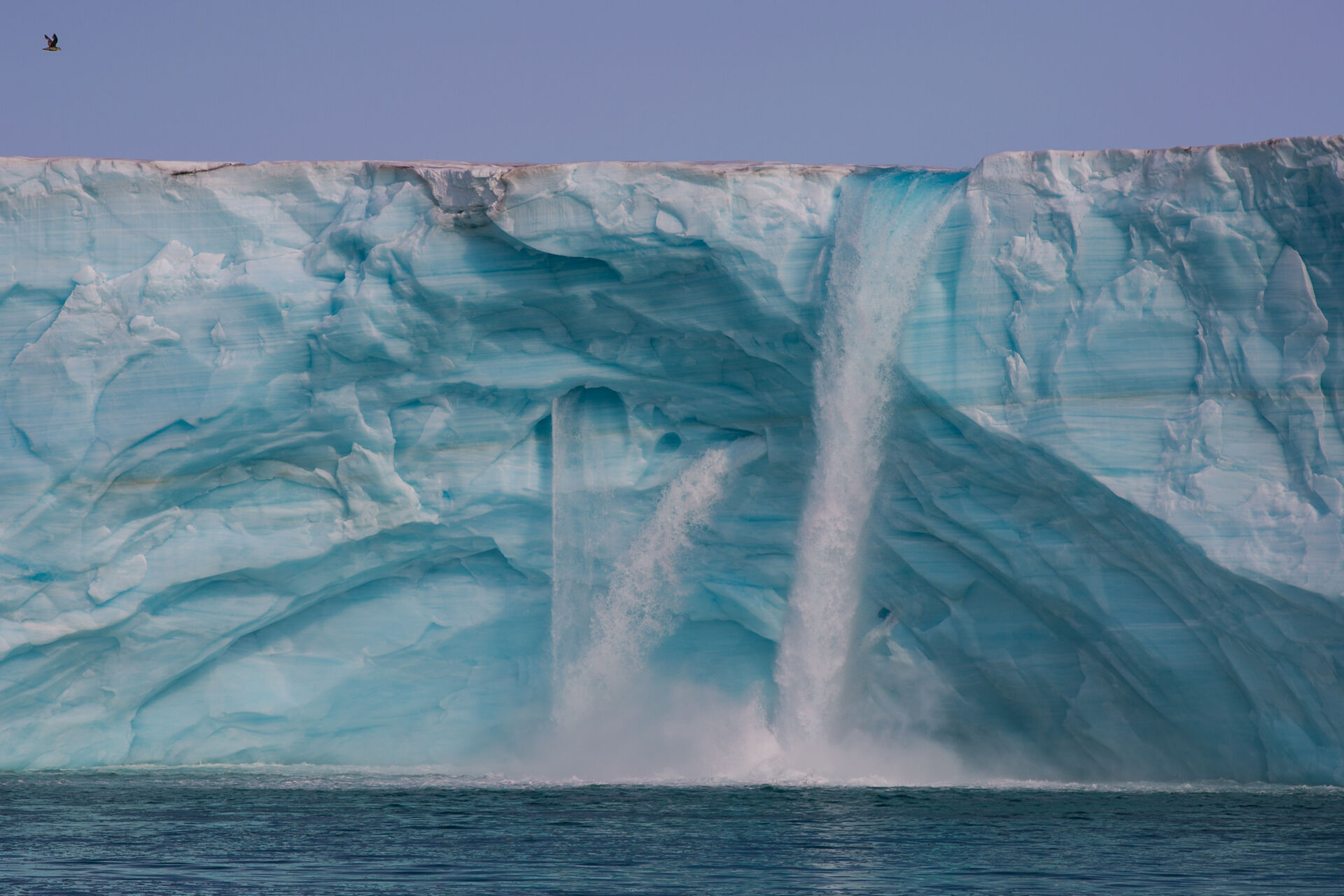
The climate changes currently occurring are much more evident and pronounced in Arctic latitudes. They can be seen not just in ever higher air and sea temperatures, but also in altering precipitation patterns, variations in plant communities, rising sea levels and shrinking ice floes.
Wintertime brings ever more frequent instances of ‘rain on snow’, which has severe repercussions on herbivorous species, such as the snow partridge or the Svalbard reindeer: rain falling on snow creates a hard layer of ice, blocking access to the few but essential resources buried under the snow.
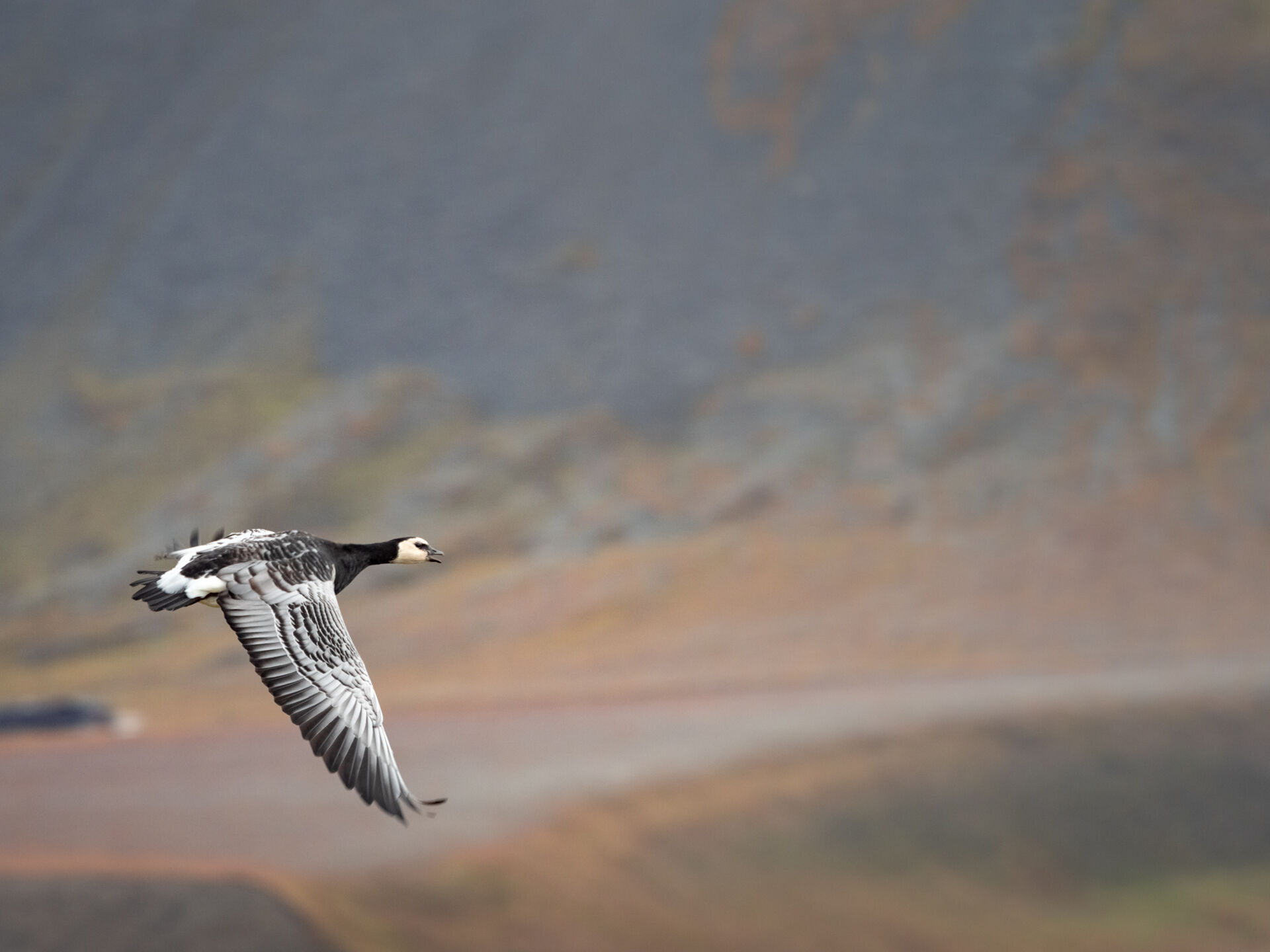
Almost all birds found on Svalbard are migratory, stopping over at the archipelago for the short summer season only. The migratory movements of avian species are guided by environmental signals linked to the climate, but if these change, migration phenology could change with them.
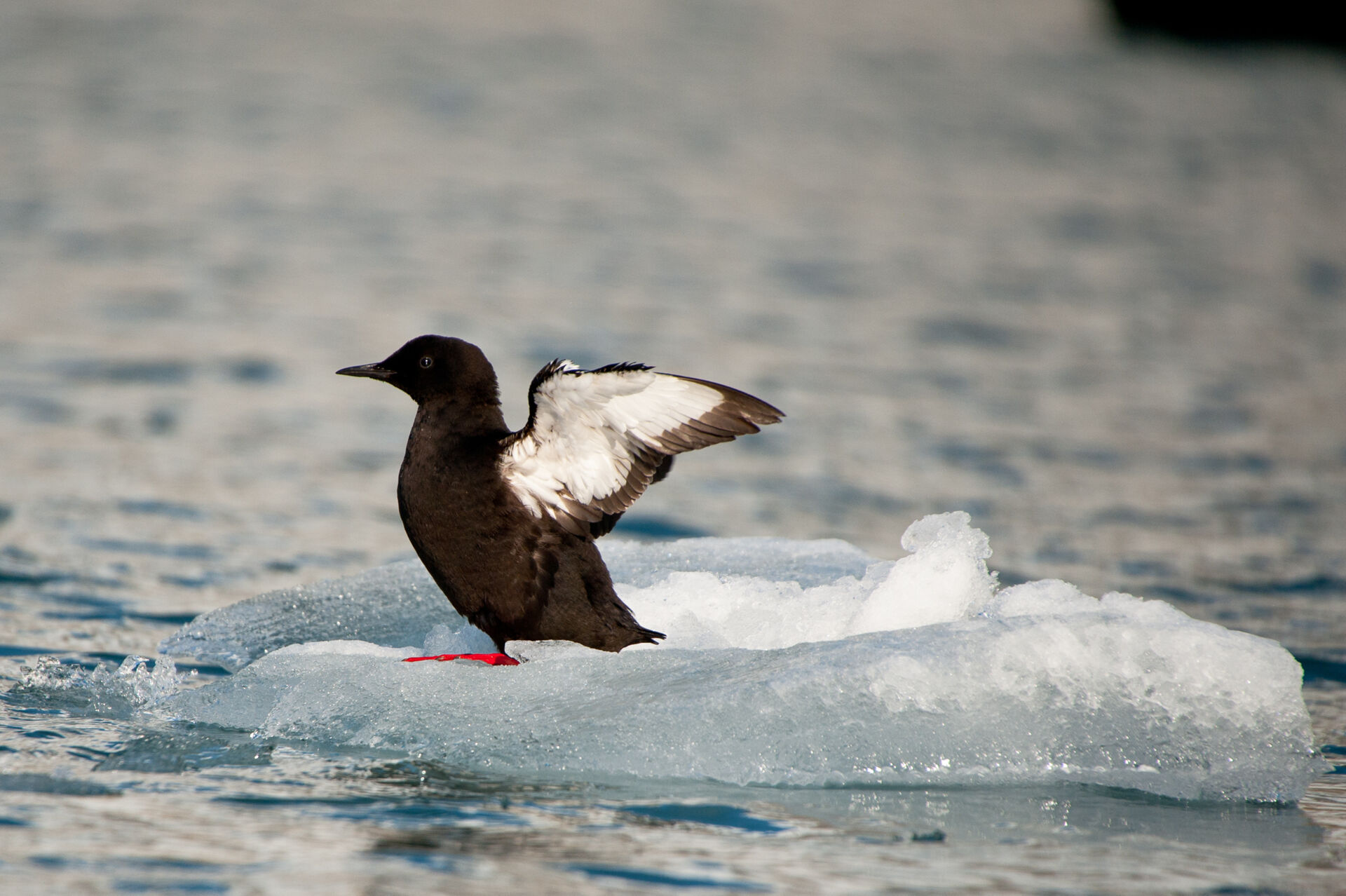
Various studies have already observed alterations in migration routes and times.
Short-range migrants are reducing distances to the extent of becoming completely settled in some cases.
Rising temperatures can bring forward the start of the spring-summer season, with negative knock-on effects on species at these latitudes that migrate to breed. Where breeding in the Arctic is concerned, timing is vital given the small window during which food sources are available for feeding young animals: earlier onset of the season may cause many species to miss out on the period of peak availability of such resources.
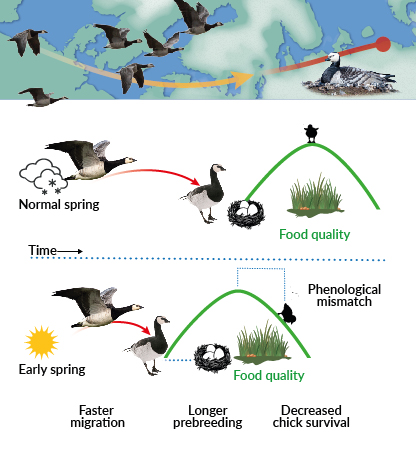
The illustration shows the migration route of the barnacle goose. The increase in temperatures, due to the climate change, can anticipate the start of the spring-summer season, altering the phenology of their migration. The species will reach the breeding site at a different time than in previous years. Reproduction will also undergo temporal changes in its phases and when the offspring are born, the peak of availability of the trophic resource will have passed, increasing the mortality of the chicks and thus decreasing the reproductive success of the species.
Recent studies have shown earlier arrival in nesting grounds of a number of species, linked to shorter breeding periods. As a result, there will be increased competition for resources with negative impact on nesting populations.
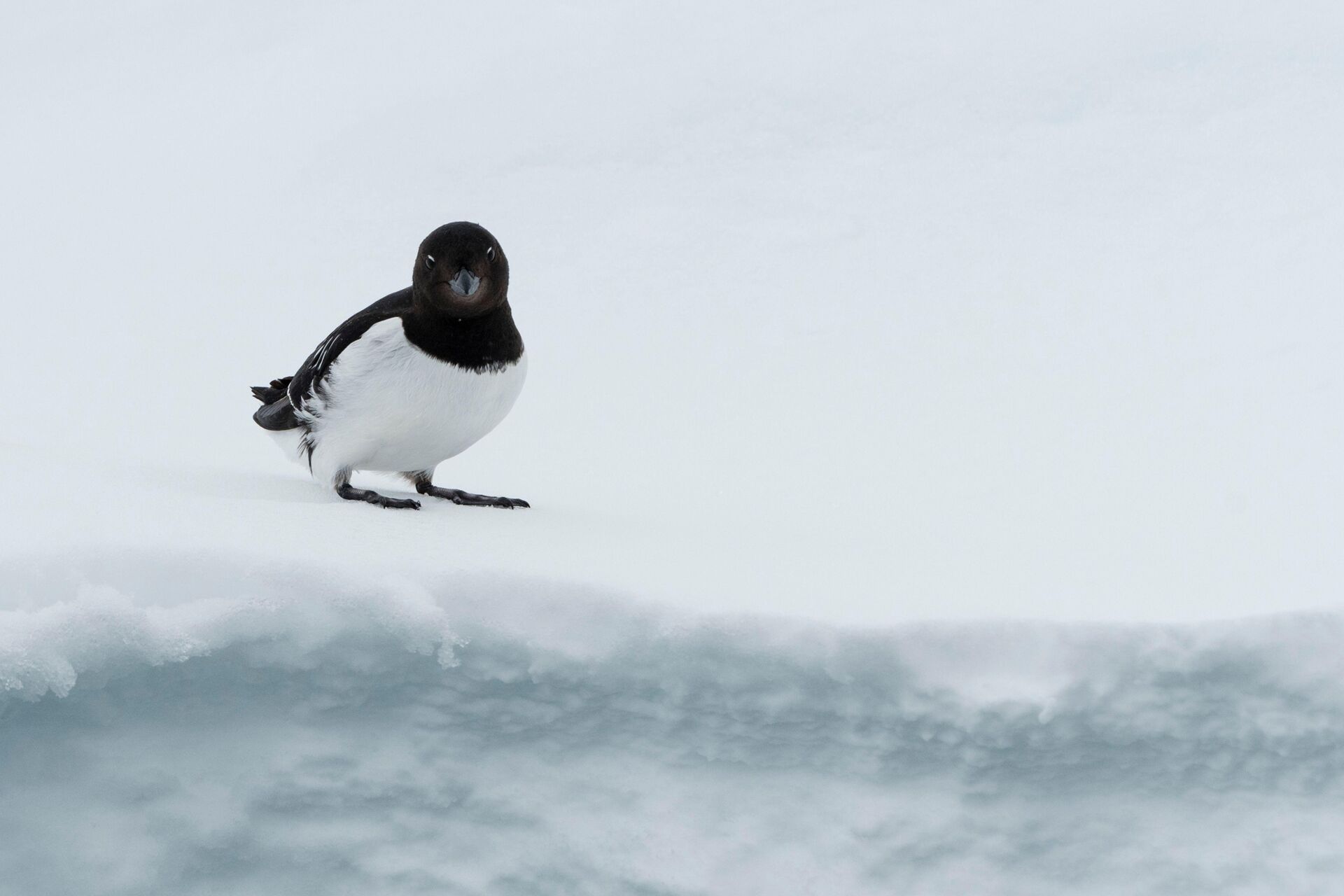
Furthermore, warming is also greatly reducing the presence of ice floes, vital for many species, including some auks and gulls.
A case in point is the little auk, a highly specialised predator feeding almost exclusively on small planktonic crustaceans known as copepods that require the presence of ice floes. Disappearance of this vital food source would remove the conditions necessary for the survival of the species.
These are just some of the potential effects of climate change. It should also be noted that, contrary to common belief, not all species will be equally affected by negative impacts: some species may actually benefit, for instance due to expansion of their optimal habitat, whereas others may suffer due to reduction of suitable habitats and/or resources.
Svalbard protected areas
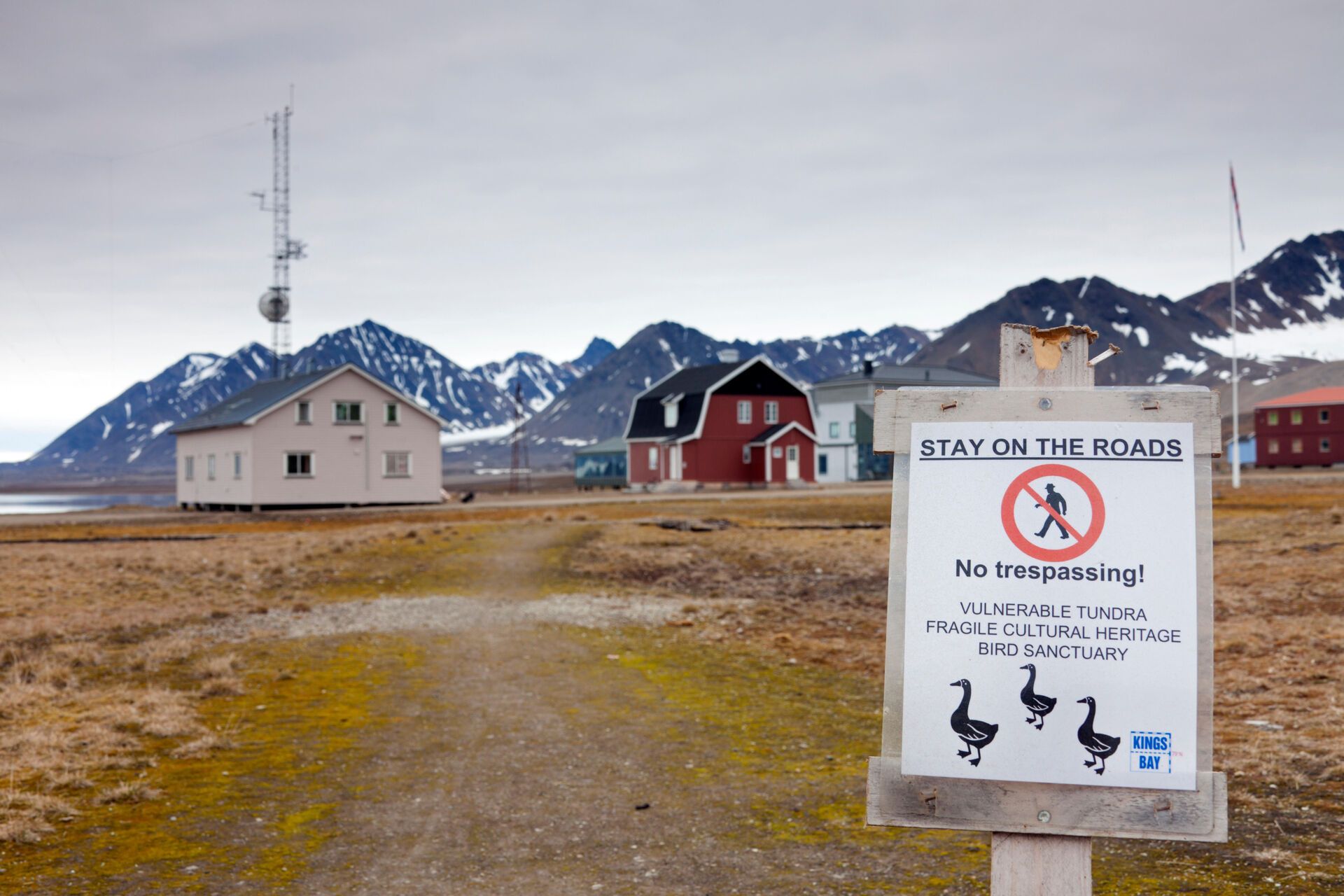
Warning sign for bird reserve near Ny-Ålesund, Svalbard (Norway)
Arndt Sven-Erik | Rights reserved | Alamy Stock PhotoOnce a hunting ground for trappers and whalers, the Svalbard archipelago boasts 29 protected areas, including no less than 16 bird reserves. Of these, 10 are inside national parks, while five are also Ramsar sites protected under the Ramsar Convention on Wetlands of International Importance, the first intergovernmental treaty designed to manage sites of this nature. In the 15 bird reserves, for the whole breeding period (15 May to 15 August), all traffic is prohibited within 300 metres of the coasts of the islands and access on foot is limited to marked paths, to avoid treading on the nests of species nesting in the tundra.
Despite a short growing season, sparse vegetation and low temperatures, summertime is very lively on Svalbard. There may not be a huge range of avian species, but numbers are impressive, resulting in intense bird activity at sea, on the cliffs and in the tundra. The silence normally enveloping the archipelago throughout the winter gives way everywhere to birdsong.

